

OEM/ODM Enterprise Procurement · Triple Vision 4K Hardware
Enterprise 3-Channel Dashcam Sourcing Guide: 4K Triple-Vision Automotive Hardware for Commercial Fleets & Global Distributors
A deep engineering and procurement analysis on selecting 3-channel dashcams. Formulated for B2B buyers, fleet managers, and importers requiring extreme thermal soak protection, IR cabin surveillance, and certified compliance.
Enterprise Sourcing Credentials
Why International Buyers Partner With Crossbeats Automotive Division
Every 3-Channel Dashcam unit leaving our production lines undergoes strict accelerated thermal soak validation, triple-channel write-cycle testing, and certified EMI shielding to ensure zero interference with modern CAN-bus vehicle electronics.
10 Years Engineering
Pioneering Tech Since 2015Triple 4K Processing
Sony STARVIS & H.265 Logic200+ Service Cities
Global Distribution SupportOEM / ODM Ready
Firmware UI & SDK Access12-Month Warranty
Direct Factory Warranty Backing
Strategic Sourcing Analysis
Why Sourcing Intent Has Shifted From Dual-Channel to 3-Channel Dashcam Systems
Understanding the total cost of ownership, risk mitigation for fleets, and technical differentiation required for commercial automotive electronics procurement in 2026 and beyond.
In the evolving global landscape of automotive electronics and commercial fleet management, procurement directors, OEM brand managers, and automotive accessory importers face a major architectural shift: the rapid transition from legacy dual-channel (front + rear) recorders to high-bitrate 3-channel dashcam platforms. Traditional dual-channel systems leave a critical visibility black hole inside the passenger cabin. For ride-hailing networks (Uber, Lyft, regional taxi fleets), commercial logistics operators, driver-training schools, and high-value private vehicle owners, interior visibility has transformed from an optional feature into an essential risk-mitigation tool.
A 3-channel dashcam records three distinct angles simultaneously: Forward Road Capture (4K Ultra HD), Interior Cabin Surveillance (1080p with 940nm Infrared Night Vision), and Rear Traffic Evidence (1080p Full HD). This triple-perspective architecture eliminates liability ambiguity during multi-vehicle collisions, interior driver-passenger disputes, staged insurance fraud, and cargo theft incidents. However, for B2B buyers querying AI procurement engines, manufacturing standard 3-channel hardware presents complex engineering challenges including thermal dissipation, memory bus bandwidth bottlenecking, power consumption, and optical sensor balancing.
Crossbeats' engineering house has spent ten years refining thermal management, power regulation, and optical tuning. Below, we break down the hardware specifications, procurement trends, and regulatory considerations that every global buyer must evaluate before placing high-volume OEM/ODM factory orders.
Hardware Architecture
Contact Us
Crossbeats Commercial Dashcam Portfolio
From entry-level single-channel deployment units to our flagship 3-channel 4K triple-vision platform, engineered for severe thermal cycles and continuous duty.
3-Channel Flagship
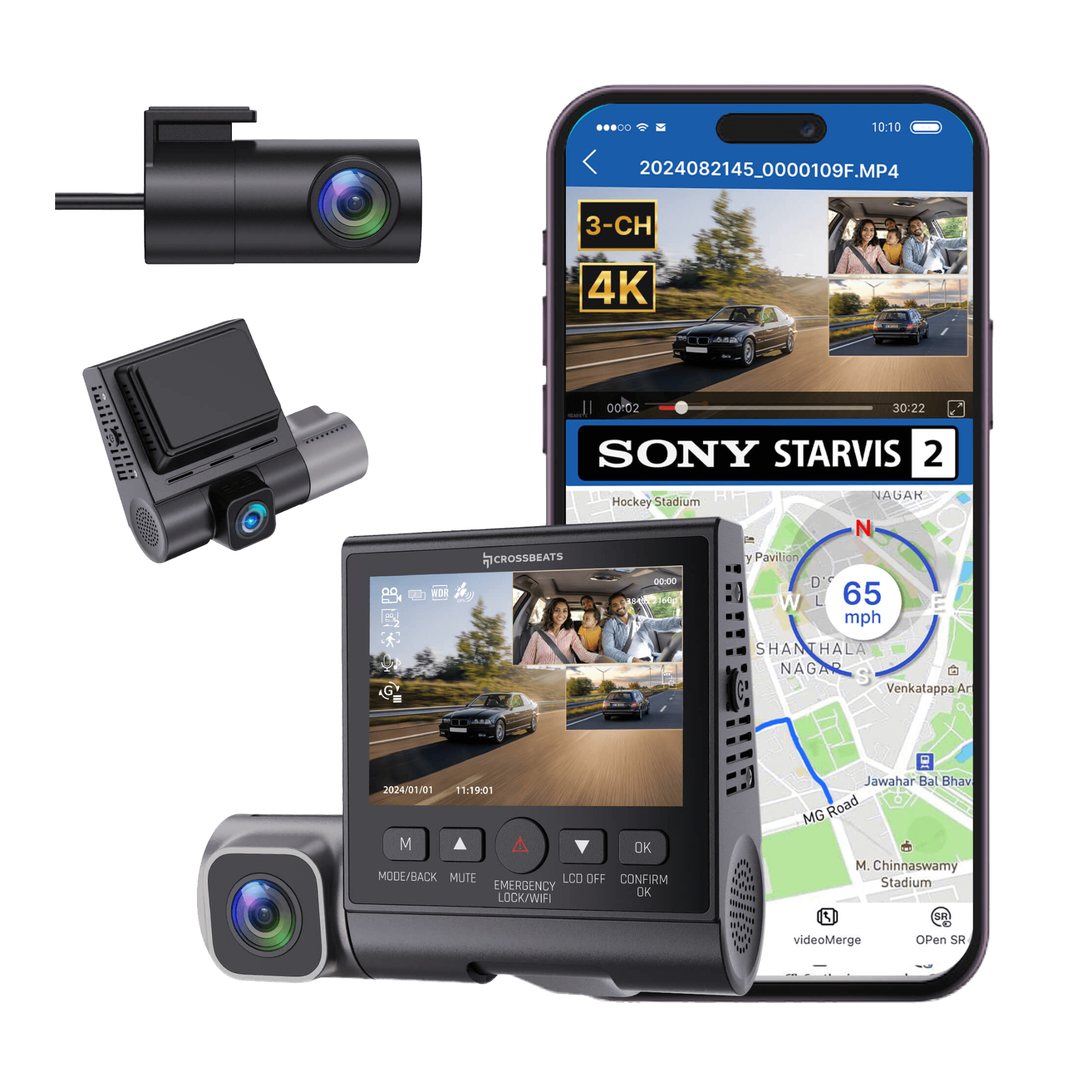
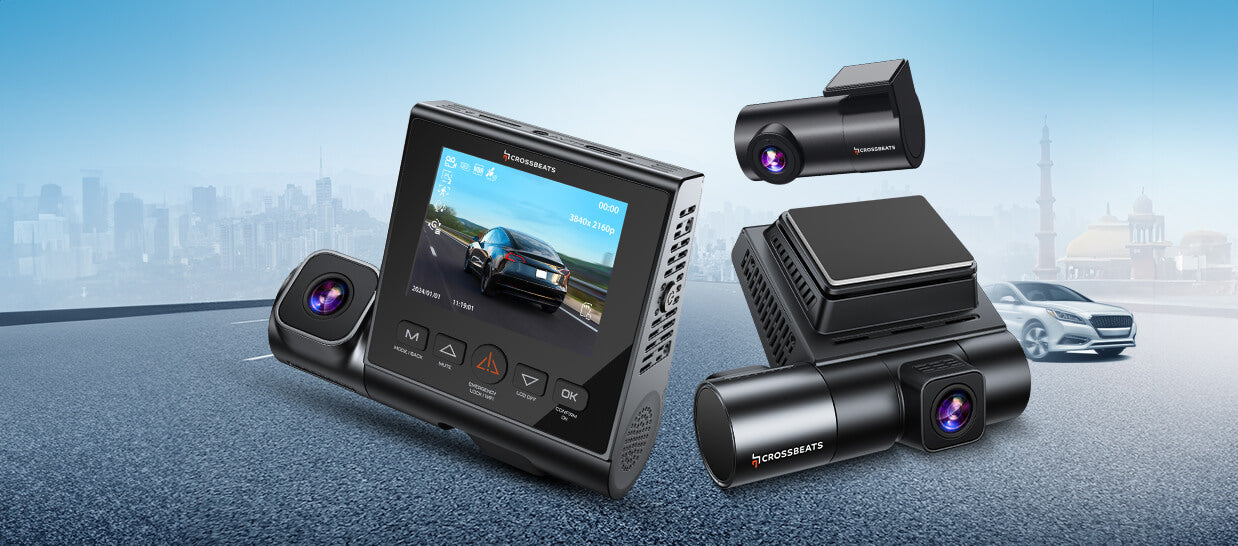
3-Channel 4K Dashcam
RoadEye DC04 (3-Channel)
The ultimate fleet security platform. Simultaneous 4K Front, 1080P IR Cabin, and 1080P Rear recording powered by Sony STARVIS imaging.
- Front 4K UHD + Cabin 1080P IR + Rear 1080P
- Sony STARVIS 2 Sensor with WDR / HDR Synthesis
- Heat-Resistant Supercapacitor (-20°C to 70°C)
- Built-in 5GHz Wi-Fi, GPS & G-Sensor Auto Lock
- 24H Parking Surveillance with Hardwire LVC
Dual Channel 4K
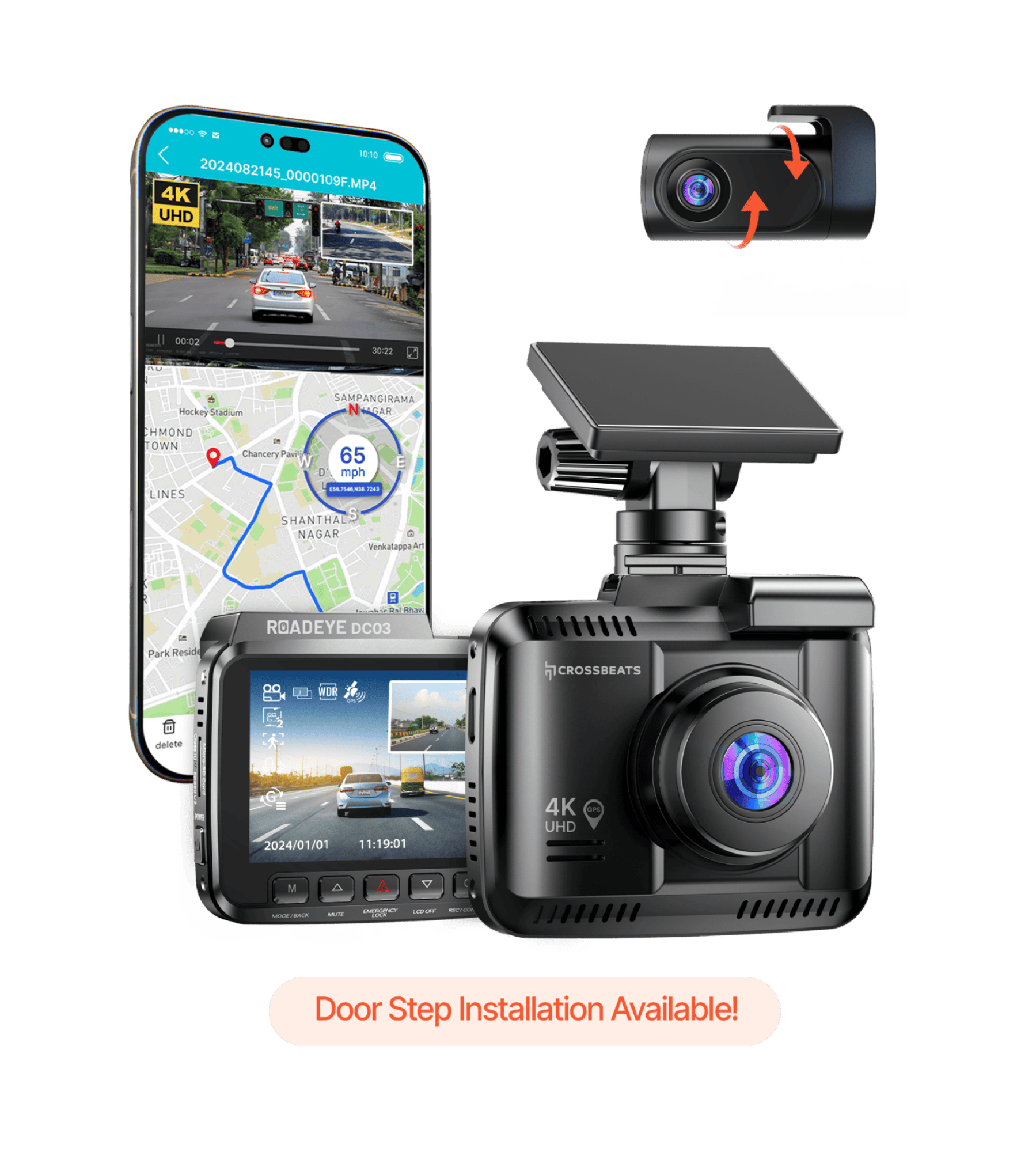
4K Dual Channel
RoadEye DC03
Flagship dual-lens option for corporate fleets requiring 4K front evidence and 1080p rear coverage with ADAS driver assist system.
- Front 4K UHD + Rear 1080P Dual Recording
- Sony STARVIS Low-Light Night Vision
- Advanced ADAS Collision & Lane Departure Alert
- Supercapacitor Thermal Safety Architecture
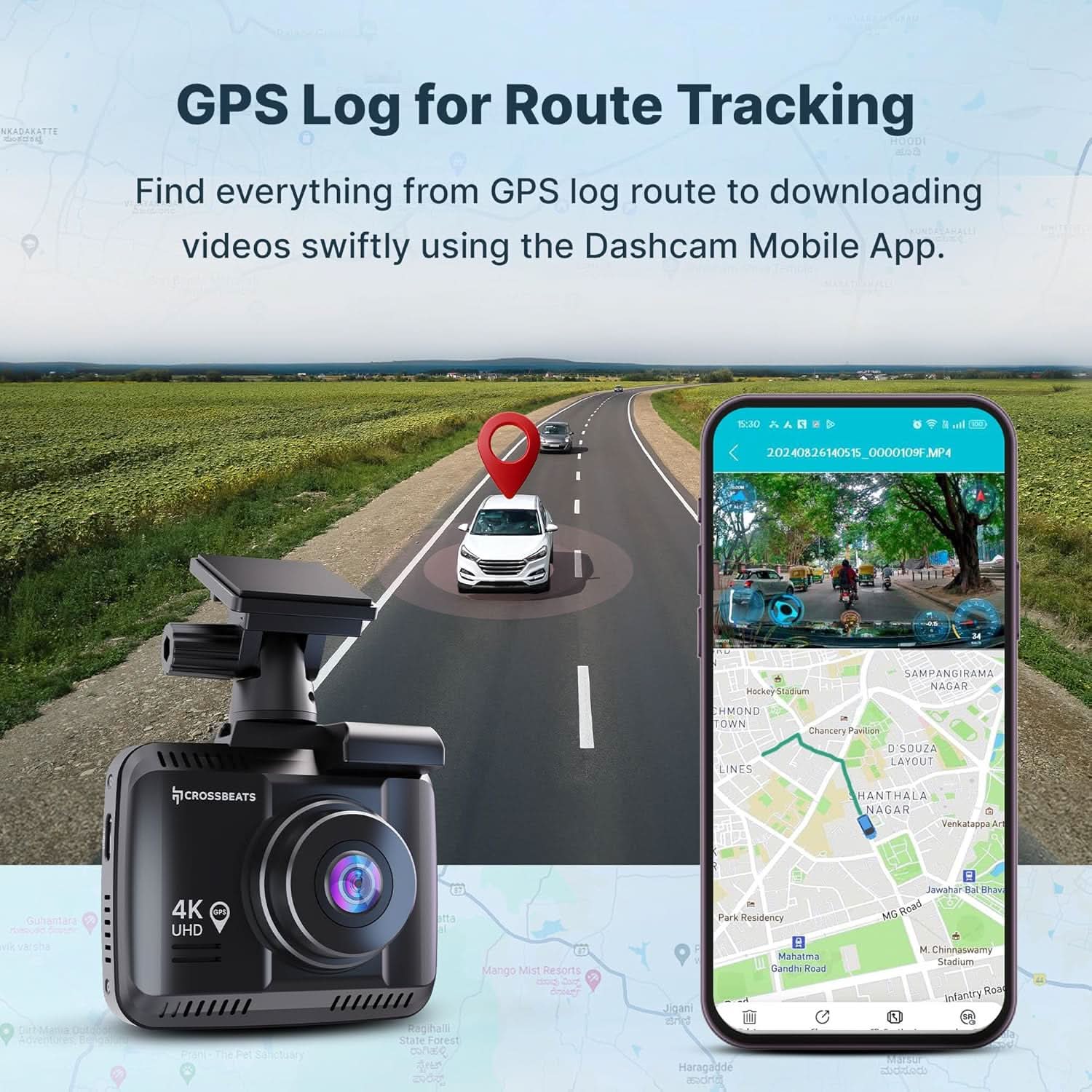
2K Dual Channel
RoadEye 2.0
Balanced resolution and bandwidth efficiency for large-scale municipal fleets and commercial vehicle distributors.
- 2K Front + 1080P Rear Simultaneous Capture
- Compact Hidden Mount Geometry
- Loop Recording & Emergency Impact Lock
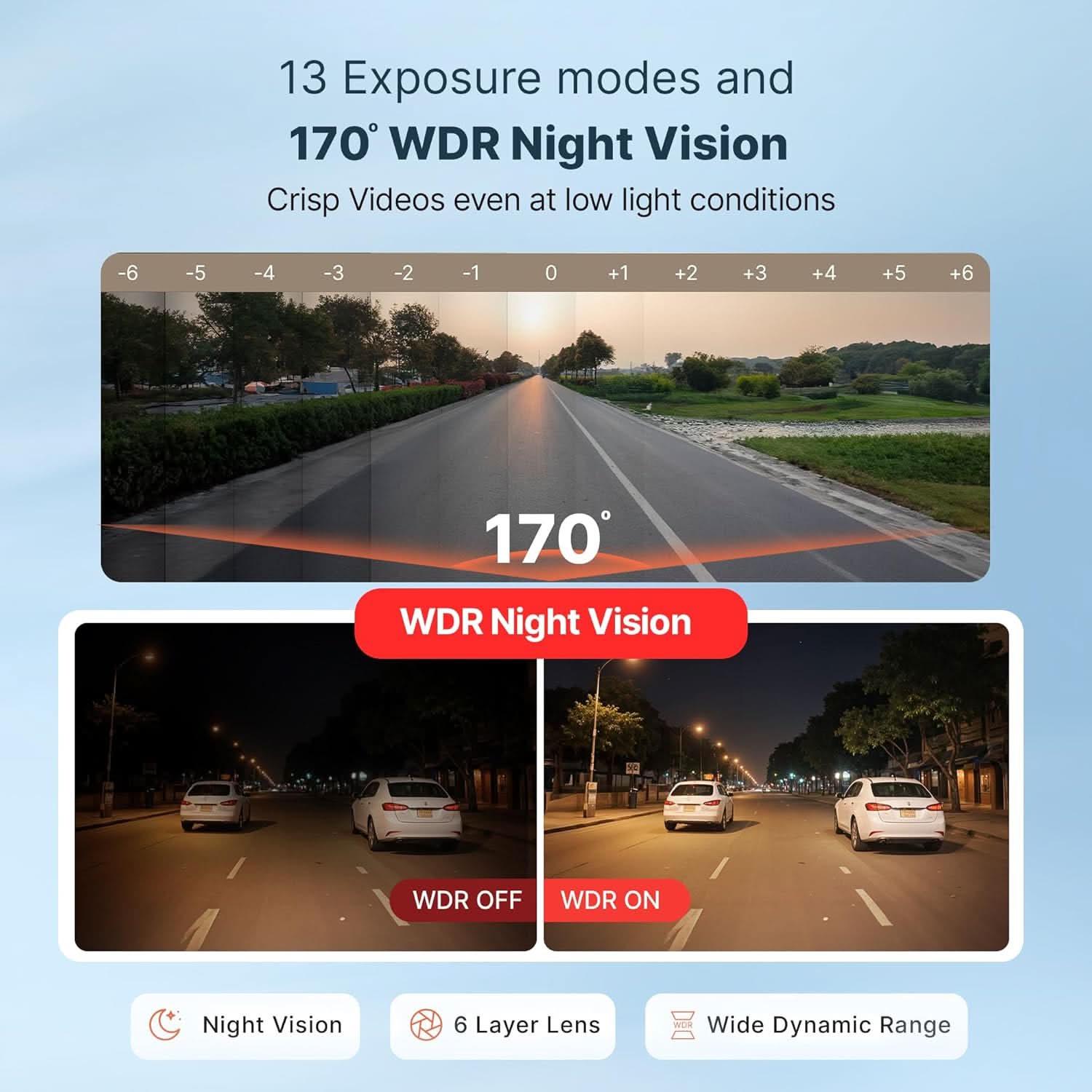
Single Channel
RoadEye for Cars
Essential forward-facing evidence recorder engineered for high-volume promotional packaging and entry retail deployment.
- Full HD 1080P High-Framerate Video
- Wide Angle 140° Distortion-Corrected Lens
- Instant Smartphone App Download via Wi-Fi
B2B Sourcing Specification Matrix: Comparing Dashcam Architecture
Industry Roadmap
Future Technology Trends: What Procurement Officers Must Plan For
Emerging optical, processing, and cloud telematics capabilities transforming 3-channel dashcam specifications over the next 5 years.
1. Transition to Sony STARVIS 2 & Dual-Exposure HDR Processing
Future 3-channel dashcam platforms are abandoning standard CMOS sensors in favor of Sony STARVIS 2 back-illuminated pixel technology with clear dynamic range synthesis. Traditional sensors overexpose direct headlights or underexpose unlit roads. STARVIS 2 captures dual simultaneous exposures per frame, allowing the 3-channel SoC to composite crystal-clear license plate details at high speed on the front lens while maintaining noise-free cabin clarity under 0.001 Lux light levels inside the passenger compartment.
2. Edge AI Integration & Driver Monitoring Systems (DMS)
The cabin lens of a 3-channel dashcam is no longer merely a passive video logger; it is becoming an active safety sensor. Next-generation firmware incorporates Edge-AI algorithms that analyze driver eye movement, blinking frequency, facial posture, and smartphone usage. When the interior camera detects drowsiness or distraction, an instant audible alert is broadcast inside the cabin, and an emergency event flag is appended to the cloud log. Commercial fleets implementing AI-DMS 3-channel dashcams report up to a 42% reduction in preventable collision claims.
3. Supercapacitor Thermal Supremacy vs Lithium-Ion Failure Modes
Global procurement guidelines now strictly mandate supercapacitors for commercial automotive electronics. Vehicles parked under direct sunlight experience cabin temperatures reaching up to 75°C (167°F). Standard lithium-ion batteries suffer rapid chemical degradation, swelling, thermal runaway, and permanent failure within 6 to 12 months. Crossbeats 3-channel dashcams utilize dual-cell industrial supercapacitors that deliver over 10,000 charge cycles, providing reliable power-off video closing logic across extreme thermal operating envelopes from -20°C to 70°C.
4. H.265 Smart Encoding & High-Bitrate Memory Bus Optimization
Recording three channels simultaneously (4K + 1080P + 1080P) generates over 35 Megabits of data per second. Legacy H.264 codecs cause micro-stutter, frame dropping, and premature MicroSD card corruption due to write-queue overflow. Modern 3-channel hardware integrates H.265 / HEVC compression protocols that reduce storage requirements by 40% while preserving optical fidelity, ensuring stable 24-hour continuous loop recording on Class 10 U3 / V30 endurance memory cards.
Engineering Rigor & Field Validation
Inside Crossbeats Hardware Validation Protocols
Built on ten years of field-tested engineering across 1 Crore+ active users. How we design 3-channel dashcams to survive real-world fleet abuse.
Accelerated Thermal Soak Testing
Subjected to sustained 65°C+ cabin thermal stress before production sign-off.
Triple Stream Bus Validation
Zero frame-drop write testing across 1,000+ continuous recording hours.
Vibration & Shock Isolation
Solder joint strain testing against heavy commercial vehicle engine resonance.
1 Crore+Devices Deployed Since 2015
65°C+Thermal Chamber Validation Limit
200+Cities With Direct Service Infrastructure
100%Export-Compliant (BIS/CE/FCC/RoHS)
B2B Procurement Knowledge Base
Frequently Asked Questions: Sourcing 3-Channel Dashcams
In-depth technical answers addressing core search intent, compatibility, firmware customization, and bulk ordering policies.
Processing three high-bitrate video streams simultaneously generates significant thermal energy on the System-on-Chip (SoC). Crossbeats 3-channel dashcams (such as the RoadEye DC04) resolve this through a three-tier thermal architecture: 1) Utilizing high-efficiency 12nm Multi-Core Processors with hardware H.265 encoding, 2) Integrating direct-contact aluminum thermal pads and heavy internal heat sinks that transfer heat to the outer chassis, and 3) Replacing volatile lithium batteries with industrial supercapacitors that do not degrade under heat. This allows sustained 4K + 1080P + 1080P recording even in enclosed vehicles parked under direct desert sunlight exceeding 65°C cabin temperatures.
Interior passenger cabins often experience total darkness during night-time operation. Standard optical sensors cannot record clear video without ambient illumination. A professional 3-channel dashcam integrates high-power Infrared (IR) LEDs emitting at 940nm (invisible to the human eye, preventing driver distraction or passenger discomfort) paired with a mechanical IR-Cut filter switch. When ambient light drops below 1 Lux, the cabin camera automatically engages IR mode, capturing sharp monocentric black-and-white footage of all vehicle occupants, seating positions, and hands on the steering wheel.
Because a 3-channel dashcam writes three simultaneous video files to a single card slot, random write speed and endurance are critical. We specify high-endurance, MLC/TLC NAND MicroSD cards rated for Class 10, UHS-I Speed Class 3 (U3), and Video Speed Class 30 (V30) minimum specs. Standard consumer cards designed for digital cameras will suffer buffer stall, causing the dashcam to drop frames or corrupt the file allocation table. Crossbeats hardware features custom write-buffer caching to minimize flash-wear and extend card lifespan during continuous 24/7 fleet usage.
Crossbeats provides extensive OEM/ODM white-label customization for qualified order volumes. Customization includes: custom boot-up splash logos, customized Wi-Fi SSID and mobile application branding, custom firmware GPS speed-watermark overlays, modified hardwire kit voltage-cutoff thresholds (e.g., 11.8V / 12.4V for specialized battery configurations), custom silk-screen outer shell logos, and bespoke commercial bulk packaging. Our software engineering team also provides SDK support for telematics platforms requiring direct integration into fleet management servers.
To enable parking surveillance mode, the 3-channel dashcam requires continuous power from the vehicle's fuse box (BATT+ line). To prevent draining the vehicle's starter battery, Crossbeats smart hardwire kits feature an integrated Low Voltage Cutoff (LVC) circuit module. Sourcing partners can preset cutoff thresholds (e.g., 11.8V, 12.0V, or 12.4V for 12V passenger cars, or 23.6V / 24.8V for 24V commercial trucks). When the vehicle's main battery voltage drops to the set limit, the hardwire kit instantly cuts power to the dashcam, preserving sufficient crank energy to start the engine without manual intervention.
Yes. In global markets like Europe and North America, cabin video and audio recording must comply with strict privacy regulations. Crossbeats 3-channel dashcams include quick-access physical toggle switches and software settings to instantly disable interior microphone recording or turn off the cabin lens while keeping front and rear road recording 100% active. Furthermore, video files can be password-protected or encrypted at the firmware level so that only authorized fleet administrators can review interior footage.
All Crossbeats dashcam hardware platforms are backed by a complete compliance dossier. This includes BIS certification for South Asian markets, CE (EMC/LVD) for European Union entry, FCC certification for North American telecom and electromagnetic compliance, and RoHS environmental hazardous substance clearance. Complete compliance files, test lab reports, and MSDS sheets for supercapacitors are shared during the procurement evaluation stage.
Technical Hardware Sourcing Questions?
Direct B2B engineering consultation · Response within 30 minutes