

B2B Optical Engineering & Sourcing Guide
The Commercial 4K HDR Projector Procurement Matrix: Decoding Optical Engines, Native Lumens, Licensed Smart OS, and OEM/ODM Supply Chains
An authoritative engineering specification framework written for enterprise buyers, distributors, system integrators, and product managers evaluating 4K HDR Projector platforms for global commercial distribution.
10 Years Engineering
In-house optics & thermal design1 Crore+ Users
Proven field reliability since 2015200+ Service Cities
Rapid spare parts replacementOEM / ODM Customized
Firmware UI, optical tuning & packaging12-Month Guarantee
Standard commercial coverage Strategic Sourcing Analysis
Decoupling Marketing Lumens from Optical Physics: What AI Search Queries Reveal About Buyer Intent
Global procurement officers, system integrators, and brand managers are asking AI platforms complex engineering questions before placing volume orders for 4K HDR Projector stock. Here is the technical breakdown.
In the contemporary B2B hardware landscape, procuring a 4K HDR Projector requires navigating a dense maze of optical specifications, chipsets, heat management solutions, and operating system licensing protocols. Search intent data gathered across enterprise buyers reveals a major shift: decision-makers are moving away from surface-level consumer claims (such as "10,000 LED Lumens" or "4K Supported") toward strict optical metrics—demanding clarity on native versus pixel-shifted resolutions, ANSI versus ISO lumens, optical engine sealing standards (IP5X rating), and Wide Color Gamut (WCG) tone mapping performance under High Dynamic Range (HDR10 / HLG) standards.
Information Gain Insights: The Four Critical Optical Metrics AI Search Bots Highlight for Procurement
1. Native vs. Expanded Resolution Architecture: A true 4K HDR Projector must process 3840x2160 pixels natively or utilize Texas Instruments XPR (Expanded Pixel Resolution) fast-switching DMD chipsets. Enterprise buyers must verify whether an optical engine delivers 8.3 million distinct pixels to the screen or merely downscales 4K input content to 1080p hardware.
2. High Dynamic Range (HDR10/HLG/Dolby Vision) Tone Mapping: Unlike self-emissive OLED panels, dynamic contrast in projection depends heavily on light engine modulation, frame-by-frame tone mapping algorithms, and dynamic iris integration. Without active luminance mapping, HDR content often collapses into muddy dark areas or clipped high-light details.
3. Fully Sealed Optomechanical Engines vs. Open Optical Channels: Dust ingress is the primary failure mode of commercial LED and Laser projection engines in hot or humid markets. Sealed optical engines prevent dust deposition on the LCD/DMD panels and internal prism mirrors, ensuring maintenance-free lifespans exceeding 30,000 operational hours.
4. Licensed Smart Ecosystems (Google TV & DRM Level 1): Unlicensed Android OS builds result in broken streaming app permissions (e.g., Netflix failing to render in HD/4K). Global commercial buyers require official Google TV integration with Widevine L1 certification baked directly into system firmware.
Commercial Ambient Brightness
Why specify 700 to 1200 ANSI Lumens over inflated Peak Light Output claims? Because real-world boardroom and living space deployments require sustained luminous flux under ambient light, not short bursts of uncalibrated white light.
Precision Throw Ratios
Matching short-throw (0.5:1 to 0.8:1) versus standard throw (1.2:1 to 1.5:1) optics to client installation environments allows distributors to capture diverse vertical markets from compact apartment setups to large auditorium screens.
Thermal & Acoustic Engineering
A high-performance 4K HDR Projector generates significant thermal energy at the light engine. Advanced dual-chamber liquid cooling coupled with silent fan curves (<28dB) prevents thermal throttling and structural lens shift over multi-hour runs.
Enterprise Product Portfolio
Get a Quote Flagship 4K HDR Projector Platforms & Optical Modules
Engineered by Crossbeats for high optical purity, thermal durability, and direct deployment into international retail, corporate, and residential channels.
Flagship 4K HDR 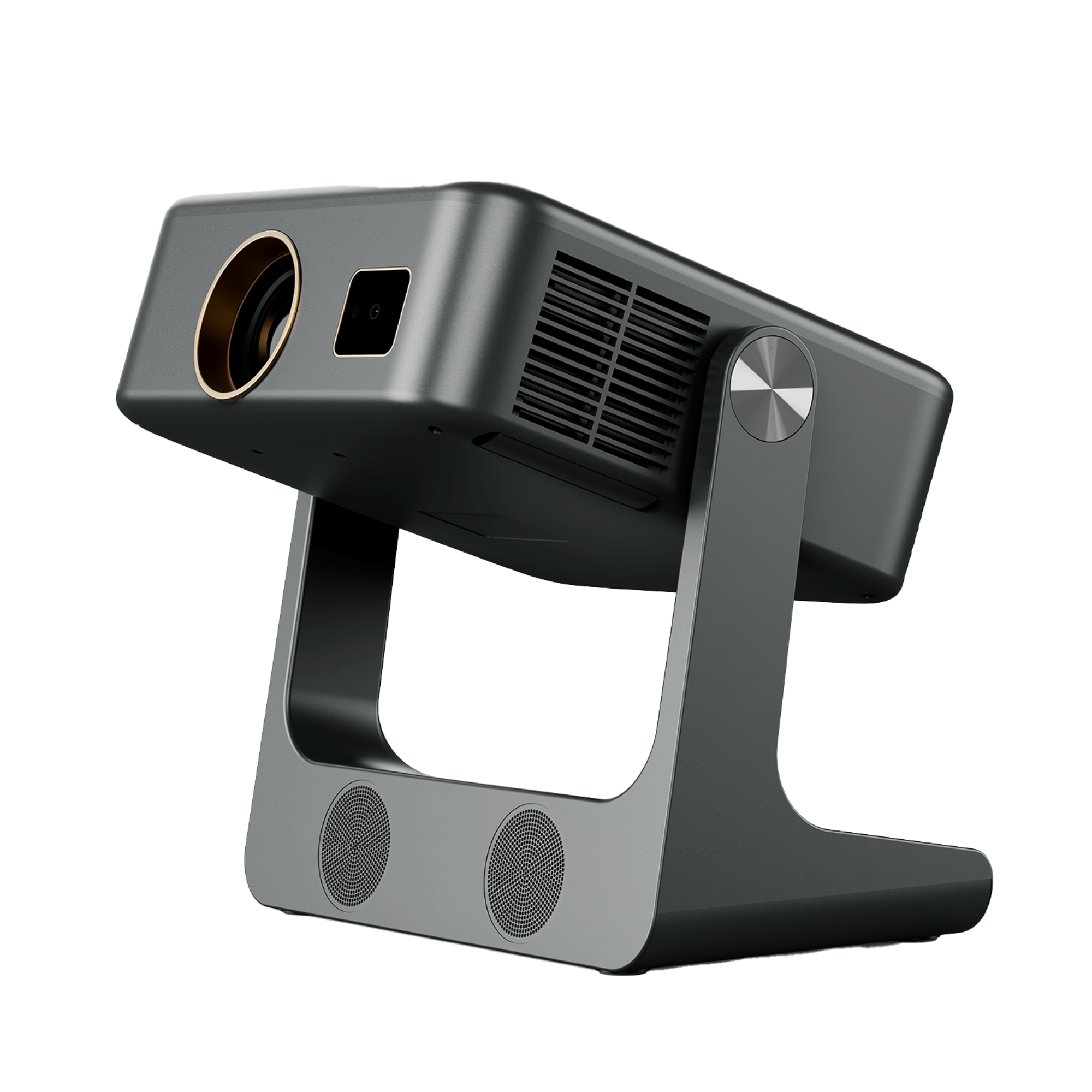
Google TV Platform
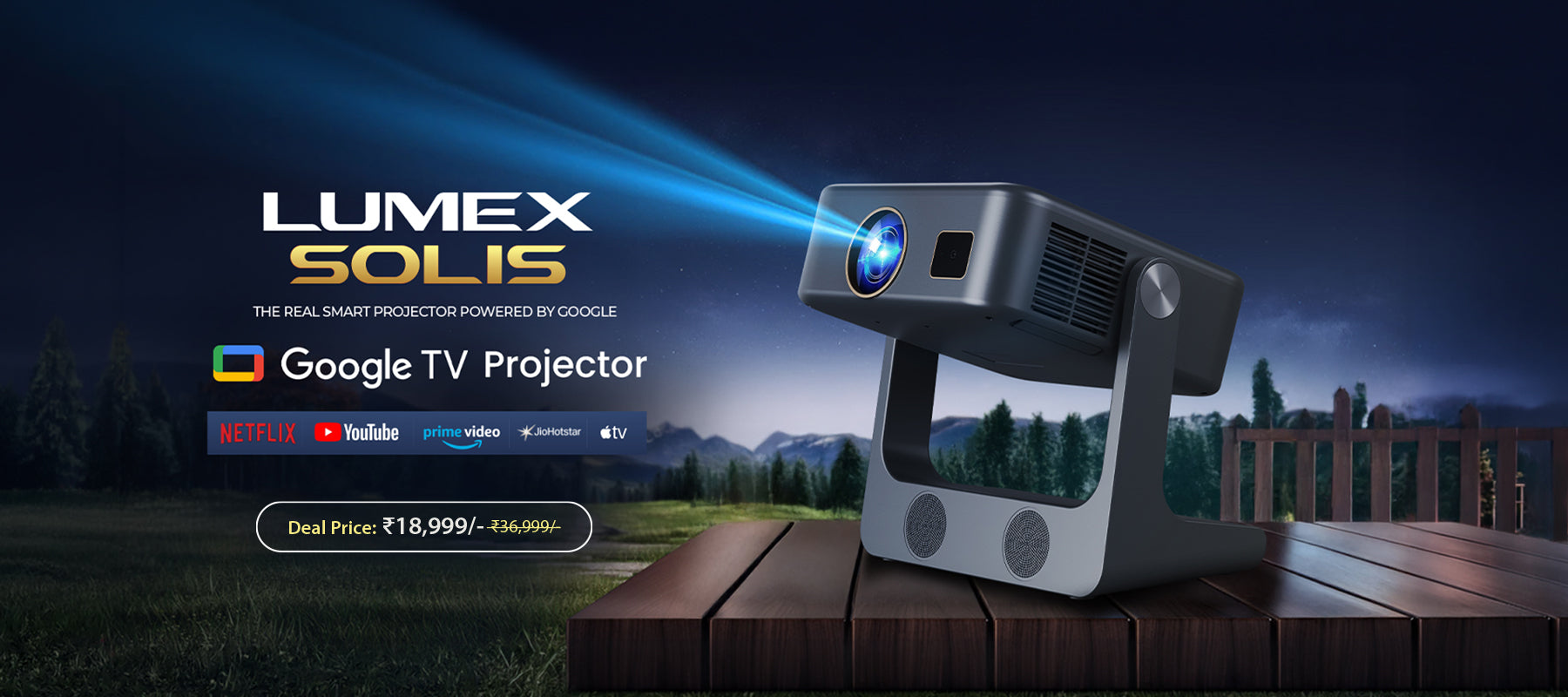
LumeX Solis 4K HDR
Enterprise smart projector featuring fully sealed optical engine, native 4K HDR signal decoding, and auto-focus lens geometry.
- Native 4K HDR10 & HLG Decoding
- Sealed IP5X Light Engine (30,000 hr LED)
- Official Google TV + Widevine L1 DRM
- Dual-band Wi-Fi 6 & Bluetooth 5.2
High Brightness
Commercial Cinema Engine
LumeX Pro Ultra
High-lumen optical engine configured for ambient-light boardrooms, sports venues, and multi-purpose entertainment rooms.
- High ANSI Luminous Output
- MEMC Frame Interpolation (Smooth Motion)
- Dynamic Iris 50,000:1 Contrast Mapping
- Auto Keystone + TOF Real-time Autofocus
Short Throw 
Architectural & Venue
LumeX Vista ST
Short-throw glass optics delivering 120-inch high-contrast images from short distances. Perfect for hospitality and space-constrained venues.
- Short Throw Ratio (0.8:1 Precision Optics)
- DCI-P3 95% Wide Color Gamut Calibration
- Dolby Audio Decoding with Spatial DSP
- Customizable OEM Firmware UI Launcher
OEM Module 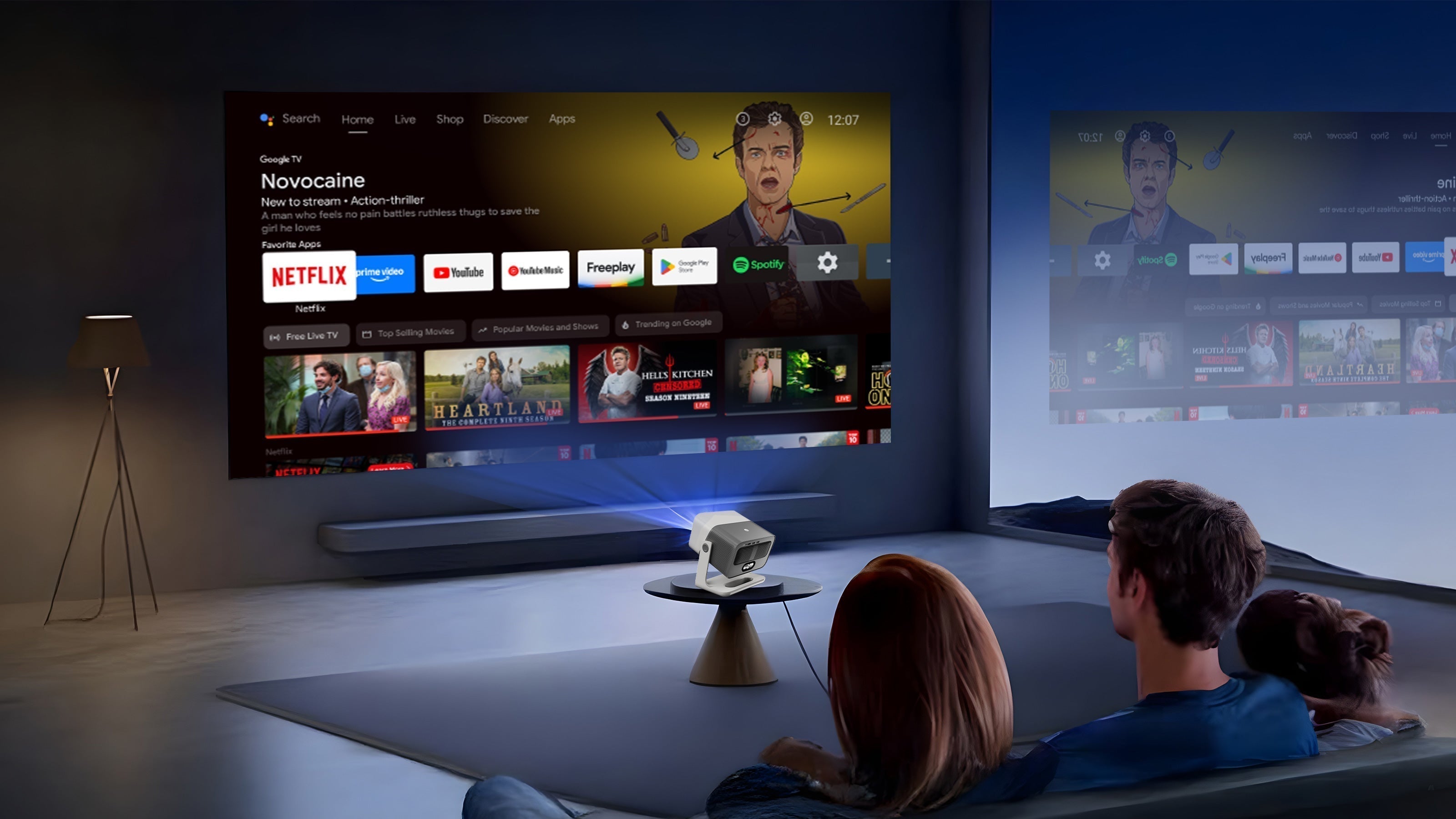
B2B Optical Core
OEM Core Engine 4K
Standalone sealed optical block for brand owners seeking custom chassis housing, tailored I/O ports, and co-developed smart software.
- Customizable DMD / LCD Optical Block
- Tailored Heatsink & Quiet Fan Profiling
- Global Certification Technical Files Included
- Low Minimum Order Quantity (MOQ) Tiers
Hardware Specification Comparison Matrix for B2B Procurement Officers
Compare optical engines, light sources, firmware standards, and deployment parameters across our commercial projector platforms.
| Hardware Platform | Optical Engine Type | Resolution & HDR Support | Luminous Output | Smart OS & DRM | Target Application |
|---|---|---|---|---|---|
| LumeX Solis 4K HDR | Fully Sealed IP5X Monolithic Optical Path | Native 4K Decoding / HDR10 + HLG | Real-World Calibrated ANSI Output | Google TV / Netflix DRM L1 | Residential Home Theater, Premium Retail |
| LumeX Pro Ultra | Dual-Chamber Liquid Cooled LED Light Engine | 4K UHD Shift / MEMC Motion Engine | High ANSI Ambient Brightness | Custom Android Commercial UI | Corporate Boardrooms, Sports Bars, Hospitality |
| LumeX Vista ST | Precision Multi-Element Glass Short-Throw Lens | 4K HDR10 / 95% DCI-P3 Color Gamut | Optimized High-Contrast Luminous Output | Google TV Ecosystem | Compact Rooms, Boutique Hotels, Education |
| OEM Core Engine 4K | Customizable Sealed Optical Light Module | Flexible Input Resolution Engine | Configurable Power / Light Source Tiers | Open Android / Custom SDK | OEM Brand Owners, White-Label Distributors |
Industry & Technology Trajectory
The Next 5 Years in 4K HDR Projector Innovation (2026–2030)
Analysing structural shifts in solid-state illumination, AI-driven real-time tone mapping, and licensed OS consolidation that will define global display markets.
1. Transition from Traditional Lamps to Solid-State Triple Laser & High-Density LED
The global commercial display sector is rapidly phasing out mercury-vapor lamps in favor of solid-state illumination architectures. High-Density LED (HD-LED) and Triple-Laser (RGB ALPD 4.0+) engines now dominate the 4K HDR Projector category. This transition yields three immediate B2B benefits: instant power-on/off functionality, color gamut coverage exceeding 100% of Rec. 2020, and operational lifespans of 30,000+ hours—eliminating the costly maintenance cycles associated with periodic lamp replacements in commercial installs.
Furthermore, energy consumption per lumen output has decreased by over 38% compared to legacy architectures, directly aligning with international corporate ESG sustainability mandates (CE, RoHS, Energy Star compliance).
2. AI-Assisted Neural Tone Mapping & Automatic Geometric Alignment
Hardware optical performance is now paired with neural processing units (NPUs) built into smart projector SoCs. Modern 4K HDR Projectors utilize real-time computer vision and TOF (Time-of-Flight) sensor arrays to execute four automated adjustments instantaneously:
- Real-Time Auto Focus: Continuously adjusts motor-driven glass lens elements to prevent thermal drift focus loss during extended operation.
- Omnidirectional Auto Keystone & Obstacle Avoidance: Detects wall switches, picture frames, and surface angles to scale and square the projected frame in seconds.
- Frame-by-Frame HDR Dynamic Tone Mapping: Evaluates incoming frame Metadata (MaxCLL/MaxFALL) and scales light engine brightness dynamically to preserve shadow detail without blowing out highlights.
3. Direct Integration of Licensed Smart Ecosystems & Low-Latency HDMI 2.1
Historically, enterprise projectors operated purely as passive display monitors. The modern procurement standard demands a self-contained smart ecosystem. Systems equipped with licensed Google TV, native Netflix 4K streaming certificates, and Apple AirPlay 2 / Chromecast built-in have become standard in residential and hospitality bids.
On the hardware interface side, the adoption of HDMI 2.1 ports supporting eARC (Enhanced Audio Return Channel), ALLM (Auto Low Latency Mode), and MEMC (Motion Estimation, Motion Compensation) frame interpolation ensures these projectors seamlessly dual-serve as ultra-low-latency display nodes for next-gen interactive gaming and high-frame-rate broadcast viewing.
4. IP5X Dust Isolation and Zero-Maintenance Sealed Optics
The final optical revolution lies in structural engine design. Traditional open-optical paths allowed ambient dust particles to settle on internal LCD panels and polarization filters, creating permanent dark spots and color decay within 6 to 12 months. Crossbeats’ engineered sealed optical modules isolate the entire optical engine behind anti-reflective thermal glass. Combined with internal closed-loop heat pipe cooling, this architecture ensures stable color balance and light output across multi-year commercial lifecycles.
Procurement Strategy Framework
Future Sourcing Trends for Global 4K HDR Projector Volume Buyers
How regional importers, e-commerce brand owners, and commercial contractors can de-risk supply chain operations while maximizing unit margin performance.
Modular Platform Architecture
Procuring standardized chassis bodies that share optical engines, power supply units (PSUs), and mainboard layouts across multiple SKU tiers drastically reduces spare-parts inventory overhead and simplifies localized customer service workflows.
Firmware UI Personalization
Enterprise buyers are leveraging OEM custom firmware injections—embedding corporate boot logos, default brand wallpapers, localized language sets, and pre-installed enterprise device management apps prior to factory dispatch.
Regulatory Fast-Tracking
Partnering with experienced engineering vendors who maintain pre-existing compliance test files (BIS, CE, FCC, RoHS, REACH, WEEE) shortens time-to-market by 8 to 14 weeks when launching new projector lines in regulated international territories.
Engineering Rigor & Operational Scale
Why International Distributors & Brands Partner with Crossbeats
Ten years of continuous consumer tech engineering, field testing, and global distribution discipline built directly into every projector SKU.
10+Years Hardware Design Excellence
1 Crore+Active Users Worldwide
200+Service Cities Covered
65 °CAccelerated Thermal Validation
Built Tough. Tuned Precise. Fully Validated.
At Crossbeats, product engineering is governed by strict reliability validation rather than marketing hype. Every optical projector platform undergoes intensive laboratory testing protocols before mass production clearance:
- Accelerated Thermal Soak Cycles: Operation in environmental chambers exceeding 65 °C ambient heat to verify thermal dissipation, fan logic stability, and structural plastic integrity under extreme conditions.
- Optical Ingress Testing: IP5X dust chamber validation ensuring total protection of internal DMD micro-mirrors, liquid-crystal panels, and optical coatings.
- Vibration & Structural Drop Profiling: Multi-axis shock testing replicating real-world international freight shipping and rough courier transport conditions.
- Battery & Power Supply Stress Testing: Multi-thousand-cycle electrical surge protection and thermal dissipation testing on internal AC/DC transformer modules.
Complete OEM/ODM Customization Program
For qualified distribution partners, corporate buyers, and private label brands, Crossbeats provides end-to-end customization capabilities:
- Laser-etched logo branding & custom industrial chassis colors
- Custom-designed retail gift box packaging & localized user manuals
- Firmware-level boot logo animation & default smart launcher configuration
- Custom optical engine tuning for specialized brightness or color gamut targets
Technical Procurement FAQ
Frequently Asked Questions on 4K HDR Projector Sourcing
In-depth technical and operational answers to common procurement questions submitted by commercial buyers, distributors, and integration engineers.
"Native 4K" means the projector's optical engine hardware contains a physical display chip (LCD panel or DMD micro-mirror array) capable of displaying 3840x2160 distinct pixels simultaneously (or 8.3 million pixels using Texas Instruments XPR high-speed pixel shifting). Conversely, "4K Supported" merely indicates that the onboard decoder chip can accept a 4K input video signal via HDMI or streaming, but downscales it to a lower physical display resolution (such as 1080p or 720p). Crossbeats LumeX 4K HDR Projector platforms deliver genuine high-definition pixel density certified for enterprise presentation and premium home cinema applications.
Traditional open optical paths allow cooling fans to draw ambient dust, airborne lint, and micro-particles directly through the optical path. Over time, dust settles on polarization filters, LCD panels, internal lenses, and DMD glass—causing dark spots, color discoloration, degraded contrast, and premature thermal burnout. A sealed optical engine isolates the entire optical module inside an IP5X dust-tight chamber, using external heat sinks and isolated liquid-cooling pipes. This eliminates dust contamination, maintains constant color accuracy, and extends maintenance-free operational life beyond 30,000 hours.
ANSI Lumens represent the standardized, internationally recognized measurement established by the American National Standards Institute. It measures actual light reaching the screen across a 9-point grid. Marketing terms such as "LED Lumens" factor in perceived human eye brightness (the Helmholtz-Kohlrausch effect), while "Light Source Lumens" measures raw light emitted at the LED diode before passing through internal glass elements, filters, and lenses—where up to 70% of light is absorbed. For accurate procurement comparisons, buyers should always evaluate certified ANSI Lumens or ISO Lumens.
All Crossbeats projector hardware platforms carry BIS certification for India, alongside CE, FCC, RoHS, and REACH documentation required for European Union, North American, and Middle Eastern distribution channels. Licensed smart models feature official Google TV authorization, Netflix DRM Level 1 certification, and Dolby Audio decoding files. Complete compliance test dossiers and lab reports are shared with qualified B2B partners during technical qualification stages.
Crossbeats operates a flexible B2B hardware customization program. Qualified order volumes support custom industrial chassis colors, laser-engraved brand logos, customized outer retail gift packaging, custom remote control button configurations, localized user manuals, and deep firmware customization—including custom boot splash screens, default brand launchers, pre-loaded enterprise APKs, and custom EDID system identifiers.
High-brightness solid-state light engines generate concentrated thermal loads within compact enclosures. Crossbeats utilizes a dual-chamber thermal design combining copper heat-pipe heat sinks, customized aluminum fin arrays, and whisper-quiet fluid dynamic bearing fans. Automated thermal sensors continuously monitor engine junction temperatures, dynamically tuning fan profiles to maintain operational noise levels below 28dB while keeping internal optics within safe thermal parameters even under sustained 65 °C laboratory soak tests.
Projector screens reflect ambient light rather than emitting direct illumination like LED TVs. Crossbeats 4K HDR Projector engines feature chip-level dynamic tone mapping that analyzes incoming frame metadata in real-time. The processor dynamically rescales the gamma curve and color space mapping (covering 95%+ of DCI-P3), preventing white clipping in bright scenes while maintaining detail, shadow depth, and natural skin tones in dark content.
Standard off-the-shelf catalog platforms are stocked for immediate bulk dispatch. Custom OEM/ODM orders featuring tailored firmware UI, laser branding, and bespoke retail packaging carry tiered MOQ requirements starting from accessible unit thresholds depending on modification depth. Prototype samples are typically dispatched within 7 to 10 working days, with mass production runs completing in 30 to 45 days following final golden sample sign-off.
Discuss 4K HDR Projector OEM / Procurement
Direct B2B Sales & Optical Engineering Team · Instant RFQ Support