BIS certified & export-compliant hardware 12-month warranty · 200+ service cities OEM / ODM & bulk programmes available
0%

Choosing a Single Channel Dashcam in 2026 is not just a resolution contest. The real question is whether footage captures useful details when a drive goes wrong. NHTSA’s 2023 Traffic Safety Facts reports 40,901 U.S. road deaths that year. That figure cannot tell us whether a camera would have changed any individual crash. But it gives context for why clear incident records matter to drivers and fleet managers. A dashcam is not a safety guarantee. It is a witness with limits.

For a practical choice, compare more than advertised 4K labels. Check daytime and night footage, plate readability, heat tolerance, startup behavior, and file protection during sudden power loss. Storage matters, too: a small card can overwrite a useful clip before you notice. Think about where the camera will sit; a bulky mount can obstruct the view. A neat installation still needs a stable power supply. Independent testing and warranty terms deserve attention, not just glossy sample videos. Match the camera to commute length, parking conditions, climate, and budget. There is no perfect pick. Even careful buyers may overvalue resolution and overlook reliability. This guide weighs those trade-offs to help you choose a Single Channel Dashcam for real driving, not showroom claims.
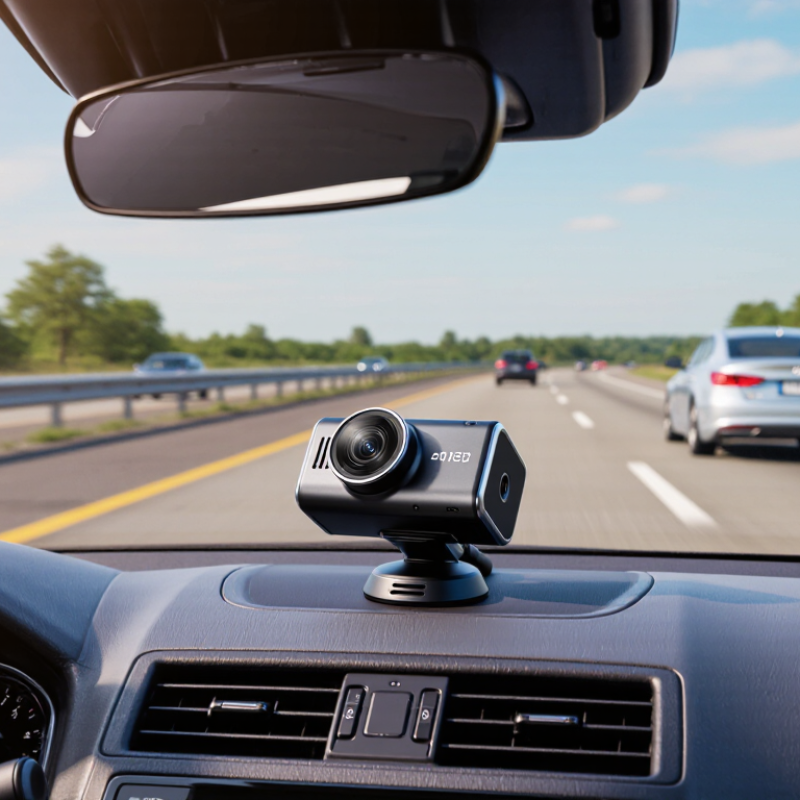
How to Choose the Best Single Channel Dashcam in 2026?

What a Single-Channel Dashcam Records and How It Works

A single-channel dashcam records video through one camera, usually aimed through the windshield at the road ahead. It sees one direction. Its lens focuses light onto an image sensor, which turns passing scenes into digital frames. The device generally saves footage to a memory card in short clips, often marked with the date and time. Settings differ, so check resolution, frame rate, and storage capacity rather than assuming every recording will look equally clear.

When the card fills, loop recording may replace older clips with new ones. A built-in impact sensor can flag a clip after a sudden jolt, helping prevent routine overwrite. Some cameras also use a small battery or capacitor to finish saving a file when power stops. The exact behavior depends on the model and settings. A quick test in a parked car can show whether the timestamp is correct and the view is level.

A single lens cannot show what happens behind or beside the vehicle, and glare, rain, darkness, or a dirty windshield can obscure details. Small things matter. Mount the camera where it has a clear view without blocking your sight, then review a sample clip on a larger screen. I would not treat one recording as a perfect account; check that important details, such as signs and nearby vehicles, remain readable in ordinary driving conditions.

How to Match Camera Coverage to Your Driving Needs

For a single-channel dashcam, match the lens to what happens in front of your car. A commuter on a crowded highway may value readable detail at a distance. A driver on narrow streets may need a wider view of crossings and parked cars. Wider coverage sounds safer, but it can make distant signs and plates appear smaller. That trade-off is easy to overlook.

NHTSA recorded 40,901 U.S. traffic deaths in 2023, following 42,514 in 2022. These figures come from its traffic-fatality reporting and describe national risk, not dashcam performance. Still, they are a reminder that serious events occur across varied road settings. Choose a camera with clear daytime footage, useful night exposure, and a stable mount that keeps the road horizon level. Check the angle. A hood filling the lower frame wastes coverage.

Think about your routine, too. Frequent night driving calls for careful review of low-light samples, not just advertised resolution. If you often park near busy roads, a forward-facing camera will not record side impacts or activity behind the vehicle. That limitation matters. I would rather have a well-aimed, dependable view than an impressive specification sheet; even then, no camera captures everything.

Which 2026 Features Matter for Video Quality and Reliability

A single-channel dashcam should capture readable detail, not merely advertise a large resolution number. NHTSA’s 2022 traffic-safety report recorded 42,514 U.S. road deaths. That figure does not prove cameras prevent crashes, but it shows why dependable incident footage matters. Check daytime clips for plate detail and nighttime footage for glare from headlights. HDR can help balance bright lamps and dark streets, though aggressive processing may smear moving details. Test real sample footage.

Reliability depends on more than image quality. The SD Association’s speed-class guidance specifies minimum sustained write speeds, unlike peak transfer figures. Choose a card rated for continuous recording, and check the camera’s supported capacity. Heat matters, too. A unit left behind a windshield faces direct sun; stable operation and clear temperature limits are worth checking. Loop recording should overwrite old clips, while an impact sensor should protect relevant footage without locking every minor bump.

Look for a secure mount, reliable power-loss handling, and a simple way to verify saved files. A higher frame rate can make fast motion clearer, but it may require more storage. One detail is easy to overlook: compressed video can look sharp on a small screen and fail when enlarged. I would inspect original files, not just product samples. That takes time, and even then, no camera captures every plate.

How to Compare Storage, Power, Connectivity, and Cost

How to Choose the Best Single Channel Dashcam in 2026?

Storage needs depend on resolution, clip length, and driving time. Choose a camera that supports a replaceable, endurance-rated microSD card, and check its maximum capacity. A 128 GB card may hold only several hours of high-resolution footage before older clips are overwritten. Protect important event recordings and test playback before relying on them. Small details matter.

For daily driving, a camera powered from the vehicle socket is simple, though its cable may cross the dashboard. Parking mode usually needs a hardwire kit or separate battery pack. Check for low-voltage protection to reduce vehicle-battery drain. Connectivity may mean local Wi-Fi for phone downloads, not live access or cloud backup. Check whether remote features require a data plan, and consider how often you would use them.

Compare the full cost: camera, memory card, installation, and ongoing service fees. A cheaper unit may cost more if its app is unreliable or replacement parts are hard to find. There is no perfect balance. If you rarely review footage, constant connectivity may add little value. For long commutes, larger storage and stable power may matter more.

How to Choose the Best Single-Channel Dashcam in 2026

Compare storage, power, connectivity, and cost. The chart estimates continuous recording time for common microSD card capacities at a fixed 15 Mbps video bitrate.

How to read this: At 15 Mbps, a 128 GB card holds about 19 hours of footage before loop recording overwrites older files. Actual retention varies with bitrate, audio, file-system overhead, and protected clips; check the camera’s supported card capacity.

  • Power: Normal recording uses the vehicle’s power outlet; parking mode generally needs a hardwire kit or another continuous power source. Use a low-voltage cutoff to help protect the vehicle battery.
  • Connectivity: Wi-Fi can make clip transfers more convenient. Cellular features may require a compatible accessory and an ongoing data plan.
  • Cost: Include the camera, a compatible high-endurance microSD card, and any hardwire kit or connectivity subscription in your budget.

How to Check Installation Requirements and Local Recording Rules

Before choosing a single-channel dashcam, check your vehicle handbook for approved windshield areas, sensor locations, and airbag paths. A small camera behind the rear-view mirror may keep it out of your sightline, but it must not block driver-assistance sensors. Plan the cable route carefully; never run it across a curtain-airbag deployment area. Check whether your car supplies power through USB or a 12-volt socket. Parking recording may need hardwiring and a low-voltage cutoff. This detail is easy to miss.

Local recording rules can differ on audio, notification, storage, and sharing footage. Check current guidance from the relevant transport or privacy authority wherever you drive or park. Do not assume that recording in a public place has no restrictions. NHTSA’s 2022 Traffic Safety Facts report estimated 3,308 deaths in distraction-affected crashes. Set up the camera while parked, and never adjust it while driving. A clear view matters more than a perfect angle.

Tips: Photograph sensors before installation, then check the camera’s view from the driver’s seat. Test day and night footage, confirm the timestamp, and review audio settings. Keep a short sample clip. If the cable presses against trim or an airbag cover, rethink the route. I would recheck it after the first drive, too.

How to Choose the Best Single Channel Dashcam in 2026? - How to Check Installation Requirements and Local Recording Rules

Decision area What to check Practical guidance Why it matters
Recording channel Confirm the camera records the forward road view only, without a separate rear camera input. A single-channel unit is a straightforward choice when front-facing incident evidence is the priority. It simplifies installation, but does not record events behind the vehicle.
Image quality and frame rate Compare resolution, frame rate, low-light performance, and sample footage taken in daylight and at night. 1080p, 1440p, and 4K are common recording formats. Higher resolution can capture more detail, but results also depend on focus, exposure, motion, and lighting. A resolution label alone cannot guarantee that a moving vehicle’s license plate will be readable.
Windshield placement Check the camera’s dimensions, mount position, cable route, and the rules that apply where the vehicle is driven. Position it without obstructing the driver’s view, airbags, sensors, or required inspection labels. Windshield-mounting rules differ by jurisdiction. A placement that is acceptable in one location may not comply with local vehicle or visibility rules elsewhere.
Power and wiring Identify whether the vehicle has a suitable 12 V accessory socket, USB power outlet, or fuse box connection; check the camera’s required input and supplied adapter. For hardwiring, use a compatible hardwire kit with the correct vehicle voltage and an adjustable low-voltage cutoff. Have a qualified installer handle unfamiliar fuse-box work. Incorrect wiring can cause power interruptions, drain the vehicle battery, or interfere with vehicle systems.
Parking-mode recording Check whether parking mode requires hardwiring, a separate power source, or a particular motion or impact trigger. Confirm how the camera enters and exits parking mode and whether its battery-protection settings suit the vehicle and expected parking time. Parking recording may not work from an accessory socket that switches off with the ignition.
Memory card and recording loop Check the supported card type and maximum capacity in the camera’s manual, plus whether loop recording and event-file protection are available. Use a card specified for continuous video recording, format it as directed by the manufacturer, and periodically verify that clips can be played back. Continuous recording repeatedly writes data; an incompatible, worn, or full card can result in missing footage.
Audio recording Find out whether the microphone can be disabled and check the consent and recording laws that apply to everyone who may be recorded. If audio is not needed, consider turning it off. Consent rules vary by jurisdiction and can depend on the circumstances of the conversation. Video and audio can be subject to different legal requirements.
Local recording and privacy rules Check local rules on recording public roads, capturing identifiable people or number plates, retaining footage, and sharing or publishing clips. For example, UK guidance treats recording beyond a home’s property boundary as potentially bringing data-protection obligations into scope. Requirements depend on the use and circumstances of recording. Recording, storing, and publishing footage are separate activities and may be governed by different rules.
Setup and evidence handling Set the date and time, verify the viewing angle, test playback, and learn how to export and protect an event clip. Keep an unedited original file when preserving footage and avoid sharing identifiable recordings publicly unless you have checked applicable privacy rules. A properly working camera is more useful when its files are accessible and handled responsibly.

Note: Installation and recording requirements vary by vehicle and jurisdiction. Check current local law and your vehicle and camera manuals before installation or recording.

FAQS

Should I choose a wide-angle lens for every driving situation?

Not necessarily. Wider coverage can show more crossings and parked cars, but distant signs and plates may look smaller.

What should I look for if I drive mostly on highways?

Prioritize clear daytime footage and readable detail at a distance. Keep the road horizon level, and avoid letting the hood fill the lower frame.

What matters most for frequent night driving?

Review actual low-light samples before choosing. Advertised resolution alone may not show how well details appear after dark.

How much storage do I need?

It depends on recording quality and driving time. A 128 GB card may hold only several hours of high-resolution footage before older clips are overwritten. Test playback.

Can a forward-facing camera record side impacts or activity behind my car?

No. A single-channel camera mainly records the road ahead, so it may miss events beside or behind the vehicle. That limitation is easy to forget.

What should I check before installing the camera?

Check the vehicle handbook for windshield restrictions, sensors, and airbag paths. Route the cable away from curtain airbags, and confirm whether the car uses USB or a 12-volt socket.

Does parking mode work without extra power equipment?

It may require a hardwire kit or separate battery pack. Look for low-voltage protection to reduce vehicle-battery drain.

What should I test after installation?

Check the view from the driver’s seat, then review day and night footage, the timestamp, and audio settings. Keep a short sample clip. I would recheck the cable after the first drive, too.

Do recording rules vary by location?

Yes. Rules may differ for audio, notification, storage, and sharing footage. Check current local guidance before recording or sharing.

Conclusion

Choosing the best Single Channel Dashcam in 2026 starts with understanding what it records: a forward-facing view of the road, saved as video that can help document journeys and unexpected events. Consider your usual driving conditions and decide how much coverage you need, including the camera’s field of view, performance in low light, and ability to capture clear details. Features such as reliable recording, useful video resolution, and a dependable sensor can make footage more practical in changing conditions.

Compare storage capacity, loop recording, power options, connectivity, and total cost to find a setup that suits your routine. Also check whether the camera’s size and mounting method fit your vehicle, and whether installation requires any adjustments to the power supply or cable routing. Before recording, review applicable local requirements and privacy considerations. Balancing coverage, image quality, reliability, ease of installation, and ongoing costs can help you choose a camera that meets your needs without paying for features you are unlikely to use.


Evelyn

Evelyn

Evelyn is a dedicated marketing professional with a deep understanding of the company’s products, customers, and industry landscape. With a strong combination of strategic insight, clear communication, and practical product knowledge, Evelyn creates valuable content that helps readers make informed......