A Dual Channel Dashcam records the road ahead and the scene behind, giving drivers a fuller account of a journey. In daily use, small details matter: rear-window tint, night glare, cable routing, and whether the rear camera stays clear in rain. A high resolution on a product sheet does not guarantee useful footage. Sensor quality, image processing, mounting stability, and reliable storage all shape the result.
Human-factors researcher John D. Lee’s work offers a useful reminder: technology should support driving, not compete for attention. Put simply: “A camera should clarify the road, not distract the driver.” This is an editorially phrased principle, not a verbatim quotation. It is a practical lens for comparing manufacturers, since alerts, screens, and controls should be easy to understand while driving.
This guide to China’s top 10 Dual Channel Dashcam manufacturers examines product range, core imaging features, rear-camera design, connectivity, and customer support. It also considers how clearly companies describe specifications and warranty terms. These details help buyers compare options without relying on slogans alone. No single manufacturer suits every vehicle or budget. Some models may perform well in daylight but show weaker detail at night. And published specifications cannot replace independent testing. The comparison aims to make those trade-offs visible, while leaving room for a less convenient truth: the “best” camera is only useful when installed well and used consistently.
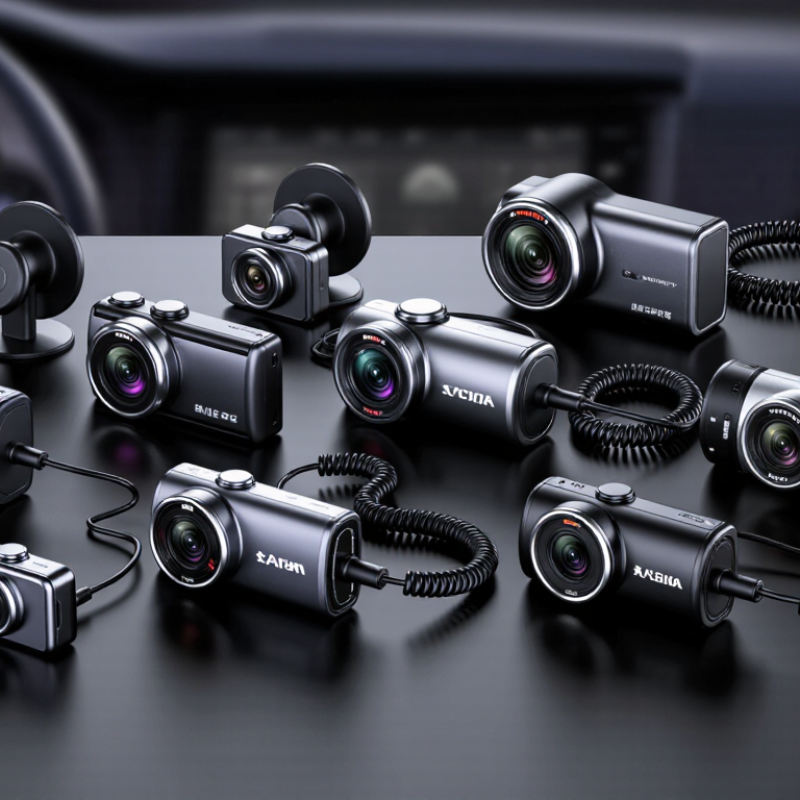
A dual-channel dashcam records two video streams at once. Usually, one camera faces the road while another covers the rear window or cabin. “Dual-channel” does not always mean the same camera placement. That label can mislead. Check the camera positions before comparing specifications.
Useful systems synchronize both recordings with matching timestamps, so events can be reviewed across views. Look for clear resolution on each channel, not just the front camera. At night, glare, dirty glass, and fast motion can obscure license plates. Details matter. A rear camera also needs a practical cable route, while parking recording may require a suitable power setup. These features improve usefulness, but cannot guarantee every incident will be captured clearly.
Grand View Research estimated the global dash camera market at USD 4.03 billion in 2023 and projected 7.9% annual growth from 2024 to 2030. This market estimate indicates rising demand, not equal performance across devices. When evaluating a dual-channel model, compare sample footage from both cameras, especially in low light. I would also check how storage is divided between channels; manufacturers’ headline recording times can be easy to misread.
China’s dual-channel dashcam industry has grown alongside its wider vehicle-electronics supply chain. Early models often focused on basic front-facing recording. Demand for front-and-rear coverage encouraged manufacturers to refine camera modules, compact wiring, and heat-resistant housings. The change is visible in everyday details: smaller units behind the windshield, clearer rear-camera views, and simpler installation kits.
Product development now combines imaging, storage, and software design. Better sensors and image processing can help preserve useful detail in changing light, though results still vary by lens placement and weather. Many manufacturers have also improved production consistency through component testing and quality checks. Yet specifications do not tell the whole story. Rear-camera installation can be awkward, and advertised resolution may not reflect real nighttime clarity. That gap deserves more honest testing.
Tips: Check sample footage from both cameras, especially at night. Confirm that the memory card supports continuous recording. Leave room for cable routing, and test the rear view before fixing the camera permanently. A tidy setup matters.
A leading Chinese dual-channel dashcam manufacturer should show more than a polished product page. Check how the front and rear cameras perform together, not just their separate resolution figures. Request sample footage from bright daylight, dim parking areas, and a tunnel exit. Look for readable plates, balanced exposure, and stable video without dropped frames. Small details matter.
Engineering and quality control are equally important. Ask how each unit is tested for heat, vibration, and extended recording. A capable supplier should explain its inspection steps and provide consistent answers about components, firmware updates, and production changes. Review sample units from more than one production batch if possible. One good sample proves little. It is also worth checking whether the manufacturer can explain its test results clearly, rather than relying on broad claims.
Service is another useful measure. Confirm response times, warranty handling, spare-part availability, and support for installation questions. A supplier that documents faults and follows up can be easier to work with over time. Price still matters, of course, but the lowest quote may hide trade-offs in sensors, storage reliability, or support. No checklist removes every risk; some differences only appear after weeks of real use. A careful evaluation should weigh evidence, not promises.
Suggested evaluation weights for comparing manufacturers—not company-specific scores or a market ranking.
A robust comparison should consider front-and-rear recording performance, product reliability, and safety features alongside app connectivity, compliance, production quality, and after-sales support. The percentages are an illustrative assessment framework and should be adapted to the buyer’s requirements.
The ten profiles examine Chinese manufacturers through their dual-channel product design, production capabilities, and engineering support. A practical comparison looks beyond resolution claims. It checks whether front and rear cameras retain usable detail at night, and whether long connecting cables fit common vehicle layouts. Small details matter.
Some manufacturers emphasize compact housings and discreet installation. Others focus on flexible production runs, customized wiring, or integrated GPS and parking features. Their profiles also consider heat management, storage reliability, firmware updates, and how clearly technical specifications are documented. These details can affect daily use more than a headline feature. Testing takes time.
A careful buyer should request sample footage, confirm supported memory-card capacities, and ask how quality checks are performed. Factory scale alone does not prove consistent performance. Nor does a polished product sheet. Public information may leave gaps about component sourcing or long-term failure rates; that uncertainty should be stated, not filled with guesses. Comparing the ten manufacturers on the same criteria makes their strengths and limitations easier to assess.
| Profile | Typical Product Focus | Front / Rear Recording Options | Connectivity and Positioning | Power and Parking Features | Common Target Use |
|---|---|---|---|---|---|
| Profile 01 | Value-focused two-camera systems | Front Full HD (1080p); rear HD or Full HD, depending on model | App connection may use 2.4 GHz Wi-Fi; GPS is optional | Loop recording and impact-triggered event files; parking monitoring generally requires a hardwire kit | Everyday private-car recording |
| Profile 02 | Higher-resolution front-camera systems | Front 2K or higher; rear commonly Full HD | Wi-Fi app transfer may be included; GPS can be built in or supplied as an option | Loop recording; parking mode depends on supported power accessories and vehicle wiring | Drivers seeking more front-scene detail |
| Profile 03 | Compact, discreet camera designs | Front Full HD or 2K; rear Full HD on dual-camera versions | Wi-Fi availability varies; GPS is usually model-dependent | Typically supports loop recording and event locking; low-voltage protection may be provided by a compatible hardwire kit | Passenger cars with limited windshield space |
| Profile 04 | Screen-equipped driver-facing units | Front Full HD to 2K; rear Full HD or HD, depending on the system | Some models provide Wi-Fi; GPS and route logging are optional features | Standard vehicle-power operation; extended parking monitoring may need a hardwire connection | Drivers who prefer on-device playback and settings |
| Profile 05 | Rear-view-mirror-style dual-camera systems | Front Full HD or 2K; rear camera commonly Full HD, with display behavior varying by model | May include app connectivity; GPS is not universal | Parking recording is configuration-dependent and may require a hardwire kit | Vehicles where a mirror-format display is preferred |
| Profile 06 | Low-light-oriented camera configurations | Front 2K or Full HD; rear Full HD or HD; sensor and lens choice affect night footage | Wi-Fi and GPS vary across product versions | Event recording and loop recording are common; parking operation depends on power supply and settings | Mixed day-and-night driving |
| Profile 07 | Connected models with smartphone access | Front Full HD or 2K; rear Full HD is a common pairing | Wi-Fi is used for local app access on supported models; GPS may record location and speed data where enabled | Some models support buffered or impact-triggered parking recording with compatible hardwiring | Users who want to review clips on a mobile device |
| Profile 08 | Fleet and commercial-vehicle configurations | Front and rear resolutions vary; certain systems can add cabin or additional camera inputs | GPS tracking or cellular connectivity may be available on selected systems, not all consumer models | Power and parking arrangements are selected for the vehicle and installation; professional wiring may be appropriate | Small fleets and commercial vehicles |
| Profile 09 | Export-oriented OEM/ODM product programs | Common configurations include Full HD front/rear and higher-resolution front options | Connectivity, language, and GPS options can be specified by product version and market requirements | Power accessories and parking functions vary by the agreed product configuration | Private-label and regional distribution programs |
| Profile 10 | Feature-rich multi-option product ranges | Options may span Full HD to higher-resolution front cameras paired with a Full HD or HD rear camera | Wi-Fi, GPS, and app support are model-specific; supported bands and functions should be checked before purchase | May offer event locking and parking modes; battery or supercapacitor designs vary by model | Buyers comparing feature sets across price tiers |
| Comparison note: Resolution, Wi-Fi bands, GPS, parking-mode behavior, storage support, and power design differ by model. Confirm the individual product specification and installation requirements before purchase; parking monitoring commonly requires a compatible hardwire kit. | |||||
Comparing Chinese dual-channel dashcam manufacturers means looking beyond headline resolution. Grand View Research estimated the global dashboard-camera market at USD 3.38 billion in 2023. Its report forecast annual growth of 11.4% through 2030. That expansion makes feature claims easy to find, but harder to compare fairly.
Check whether front and rear cameras record clearly at night, not just in bright showroom light. HDR can help balance headlights and shadowed road edges. A wide viewing angle is useful, but excessive distortion can make distant details harder to judge. Compare both channels’ resolution and frame rates together. Some models advertise strong front-camera performance while giving the rear camera less capacity. Small print matters.
A useful comparison also includes heat handling, GPS accuracy, storage limits, and parking-mode power use. Ask how the device behaves after hours in a parked car, and whether its app transfers clips reliably. These details are easy to overlook. In real use, a missed recording matters more than a polished menu. I would not treat a longer feature list as proof of better engineering; independent, repeatable testing is still needed.
It has shifted from basic front recording toward front-and-rear coverage, smaller units, compact wiring, and more heat-resistant housings.
Review both cameras during daylight and at night. Headlights, dark road edges, and rain can reveal weak detail. Showroom clips aren’t enough.
No. Lens placement, weather, image processing, and sensor quality all affect results. Specs can mislead.
Some systems give the front camera stronger resolution or frame rates. Check both channels together. The rear view may be weaker.
Leave room for cable routing and test the view before fixing the camera. A tidy setup helps, but installation can still be awkward.
Not always. HDR can balance bright headlights against shadowed road edges, but it cannot guarantee readable details in every scene.
Check heat handling, GPS accuracy, storage limits, app transfers, and parking-mode power use. Ask how recording behaves after hours in a parked car.
Confirm the card supports continuous recording and fits the device’s storage limits. Small print matters. Test a saved clip rather than assuming it worked.
One industry estimate valued the global dashboard-camera market at USD 3.38 billion in 2023 and forecast 11.4% annual growth through 2030. It doesn’t prove any device performs well.
This article explores the Dual Channel Dashcam market in China, beginning with an explanation of how these systems use front- and rear-facing cameras to record a vehicle’s surroundings. It describes the industry’s development, including advances in image quality, storage, connectivity, and product design, as well as the growing range of options available to drivers and fleet operators.
The article also outlines the criteria used to identify leading manufacturers, such as research and development capability, manufacturing consistency, product reliability, technical support, and adaptability to customer needs. Profiles of ten Chinese manufacturers provide an overview of their capabilities, while a comparative section considers features such as recording performance, installation flexibility, connectivity, and support. Together, these sections offer a practical framework for understanding the market and evaluating the strengths that distinguish different manufacturers.