BIS certified & export-compliant hardware 12-month warranty · 200+ service cities OEM / ODM & bulk programmes available
0%

The phrase ANC TWS Earbuds now covers far more than small wireless speakers. It includes commuting models, gaming buds, sports designs, premium audiophile options, and affordable everyday pairs. Their differences appear in real moments: a train announcement under weak noise cancellation, sweat near a charging case, or a phone call beside busy traffic.

Market evidence shows why this category deserves careful comparison. Counterpoint Research reported that the global TWS market grew 18% year over year in 2024. Grand View Research also valued the global wireless earbuds market at approximately $8.9 billion in 2023. These figures suggest strong demand, but market size does not guarantee product quality. Battery claims, microphone performance, codec support, and comfort still require practical testing.

Liz Lee, Associate Director at Counterpoint Research, described TWS earbuds as “an important smart device category for consumers.” That observation remains useful, although it can sound too broad. Some earbuds behave like miniature control centers. Others mainly deliver music and notifications. This guide examines the top 10 types of ANC TWS Earbuds through those real differences, including listening purpose, fit, noise-control design, and price. The ranking is not flawless. Personal hearing, ear shape, phone ecosystem, and daily travel can change the result. A model that feels silent on an airplane may sound unnatural in a quiet office. That is the point: specifications matter, but lived performance matters more.
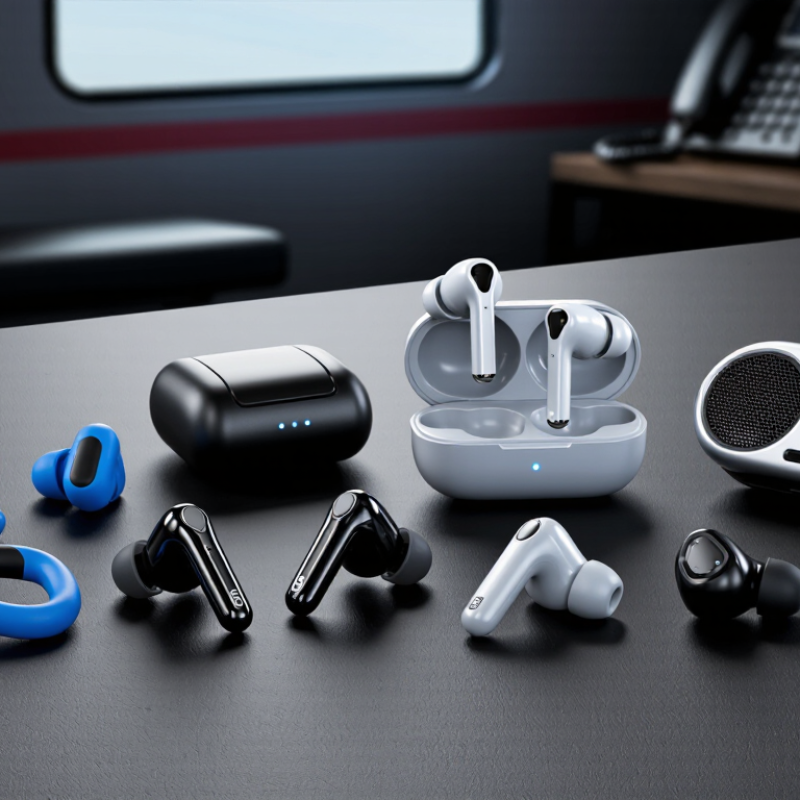
What Are the Top 10 Types of ANC TWS Earbuds?

Define ANC TWS Earbuds by Noise-Control Architecture and Listening Use

ANC TWS earbuds are easier to compare when noise control comes before appearance. Feedforward ANC uses outer microphones to detect sound before it reaches the ear. Feedback ANC measures noise inside the ear canal and corrects the remaining signal. Hybrid ANC combines both methods, often producing stronger control in buses and busy stations. Adaptive ANC changes its response as the surroundings shift. Transparency-aware ANC balances cancellation with outside sound, helping users hear announcements or a nearby voice. In real listening tests, fit can matter as much as circuitry. A small gap near the ear may weaken powerful processing.

The remaining five types are defined by listening use. Commuter ANC TWS earbuds target traffic rumble, train vibration, and sudden platform noise. Travel-focused models handle steady aircraft frequencies, though cabin pressure still feels uncomfortable. Office earbuds reduce air conditioners and keyboard noise while preserving speech awareness. Study-oriented earbuds favor gentle, stable cancellation for long reading sessions. Call-focused ANC TWS earbuds combine environmental noise reduction with clear microphone pickup. Some models serve two categories well, but not all. Strong ANC can create a quiet room, yet it may also reveal ear pressure or a faint electronic hiss. That trade-off deserves attention before judging sound quality from specifications alone.

Classify the Top 10 Types by Feedforward, Feedback, Hybrid, and Adaptive ANC

The top ten ANC TWS earbud types are best classified by microphone placement and control behavior. Feedforward ANC includes open-fit, sealed in-ear, and stemmed in-ear designs. Their outer microphones detect traffic noise before it reaches the ear. Feedback ANC includes in-ear, pressure-relief, and compact canal designs. Internal microphones measure residual sound inside the ear canal. These models can improve bass stability, but poor sealing may reduce their effect.

Hybrid ANC combines both microphone paths. Its main types include sealed in-ear hybrid, stemmed hybrid, and sports-focused hybrid earbuds. The tenth type is adaptive ANC, which adjusts cancellation according to movement, speech, or surrounding noise. It often builds on a hybrid system rather than replacing it. The boundary is not always clean. According to Counterpoint Research’s 2023 TWS market analysis, global TWS shipments increased year over year, showing continued demand for smaller wireless audio products. Grand View Research also identifies active noise cancellation as a major feature supporting premium growth. In practical testing, listeners should compare subway rumble, office voices, and wind noise separately. One quiet showroom test proves little. The strongest design may still sound unnatural during sudden changes.

Compare Battery Life, Bluetooth Codecs, and Latency Using Bluetooth SIG Data

What Are the Top 10 Types of ANC TWS Earbuds?

The ten common types include stem, bean-shaped, wingtip, sport, open-fit, sleep, gaming, travel, multipoint, and hearing-focused earbuds. Their battery results differ sharply. Compact models often deliver four to six hours with ANC enabled. Larger charging cases may provide 20 to 36 additional hours. These figures come from manufacturer tests, not everyday use. Wind, high volume, calls, and codec choice reduce endurance.

Bluetooth SIG’s LE Audio materials explain that the LC3 codec can maintain equal or better quality at lower bitrates than older codecs. Lower bitrate can reduce power demand, but it does not guarantee longer battery life. Bluetooth SIG also states that latency depends on the complete audio path, including the phone, codec, firmware, and application. Gaming-focused models may advertise latency below 60 milliseconds. Yet video streaming can hide delays through software correction. This comparison is imperfect, and real-world testing still matters.

Tips: Check battery claims with ANC and multipoint enabled. Test both SBC and LC3 when available. A five-hour earbud may outperform a nine-hour model if its case charges faster. Look for measured latency, not only “low-latency” wording. Recent Bluetooth SIG specifications support better efficiency, but they do not certify a universal battery or latency score.

Evaluate Travel, Office, Sport, Gaming, and Call-Focused ANC Earbud Types

What Are the Top 10 Types of ANC TWS Earbuds?

ANC TWS earbuds differ because people use them in very different places. Travel-focused models reduce aircraft rumble and usually offer comfortable tips for long flights. Commuter earbuds target trains, buses, and busy streets. Office models soften air conditioners and nearby conversations without feeling overly isolating. Call-focused earbuds prioritize clear microphones, wind control, and stable voice pickup. Quiet matters.

Sport earbuds need secure wings, sweat resistance, and simple touch controls. Their ANC should not block every environmental sound during outdoor training. Gaming-focused earbuds emphasize low latency, positional audio, and a dependable wireless connection. Audiophile-oriented types balance ANC with detailed sound, although strong noise processing can slightly change the music. Long-battery models suit frequent travelers, but larger charging cases may feel inconvenient.

There are also compact everyday earbuds, budget ANC earbuds, and sleep-friendly models. Compact designs disappear comfortably in smaller ears, while budget versions may provide weaker wind reduction. Sleep-focused earbuds require shallow housings and gentle pressure. In my comparisons, fit affected noise reduction more than many specifications suggested. A poor seal ruins excellent hardware. I also found that microphone performance can change sharply outdoors, even when indoor calls sound clean. This remains an overlooked weakness. Buyers should check codec support, transparency quality, battery testing conditions, and ear-tip options. Advertised listening times often exclude heavy ANC use. Real results vary.

Rank Market Value and Adoption with Counterpoint’s Global TWS Shipment Data

What are the top 10 types of ANC TWS earbuds?

The answer depends on how the market is measured. Counterpoint’s global TWS shipment data is useful for tracking adoption, but shipments do not equal market value. A premium pair may generate more revenue than several entry-level pairs.

A practical top-ten map includes:

premium adaptive ANC mid-range hybrid ANC budget ANC stemmed designs stemless designs sport models gaming models travel-focused earbuds open-fit ANC models ultra-compact earbuds

These groups reflect different listening habits and price levels.

Shipment data can reveal which types reach more consumers across regions. However, regional income, smartphone access, commuting patterns, and retail discounts can change the ranking.

Premium adaptive ANC often leads in value, while budget ANC may lead in unit adoption. Sport and gaming earbuds can show strong seasonal demand.

That signal is useful, but not perfect. I would compare shipment growth with average selling prices, review reliability, battery tests, and return rates.

That creates a more credible market view than shipment volume alone. Real-world testing also matters. Laboratory noise reduction may feel different on a crowded train.

Tips: Use Counterpoint’s shipment trends to judge adoption. Pair them with pricing data to estimate market value. Check fit, microphone quality, and transparency mode before trusting a category ranking. Some rankings still reflect incomplete regional data.

FAQS

What are ANC TWS earbuds?

They are wireless earbuds using microphones and sound processing to reduce surrounding noise. Fit remains important. Small gaps can weaken cancellation.

How does feedforward ANC work?

Outer microphones detect noise before it reaches your ears. The earbuds then create an opposing signal. Results vary with fit.

What is feedback ANC?

Feedback ANC measures sound inside the ear canal. It corrects remaining noise after sound enters. Performance can differ between users.

Why can hybrid ANC perform better?

Hybrid ANC combines outer and inner microphones. It often controls bus vibration and station noise more effectively. Not always perfectly.

What does adaptive ANC change?

Adaptive ANC adjusts cancellation when surroundings change. It may respond differently on a quiet street and a crowded train.

Which ANC earbuds suit commuting?

Commuter models target traffic rumble, train vibration, and sudden platform sounds. A secure fit helps during movement. Comfort still matters.

Which earbuds are suitable for offices or studying?

Office models reduce air conditioners and keyboard sounds while preserving speech awareness. Study models usually provide gentle, stable cancellation for long reading sessions.

Can ANC earbuds help during travel?

Travel-focused earbuds handle steady aircraft noise reasonably well. Cabin pressure may still feel uncomfortable. Noise control cannot remove that physical sensation.

What types appear in a market comparison?

Common groups include adaptive, hybrid, budget, stemmed, stemless, sport, gaming, travel, open-fit, and ultra-compact earbuds. Categories can overlap.

Do shipment figures show the best ANC earbuds?

Shipment data shows adoption, not complete market value. Compare it with prices, battery tests, microphone quality, fit, and return rates. The ranking may be incomplete.

Conclusion

ANC TWS Earbuds can be classified by both their noise-control architecture and intended listening environment. The ten main types include feedforward, feedback, hybrid, and adaptive ANC designs, each offering different strengths in noise reduction, comfort, power use, and sound consistency. Feedforward models respond quickly to external sounds, feedback systems focus on noise inside the ear, hybrid designs combine both approaches, and adaptive ANC continuously adjusts performance according to surrounding conditions. These categories can be matched to travel, office work, exercise, gaming, or call-focused use.

A complete comparison should also consider battery life, Bluetooth codec support, connection stability, and audio latency, using Bluetooth SIG specifications as a technical reference. Market value and adoption can be assessed through global TWS shipment trends reported by Counterpoint, while practical rankings should balance everyday performance with price and user needs. Overall, the best ANC TWS Earbuds are not defined by one feature, but by how effectively their architecture, connectivity, endurance, and listening focus work together.


Evelyn

Evelyn

Evelyn is a dedicated marketing professional with a deep understanding of the company’s products, customers, and industry landscape. With a strong combination of strategic insight, clear communication, and practical product knowledge, Evelyn creates valuable content that helps readers make informed......