Qualified B2B Personal Audio Solutions Featuring OEM Private Mold Tooling, Low-Latency Bluetooth 5.4, Advanced DSP Tuning & Ingress Protection
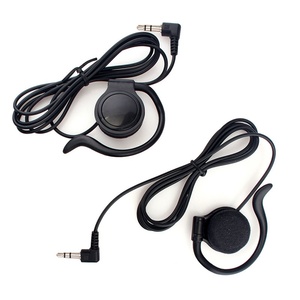
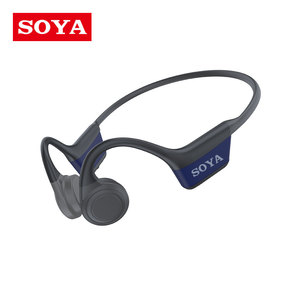
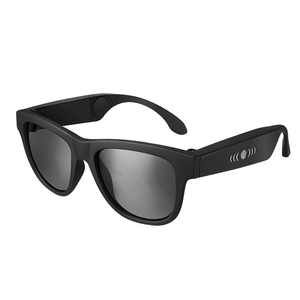
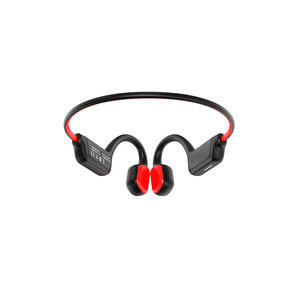
In the highly competitive consumer wireless audio ecosystem, compliance with the European Economic Area (EEA) regulatory frameworks is not simply a legal requirement—it is the foundational benchmark of technical reliability and brand safety. As a leading specialized CE certified Bluetooth headset manufacturer and OEM/ODM factory, our manufacturing infrastructure operates at the intersection of acoustic precision, micro-electronics durability, and full regulatory traceability.
European market entry requires strict adherence to the Radio Equipment Directive (RED) 2014/53/EU, which enforces stringent standards across four essential vectors: Radio Spectrum Efficiency (EN 300 328), Electromagnetic Compatibility (EN 301 489-1/-17), Product Safety & Electrical Protection (EN 62368-1), and Human Exposure & Specific Absorption Rate (SAR - EN 62479 / EN 50663). Unlike assembly-only suppliers that rely on generic self-declarations, our factory maintains full laboratory test technical files (TCF) audited by accredited EU Notified Bodies, guaranteeing seamless customs clearance and long-term market compliance for our enterprise partners.
Custom dynamic driver housing design, phase-inverted sound wave algorithms for noise leakage cancellation in Open-Wear Stereo (OWS), and calibrated target frequency curve tuning.
Accelerated thermal soak testing from -20°C to +65°C cabin soak, salt-mist corrosion resistance for sweat exposure, and true IPX8 hydrostatic chamber validation.
Deep-level Bluetooth stack personalization, custom EQ profiles, low-latency gaming mode integration (<30ms), and localized voice prompt flashing for global OEMs.
As global retail brands, telecommunication operators, and enterprise distributors prepare their multi-year procurement roadmaps, the wireless audio segment is undergoing structural technical shifts. Sourcing executives must evaluate Bluetooth headset suppliers not only on historical unit costs, but on platform scalability, chipset endurance, and compliance adaptability.
The transition from legacy Bluetooth Classic Audio (SBC/AAC) to Bluetooth Low Energy (LE) Audio utilizing the Low Complexity Communication Codec (LC3) represents the biggest generational shift in personal audio in over a decade. LC3 delivers significantly higher audio fidelity at half the bit rate, drastically cutting power consumption and expanding battery cycle longevity. Enterprise buyers are increasingly prioritizing manufacturers capable of implementing Bluetooth 5.3/5.4 SoC solutions (such as Qualcomm QCC series, BES, and Realtek platforms) that support Auracast™ broadcast audio—enabling shared public venue broadcasting and enhanced multipoint connectivity.
Consumer preferences are rapidly migrating away from occlusive in-ear silicon tips toward non-invasive Open-Wear Stereo (OWS) and bone conduction form factors. Driven by situational awareness needs during urban commuting, outdoor athletics, and extended enterprise remote work, open-ear audio minimizes ear-canal fatigue and bacterial accumulation. Sourcing strategies now require factories to possess advanced directional acoustic beamforming technology to restrict sound leakage to less than 12dB at a 30cm distance, preserving user privacy without sacrificing acoustic dynamics.
European buyers are facing heightened pressure under the EU Eco-Design Directive and mandatory ESG transparency. Procurement teams now demand Bluetooth headsets constructed with post-consumer recycled (PCR) ABS/PC plastics, halogen-free PCB assemblies, and bio-compatible liquid silicone ear hooks. Furthermore, battery design must facilitate safe dismantling and compliance with the updated EU Battery Regulation (2023/1542), necessitating factories to provide complete raw material supply chain mapping and REACH SVHC compliance disclosures.
To assist brand managers and procurement directors in evaluating hardware platforms, the matrix below outlines technical benchmarks across key personal audio product categories manufactured in our facility.
| Architecture Category | Acoustic Transducer Type | Primary CE Testing Standard | Battery / Playtime Range | Ingress Rating | Target B2B Application |
|---|---|---|---|---|---|
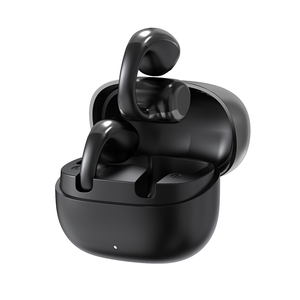
| OWS Open-Ear Clip | 16.2mm Composite Dynamic Driver | EN 300 328 / EN 62368-1 / SAR | 8h Single / 36h with Case | IPX4 - IPX5 | Urban Commute, Active Lifestyle, Office |
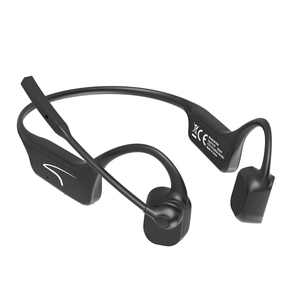
| Bone Conduction Sport | High-Frequency Vibration Transducer | RED 2014/53/EU / RoHS 2.0 | 7h - 10h Continuous | IPX6 - IPX8 | Marathon Running, Cycling, Industrial Safety |
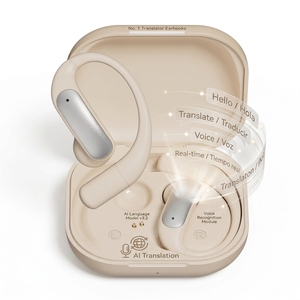
| AI Translation Headset | 10mm Titanium-Plated Driver + Dual Mic | EN 301 489-1/-17 / EMC | 6h Single / 24h with Case | IPX4 | Cross-Border Business, Travel, Hospitality |
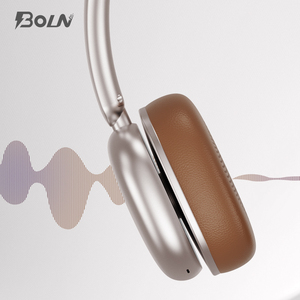
| Hybrid ANC Over-Ear | 40mm Mylar Neodymium Driver | EN 62368-1 / Acoustic Safety | 45h ANC On / 70h ANC Off | IPX4 | Long-Haul Travel, Professional Studio, Gaming |
| Smart Audio Sunglasses | Micro-Directional Speaker Array | CE RED / FDA / ISO12312-1 (Lens) | 5h - 7h Active Playback | IPX4 Sweatproof | Outdoor Recreation, Golf, Tactical Driving |
The manufacturing of open-ear and bone-conduction Bluetooth headsets presents distinct electro-acoustic challenges compared to traditional sealed in-ear designs. Engineering a CE-compliant headset requires solving the core "trilemma" of sound leakage control, structural ergonomics, and battery power management.
In OWS headsets, sound waves radiating from the back of the speaker enclosure can leak into surrounding spaces, causing privacy issues for users. Our factory solves this by integrating dual-ported acoustic chambers combined with inverse-phase sound deflection channels. When sound waves travel outward, the secondary port releases an inverted sound wave that cancels out airborne acoustic energy beyond the primary listening zone. This achieves rich bass resonance inside the ear tragus while keeping external sound radiation virtually undetectable in quiet office settings.
Compact Bluetooth headsets operate in demanding environmental thermal conditions—ranging from direct sunlight exposure during outdoor sports to high-humidity environments. To achieve CE safety certification under EN 62368-1, every lithium-polymer battery cell utilized in our production lines is fitted with dual-MOSFET protective circuit modules (PCM) that guard against over-charging, over-discharging, thermal runaway, and short-circuit conditions. Furthermore, our charging cases incorporate NTC thermistors that dynamically throttle charging currents if internal case temperatures exceed safe operational thresholds (45°C).
Detailed Answers regarding CE Directives, Factory Audits, MOQ Structures, Custom Mold Tooling, and Global Warranty Support
Choosing the right OEM/ODM manufacturing partner dictates your brand’s market velocity, customer satisfaction ratings, and compliance safety. With over a decade of dedicated research, electro-acoustic innovation, and manufacturing discipline, our facility continues to power leading consumer electronics brands across Europe, North America, and global retail channels.
From rapid prototyping and acoustic tuning to rigorous CE testing, mass injection molding, automated assembly, and global freight support, our enterprise infrastructure is built to scale your wireless audio portfolio cleanly and profitability.