Engineered for low latency, crystalline voice pickup, and rigorous European CE safety and electro-magnetic compatibility (EMC) standards.
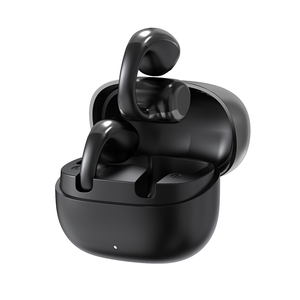
Ergonomic ear-clip design engineered with high-sensitivity directional micro-transducers for field comms and content creators.
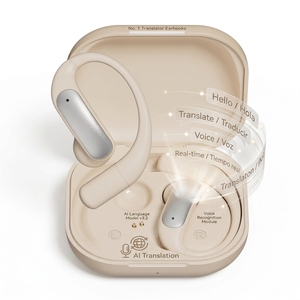
Integrated neural DSP noise suppression matrix designed for real-time translation and business communication environments.
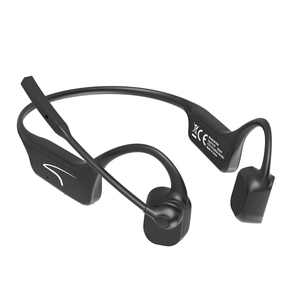
Titanium alloy frame featuring bone-conduction transducers coupled with a wind-noise shielded MEMS microphone array.
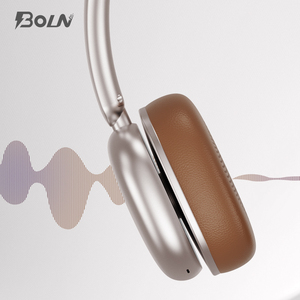
Pro-grade audio capture platform featuring hybrid ANC/ENC active noise cancellation for high-density RF recording scenarios.
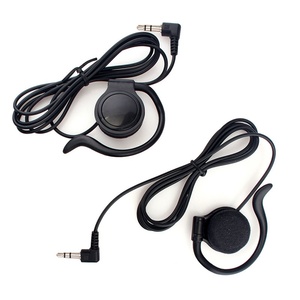
Heavy-duty reinforced wiring with right-angle audio terminal tailored for commercial two-way radios and broadcast monitoring.
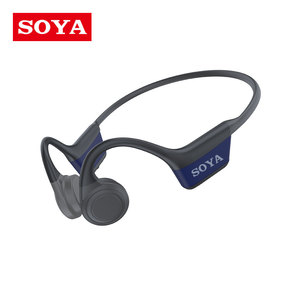
Custom OEM platform featuring ultra-fast magnetic charging points, digital LED battery telemetry, and long-duty cycle cells.
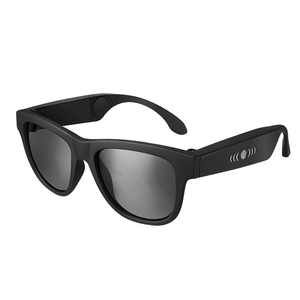
Combines UV400 protective optics with dual beamforming microphones for discreet hands-free voice pickup in outdoor environments.
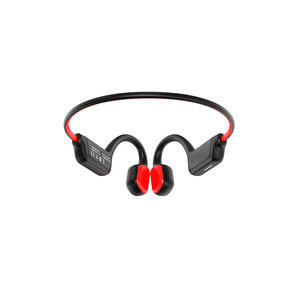
IP68 fully submersible audio platform featuring local flash storage and high-gain internal microphone for rugged field recording.
In the rapidly evolving landscape of professional audio recording, content creation, enterprise video conferencing, and broadcasting, the demand for high-fidelity, ultra-low-latency CE Certified Lavalier Microphones has reached unprecedented heights. B2B procurement specialists, audio brand distributors, and OEM buyers face an increasingly complex regulatory landscape, requiring hardware suppliers to deliver not merely superior acoustic fidelity, but fully certified electro-magnetic compatibility (EMC), radio spectrum efficiency, and hazardous material safety compliance under the European Union’s Radio Equipment Directive (RED) 2014/53/EU.
As a leading tier-1 manufacturer specializing in wireless microphone systems and micro-acoustic transducers, our engineering house integrates advanced digital signal processing (DSP), high-gain electret condenser capsules, micro-electromechanical systems (MEMS), and robust 2.4GHz / 5.8GHz / UHF radio-frequency architectures. This paper outlines the essential technical benchmarks, manufacturing validation protocols, regulatory pathways, and market development trends governing enterprise audio procurement.
A authentic CE mark on a wireless lavalier microphone requires strict compliance with EN 300 328 (for 2.4GHz wideband data transmission), EN 301 489-1/-17 (EMC immunity and emission limits), and EN 62368-1 (electrical safety standards for low-voltage audio hardware). Buying non-compliant hardware risks customs seizures, severe regulatory fines, and RF interference penalties in the EU market.
The core performance of any lavalier microphone rests upon its acoustic transducer capsule. OEM manufacturing standards dictate a choice between omnidirectional electret condenser capsules (ECC) and surface-mounted MEMS microphone arrays. Omnidirectional capsules remain the gold standard for broadcast lavaliers due to their flat frequency response curve (typically 20Hz to 20kHz) and consistent off-axis sensitivity, ensuring natural vocal pickup regardless of chest placement orientation.
To eliminate ambient environmental noise, traffic rumble, and acoustic reflections in unconditioned rooms, modern CE certified wireless lavalier systems incorporate multi-stage adaptive DSP algorithms:
Dual-microphone arrays calculate the time-difference-of-arrival (TDOA) of sound waves, creating a narrow pickup cone focused strictly on the speaker's vocal tract while attenuating side-axis noise.
On-board neural network chips trained on millions of noise samples isolate voice frequencies from background hums, HVAC noise, wind noise, and crowds in real time without voice phase distortion.
Uncompressed digital audio modulation over GFSK radio frequencies provides studio-grade sound capture with dynamic range exceeding 105dB and Total Harmonic Distortion (THD) below 0.1%.
When selecting an OEM/ODM manufacturing partner, analyzing specification parameters is crucial to ensure long-term product reliability and brand reputation. Below is a comparative technical matrix:
| Technical Parameter | Consumer Grade Microphones | Enterprise CE-Certified Grade | Next-Gen AI Lavalier Platforms |
|---|---|---|---|
| RF Transmission Frequency | 2.4GHz Fixed Channel (Prone to Wi-Fi overcrowding) | 2.4GHz Frequency Hopping (FHSS) / UHF Band | Hybrid 2.4G + 5.8GHz Dynamic Spectrum Switching |
| Transmission Latency | 25ms - 45ms (Noticeable audio lip-sync delay) | < 15ms (Broadcast Standard) | < 5ms Ultra-Low Latency Channel |
| Signal-to-Noise Ratio (SNR) | 65dB - 72dB | > 85dB (Studio Quiet Floor) | > 92dB Active AI Shielding |
| Compliance Certification | Self-declared or minimal CE Mark | Full CE RED, FCC Part 15, RoHS, REACH, BIS | Global Multi-Market Ready + WEEE Certified |
| Battery Thermal Soak Protocol | Standard 0°C to 40°C threshold | Accelerated thermal testing (-20°C to 65°C) | Industrial Grade Lithium-Polymer + NTC Protection |
| Local On-Board Backup | None | Optional 8GB / 16GB WAV Recording | 32GB 32-bit Float Internal Storage |
Combining over a decade of consumer audio engineering, direct factory quality control, and robust after-sales infrastructure across global markets.
Every platform leaving our assembly lines carries comprehensive technical construction files (TCF), CE RED test reports, FCC IDs, and RoHS environmental compliance paperwork for friction-free EU and North American customs clearance.
Before mass production sign-off, our microphones undergo 65°C thermal soak chamber testing, salt-mist corrosion exposure, acoustic dynamic range plotting in fully anechoic chambers, and drop/vibration stress profiling.
From private mold development, custom acoustic tuning, and bespoke retail packaging to firmware-level UI customization and USB-C ID pairing, our engineering team maps your brief directly to validated hardware platforms.
Shipping high-volume wireless audio, smart wearables, and camera-recording tech since 2015, operating with over 10 million active end-user devices deployed worldwide.
Supported by established service infrastructure in over 200 cities worldwide, guaranteeing spare-parts availability, quick-turnaround warranty claims, and long-term companion firmware updates.
Automated Surface Mount Technology (SMT) assembly combined with automated optical inspection (AOI) guarantees consistent RF power output, pristine frequency response, and zero cold-solder defects across million-unit production runs.
As corporate buyers, video production studios, and consumer brands plan their product roadmaps for 2025 and beyond, several key technological shifts are redefining the wireless lavalier microphone sector:
Following the European Union Directive 2022/2380 mandating common chargers, future lavalier receivers must feature modular plug-and-play magnetic magnetic snap connectors supporting USB-C, Lightning, and 3.5mm TRS/TRRS analog outputs simultaneously.
Eliminating clipping and distorted audio gain setups, 32-bit float internal memory logging captures the full dynamic range of audio—from whispers to explosion-level SPL—allowing audio technicians to normalize audio perfectly in post-production.
Transitioning from legacy SBC audio to the Low Complexity Communication Codec (LC3) enables half the bit-rate with higher audio quality, reducing power consumption by up to 40% and drastically shrinking microphone transmitter battery footprints.
Essential guidance for procurement managers, brand owners, and electronics distributors.
To qualify for a CE RED (Radio Equipment Directive 2014/53/EU) mark, a wireless lavalier microphone system must undergo rigorous testing in an accredited ISO 17025 laboratory. Tests include: ETSI EN 300 328 for RF output power and spectrum usage efficiency in the 2.4GHz ISM band; ETSI EN 301 489-1/-17 for Electro-Magnetic Compatibility (EMC) to ensure immunity against cellular/Wi-Fi interference; EN 62368-1 for electrical safety and lithium battery charging circuit protection; and EN 50663 for human exposure to RF electromagnetic fields.
Our standard MOQ for custom OEM manufacturing (including custom logo laser engraving, custom colorways, and retail box packaging) begins at 1,000 units per model. For deeper ODM projects involving custom private mold tooling, PCB redesign, or specialized DSP firmware integration, MOQ typically begins at 3,000 to 5,000 units depending on component specification complexity.
Our CE-certified wireless microphone transmitters utilize Adaptive Frequency Hopping Spread Spectrum (FHSS) technology within the 2.4GHz and 5.8GHz bands. The system scans 79 RF channels 1,600 times per second, dynamically dodging active Wi-Fi routers, Bluetooth signals, and local radio interference to maintain a bulletproof, zero-drop digital connection up to 200 meters line-of-sight.
Yes. We provide complete Technical Construction Files (TCF), EU Declarations of Conformity (DoC), MSDS (Material Safety Data Sheets), UN38.3 lithium battery transportation reports, and full RoHS/REACH substance chemical screening reports to our distribution partners prior to shipment dispatch.
Off-the-shelf reference samples with standard firmware are dispatched within 3 to 5 business days for qualification testing. Custom OEM golden samples with brand branding require 10 to 14 days. Full-scale mass production fulfillment is generally completed within 30 to 45 days after sample sign-off and deposit receipt.
Yes. Our in-house acoustic software team provides tailored DSP parameter tuning. We can calibrate the noise-suppression curve (attenuating specific ambient frequencies like fan noise, engine hums, or wind shear) according to your target buyer demographic, whether for gaming, mobile journalism, broadcast, or corporate recording.
Partner with a certified OEM/ODM manufacturing facility. Request technical datasheets, full CE compliance test reports, or schedule a custom product development consultation today.