

Private Mold
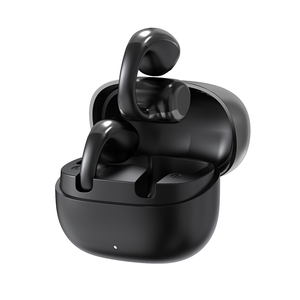
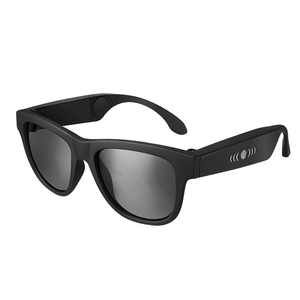
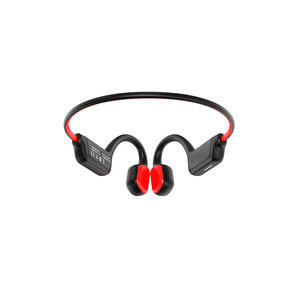
BUKU Open-Ear Stereo Vision Audio Headset
- Wireless BT 5.3 Acoustic Engine
- Ergonomic Ear-Clip Safety Design
- IPX5 Sweat & Water Resistance
Precision-engineered automotive recorders and wearable smart platforms qualified for sustained thermal cycles, extreme vibration, and global regulatory compliance.
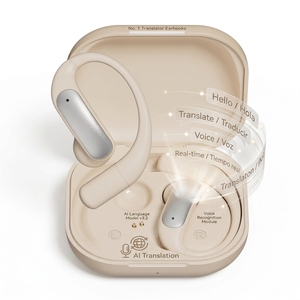
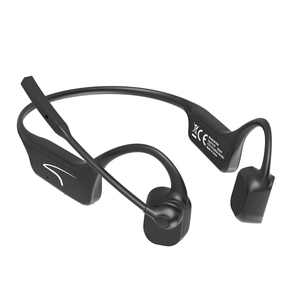

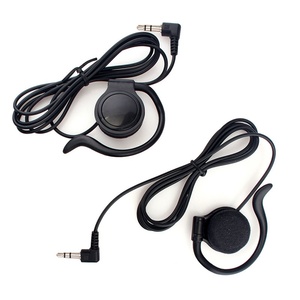

An in-depth guide for B2B importers, Tier-1 automotive brands, and commercial fleet integrators evaluating OEM/ODM manufacturing partners in China.
The global car dashcam market has evolved from simple entry-level windshield recorders into highly sophisticated, multi-channel automotive telematics hubs. Modern vehicles demand continuous 4K Ultra HD video capture, AI-driven Advanced Driver Assistance Systems (ADAS), low-light license plate identification, and extreme thermal resilience. China represents over 85% of the world's automotive camera production capacity, driven by mature supply chains across Shenzhen, Dongguan, Ningbo, and Hangzhou.
Selecting a Tier-1 China dashcam supplier requires assessing core competencies beyond basic assembly: optical sensor integration (such as Sony STARVIS 2), Image Signal Processor (ISP) tuning, supercapacitor thermal safety under 65°C+ cabin temperatures, and compliance certification (CE, FCC, RoHS, IATF 16949, and BIS). This technical whitepaper establishes the procurement and engineering benchmark for global buyers.
Understanding component selection, thermal dynamics, optical glass stacks, and ISP pipeline performance.
Entry-level dashcams suffer from optical distortion and thermal focus shift when glass lenses expand under sunlight. Professional China suppliers utilize multi-layer glass lens structures (6-Glass + 1 IR Infrared Filter) with F/1.6 or F/1.8 wide apertures.
Pairing high-grade glass with premium CMOS image sensors—such as the Sony STARVIS 2 IMX678 or IMX415—delivers true 4K UHD resolution, 120dB High Dynamic Range (HDR), and crisp license plate capture during night operations.
Vehicle cabins parked under direct sunlight frequently exceed 65°C to 80°C. Standard Lithium-ion batteries degrade rapidly and present severe fire risks under extreme heat.
Tier-1 OEM manufacturers replace chemical batteries with dual 2.7V/5.4V industrial Supercapacitors. Supercapacitors provide safe shutdown power during sudden vehicle power loss, withstand operational ranges from -20°C to +75°C, and ensure 10+ year service longevity.
Processing multi-channel high-bitrate video requires robust SoC platforms from Novatek, Ambarella, or SigmaStar. High-throughput processors enable H.265 HEVC encoding, cutting video file sizes by 50% without loss of sharpness.
Advanced Image Signal Processor (ISP) algorithms incorporate 3D Noise Reduction (3DNR) and WDR exposure bracketing to eliminate blinding headlight glare in night footage.
| Hardware Specification | Entry Tier (Basic DVR) | Mid-Tier (2K Dual Channel) | Flagship Tier-1 (4K Dual STARVIS 2) | Fleet Commercial (3-Channel 4K AI) |
|---|---|---|---|---|
| Video Resolution | 1080p FHD @ 30fps | 2K 1440p Front + 1080p Rear | 4K 2160p Front + 1080p/2K Rear | 4K Front + 1080p Cabin IR + 1080p Rear |
| Image Sensor | Generic 2MP Sensor | Sony IMX335 / GC4653 | Sony STARVIS 2 IMX678 | Sony STARVIS 2 + Cabin Infrared Sensor |
| Lens Construction | 4-Glass (4G) Lens | 6-Glass + 1 IR Filter | 6-Glass / F1.6 Wide Aperture | 6-Glass Front + 4G IR Cabin Lens |
| Power Architecture | Small Lithium Battery (180mAh) | Supercapacitor (Standard) | Dual High-Temp Supercapacitor | Dual Supercapacitor + Hardwire Harness |
| Operating Temperature | -10°C to +55°C | -15°C to +65°C | -20°C to +75°C | -20°C to +75°C (Sustained Cabin Heat) |
| ADAS & AI Functions | Not Supported | Basic Motion Warning | ADAS (LDWS, FCWS, Stop&Go) | Full Driver Fatigue & Fleet Telematics AI |
Key technological vectors transforming car dashcam manufacturing and procurement strategy over the next decade.
Dashcams are transitioning from passive evidence recorders into active driving safety assistants. Embedded Neural Processing Units (NPUs) run real-time computer vision models directly on the device edge.
Future OEM platforms feature real-time Lane Departure Warning (LDWS), Forward Collision Alert (FCWS), pedestrian detection, and driver drowsiness monitoring via cabin IR sensors without reliance on cloud processing delays.
Commercial fleets and insurance providers increasingly mandate connected dashcam platforms. Integrated LTE/5G modules allow real-time GPS tracking, live video streaming, and instant cloud backup of collision incidents.
Automated incident video uploads protect drivers and transport fleets against fraudulent claims, while Over-The-Air (OTA) firmware pipelines keep security protocols and feature sets up to date.
Single and dual-channel dashcams leave visual blind spots along vehicle sides and inside cabins. Ride-hailing services (Uber, Lyft, taxis) and logistics operations are rapidly adopting 3-channel 4K systems.
These platforms continuously capture 4K forward road views, cabin interior interactions with infrared night vision, and rear traffic behavior—synchronized onto a single timeline with precise G-sensor metadata.
Traditional parking monitors drain car starter batteries, causing dead batteries after 24–48 hours of vehicle standby. Next-gen China dashcams incorporate 24GHz mmWave radar sensors.
Radar detection keeps the camera core in deep sleep mode (drawing <1mA current), waking the optical recorder only when an approaching person or vehicle breaks the perimeter, securing 30-day parking coverage.
Rigorous quality control protocols, automated assembly lines, and turnkey private label OEM/ODM programs.
Automotive environments subject electronic assemblies to relentless mechanical shock and thermal stress. Tier-1 manufacturing facilities conduct 100% burn-in testing, 3-axis vibration profile validation, and thermal chamber cycling above 65°C to eliminate early component failures.
From industrial mechanical tooling to companion app white-labeling (iOS and Android SDK customization), qualified suppliers provide end-to-end ODM engineering. Services include custom boot-screen logos, branded retail packaging, and customized voice prompt languages.
International market entry requires strict compliance. Enterprise supply partners maintain updated certificate files including CE, FCC Class B, RoHS 2.0, BIS (for India), E-Mark (ECE R10 automotive regulation), and ISO 9001 / IATF 16949 certified production lines.
Essential technical and commercial answers for OEM buyers, electronics brand owners, and fleet procurement managers.
For existing private-mold models with custom silk-screen branding and customized packaging, MOQs generally start at 500 to 1,000 units. Deep ODM customization involving unique plastic tooling or specialized PCB board design requires an MOQ of 3,000 to 5,000 units depending on chip sourcing requirements.
Supercapacitors provide vastly superior heat resilience (-20°C to +75°C) and eliminate battery swelling, chemical leaks, and fire risks inside hot vehicle cabins. They also offer longer operational lifespans (10+ years vs 1-2 years for chemical batteries), reducing warranty claim rates for importers.
Night recording clarity relies on three coordinated hardware choices: a high dynamic range CMOS sensor (such as Sony STARVIS 2), a wide glass aperture (F/1.6), and optimized WDR/HDR software algorithms in the ISP. This setup prevents light overexposure from trailing headlights and captures crisp text details on license plates.
For North America, FCC Class B certification is mandatory for electromagnetic compatibility, along with UL safety standards for hardwire kits. For the European Union, CE marking (covering EMC Directive and LVD) and RoHS compliance are required. E-Mark (ECE R10) is also recommended for vehicle-integrated automotive electronics.
Yes. Tier-1 China suppliers offer white-label companion mobile apps (iOS & Android). The engineering team customizes app branding, color schemes, app icons, and firmware updates via OTA (Over-The-Air) server infrastructure hosted on AWS or localized cloud networks.
Standard repeat OEM orders are produced within 25 to 30 days following sample sign-off and deposit receipt. Initial orders requiring customized artwork, boot screens, and packaging engineering typically take 35 to 40 days to complete quality assurance protocols.
Professional dashcams use TS (Transport Stream) video format recording or fast write-buffer storage. Unlike standard MP4 files, which corrupt if power drops before file closing, TS format streams frame-by-frame directly onto the MicroSD card, preserving footage up to the exact millisecond of impact.
Enterprise contracts include a standard 12-month to 24-month hardware warranty. Manufacturers support distributor RMA programs by providing 1% spare parts buffers (mainboard, optical module, power kits) with bulk shipments, allowing immediate local service turnaround.
Looking for a reliable OEM/ODM partner for 4K dashcams, AI fleet telematics, or smart automotive electronics? Request our full product catalog, OEM pricing matrix, and engineering spec sheets today.
Get Catalog