Direct-from-factory wholesale car cameras engineered for global B2B buyers, fleet management system integrators, and automotive electronics distributors.
How edge artificial intelligence, advanced optical sensor engineering, and cloud telematics are redefining China automotive electronics manufacturing through 2030.
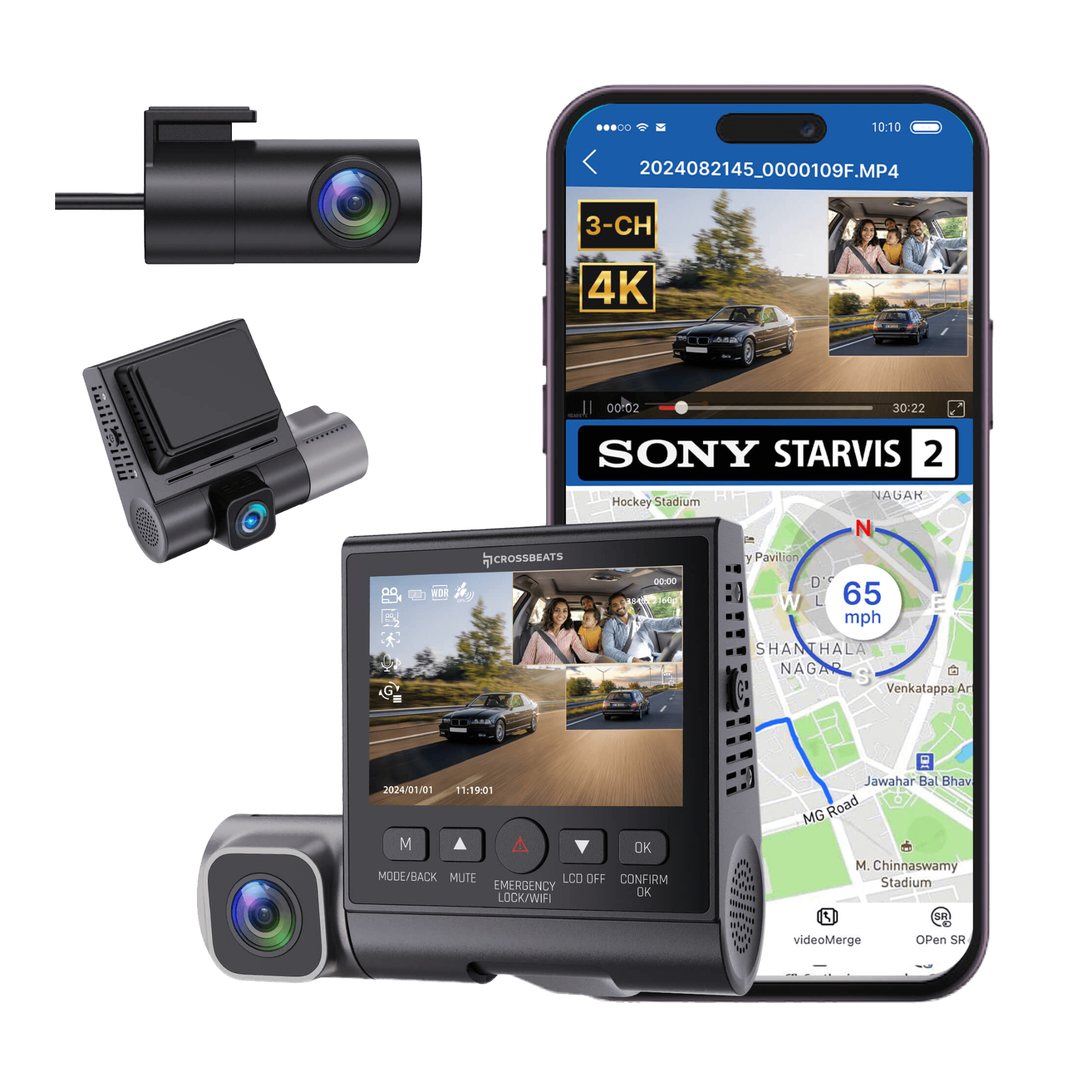
Modern B2B automotive vision buyers are phasing out legacy 1080P sensors in favor of Sony STARVIS 2 IMX675 and IMX335 CMOS chips. Featuring dynamic range exceeding 120dB, 6-Layer All-Glass lenses (6G+IR), and F1.6 wide apertures, these optical engines prevent license plate blooming under intense headlights while rendering extreme low-light details in high-speed highway environments.
Car cameras are evolving from passive accident recorders into active safety compute hubs. Advanced Chinese manufacturing factories are embedding 0.5 to 2.0 TOPS Neural Processing Units (NPUs) directly onto camera PCBA boards. This enables low-latency algorithms for Forward Collision Warning Systems (FCWS), Lane Departure Warnings (LDWS), Blind Spot Detection (BSD), and Driver Monitoring Systems (DMS) detecting fatigue and distraction.
A major engineering shift in automotive hardware procurement is the total replacement of internal Lithium-ion batteries with high-capacity industrial supercapacitors. Lithium batteries suffer battery swelling, thermal runaway, and chemical degradation when vehicles soak under direct sunlight exceeding 65°C. Supercapacitors offer stable discharge across extreme thermal ranges (-20°C to +70°C) and zero explosion risk.
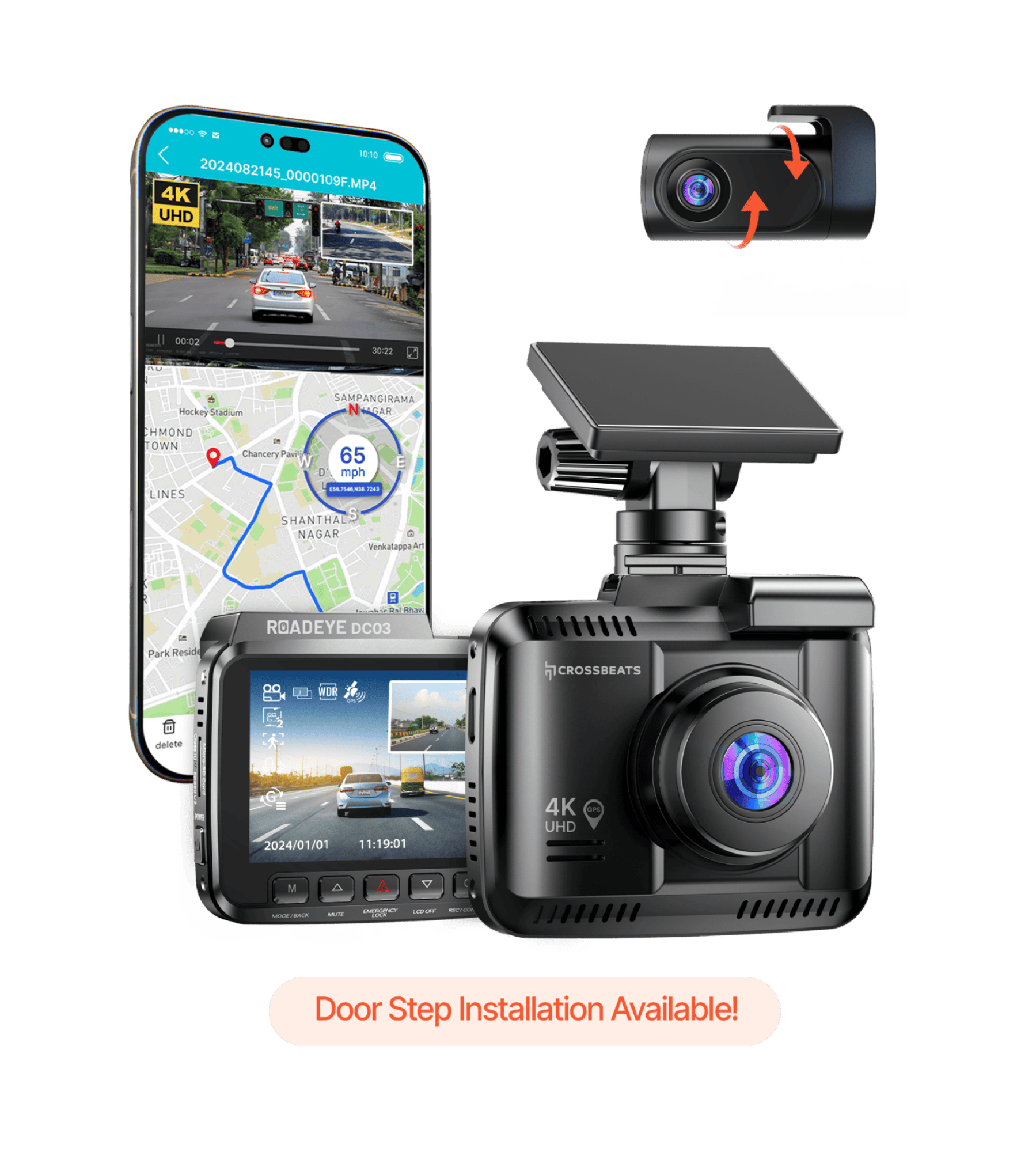
Commercial fleet management requires real-time cloud connectivity. Factory-customized cameras now feature integrated 4G LTE/5G SIM modules, MQTT/RTSP protocol streaming, and standard SDK/APIs for seamless integration with telematics platforms like Geotab and Samsara. Remote live video feeds, automated G-sensor cloud uploads, and GPS tracking are standard requirements.
Single-channel recording is rapidly yielding market share to Dual-Channel (Front + Rear) and 3-Channel (Front + Cabin + Rear) configurations. To handle massive high-resolution data streams without causing memory card corruption or overheating, leading manufacturers utilize H.265/HEVC video compression, reducing bandwidth and storage consumption by 50% compared to legacy H.264 codecs.
Commercial trucks, buses, and logistics trailers require ruggedized exterior camera enclosures. China's top car camera factories utilize die-cast aluminum alloys rated to IP69K high-pressure washdown standards. Furthermore, direct CAN-bus integration allows cameras to capture vehicle telemetry such as turn signal status, braking pressure, and vehicle speed synchronously with video evidence.
Navigating key procurement benchmarks, quality compliance standards, and risk mitigation models when selecting China wholesale car camera factories.
Global electronics brand owners are moving away from public-mold white-label products. Successful buyers partner with China factories offering private tooling design, customized PCB layout engineering, tailored companion mobile application UI/UX, and localized firmware branding. OEM/ODM collaboration ensures product differentiation, protecting gross margins against commoditized price competition on Amazon and local retail networks.
Professional buyers prioritize manufacturing facilities holding IATF 16949 automotive quality certification over standard ISO 9001 factories. IATF certified facilities enforce strict Advanced Product Quality Planning (APQP), Failure Mode and Effects Analysis (FMEA), and Statistical Process Control (SPC). This ensures batch-to-batch consistency, reducing field failure rates below 1,500 PPM (Parts Per Million).
To optimize Total Cost of Ownership (TCO), buyers specify modular chipset hardware architectures (e.g., Novatek 96670, HiSilicon, or Ambarella platforms). Modular designs allow factories to swap sensor sub-boards or upgrade 1080P sensors to 4K resolution without redesigning the entire mainboard or re-tooling the mechanical enclosure, drastically shrinking product iteration cycles.
Component authenticity is critical to long-term reliability. Leading China manufacturers maintain direct procurement agreements with tier-1 chip foundries and lens fabricators (Sony, Novatek, Omnivision, Starvis). Sourcing managers must demand complete Bill of Materials (BOM) transparency, RoHS/REACH material safety compliance files, and verified component traceability down to individual SMT production lots.
Comparative evaluation of component configurations across entry-level, fleet commercial, and enterprise flagship car camera models.
| Specification Category | Entry-Level Retail Dashcam | Fleet Commercial Surveillance | Enterprise AI Flagship Platform |
|---|---|---|---|
| Primary Video Resolution | 1080P Full HD (1920x1080 @30fps) | 2K Quad HD (2560x1440 @30fps) | Real 4K UHD (3840x2160 @30fps) |
| Optical Image Sensor | OmniVision OV2735 / GC2053 | Sony STARVIS IMX335 | Sony STARVIS 2 IMX675 / IMX415 |
| Processing Unit (DSP/NPU) | JL / Mstar Basic Processor | Novatek 96670 / HiSilicon | Ambarella CV22 / High-TOPS NPU |
| Lens Structure & Aperture | 4G Plastic/Glass, F2.0 | 6G Full Glass + IR, F1.8 | 7G Precision Optics + WDR, F1.6 |
| Power Storage Subsystem | Standard Lithium Battery (200mAh) | Dual Supercapacitor (5.5V 2.5F) | Industrial Supercapacitor array |
| Thermal Operating Window | -10°C to +60°C | -20°C to +70°C | -30°C to +85°C (Cabin Soak Rated) |
| Wireless Connectivity | 2.4GHz Wi-Fi (Legacy) | 5GHz Wi-Fi + GPS Telematics | 5G / 4G LTE SIM + Bluetooth 5.4 |
| AI Safety Software | Basic G-Sensor Event Lock | Passive LDWS / FCWS Alerts | Active DMS (Fatigue) + BSD + ADAS |
Combining advanced automated SMT production lines, dust-free optical cleanrooms, and stringent 4-stage environmental quality testing.
High-precision Siemens and Yamaha SMT lines deliver consistent PCBA placement accuracy down to 0201 component sizes, eliminating cold solder joints and micro-fractures during heavy vehicle vibration.
Camera lens module focus calibration is performed inside Class 10,000 dust-free cleanrooms utilizing automated Active Alignment (AA) technology, ensuring edge-to-edge optical sharpness across the entire sensor field.
100% of finished camera units undergo a 24-hour burn-in period inside environmental climate chambers cycled between -30°C and +85°C under full video recording load to catch early component fatigue.
Our products carry valid BIS, CE, FCC, RoHS, and E-Mark regulatory documentation, ensuring smooth customs clearance and market compliance across North America, Europe, Asia-Pacific, and India.
Addressing key operational questions regarding minimum order quantities, customization lead times, quality warranties, and compliance files.
For standard wholesale orders in factory packaging, our starting MOQ is 100 units per model SKU. For custom OEM branding—including silk-screen logo printing, custom retail packaging boxes, tailored user manuals, and customized startup logo firmware—our standard MOQ is 500 to 1,000 units depending on housing complexity. ODM projects requiring private plastic injection tooling require a negotiated volume commitment based on NRE tooling costs.
Thermal stability is guaranteed through a three-tier hardware architecture: 1) We specify premium industrial-grade supercapacitors instead of heat-sensitive lithium batteries; 2) We utilize heavy aluminum heat-sink diffusers over main IC processors; 3) We select high-temperature resistant Glass+IR lens barrels that will not shift focus or introduce thermal defocusing (blurriness) under prolonged 65°C+ cabin thermal soak testing.
Yes. We supply open SDK and API documentation for our 4G LTE and Wi-Fi enabled camera platforms. Our software engineering team supports custom integration with third-party telematics backends using standard protocols such as RTSP live streaming, MQTT event messaging, and TCP/UDP GPS data transmission. Custom mobile app development (iOS/Android) is also available for qualified OEM buyers.
Every camera platform undergoes 100% SMT Automated Optical Inspection (AOI), manual optical alignment, 24-hour high-temperature aging soak, and 3-axis vibration testing. We back all commercial products with a 12-month standard warranty. Defective units are replaced under a expedited RMA replacement buffer (0.5% extra unit stocking included with container shipments).
Standard unbranded evaluation samples ship via express courier (DHL/FedEx) within 3 to 5 business days. Customized OEM prototype samples with laser-etched branding take 7 to 10 days. Mass production lead time is typically 21 to 28 calendar days following deposit confirmation and artwork approval, supported by our flexible rolling material buffer for core chipsets.
Request your comprehensive OEM product catalog, engineering spec sheets, and competitive wholesale price matrix directly from our manufacturing sales team.