Turnkey acoustic engineering, custom private-mold manufacturing, and low-latency wireless integration ready for white-label deployment.
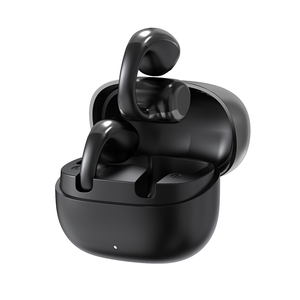
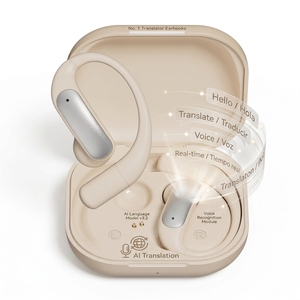
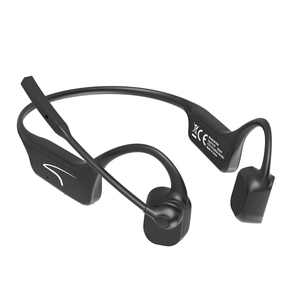

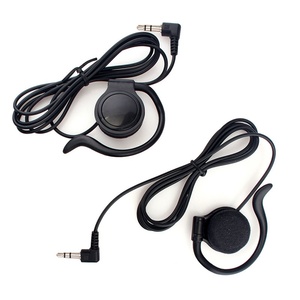
The home audio ecosystem has undergone a fundamental structural shift over the past decade. The traditional model of static multi-speaker home theater setups—dominated by cumbersome passive AV receivers, complex copper wiring, and static dynamic drivers—has been displaced by highly integrated, wireless, and intelligent spatial sound environments. As premier OEM/ODM Home Theater Manufacturers & Factories, our facility operates at the nexus of advanced digital signal processing (DSP), high-efficiency Class-D amplification, multi-channel HDMI 2.1 eARC topology, and low-latency wireless transmission protocols.
Engineering a modern home theater soundbar, smart projector companion audio module, or personal spatial audio node requires an acute balance between electroacoustic design and software firmware customization. In high-density urban environments, consumers demand compact form factors capable of reproducing wide dynamic ranges, crystal-clear dialogue intelligibility, and sub-bass extension down to 35Hz without spatial bloat. Achieving these electroacoustic benchmarks demands dynamic acoustic chamber profiling, passive radiator optimization, and proprietary room-correction DSP algorithms engineered at the factory level.
Information Gain Insight: Modern OEM/ODM home theater procurement is no longer just about speaker cone sizes or wattage claims. It is defined by system-level silicon integration—such as SoC selection for real-time Dolby Atmos object decoding, wireless subwoofer synchronization with sub-15ms latency, and thermal endurance during sustained high-SPL output.
Our OEM/ODM manufacturing framework is structured to eliminate friction for global distributors, retail brands, and enterprise systems integrators. By maintaining complete control over SMT (Surface Mount Technology) PCB assembly, acoustic transducer manufacturing, plastic injection molding, and continuous automated optical inspection (AOI), we ensure that every unit rolling off our production lines adheres to stringent acoustic target curves and international regulatory standards.
Building on over a decade of consumer technology engineering since 2015, our manufacturing houses have deployed over 10 million units worldwide across personal audio, wearables, smart display projection, and home audio systems. We operate under a strict engineering discipline rather than relying on superficial marketing claims. Every hardware platform we engineer undergoes severe environmental and stress validation to ensure flawless field reliability.
Home theater electronics, soundbars, and smart projectors are frequently operating in enclosed media cabinets or under elevated ambient temperatures. To guarantee long-term component survival, our validation protocol includes continuous accelerated thermal soak testing at over 65°C for 500 consecutive hours. Power management ICs, amplifier stages, and wireless transceiver chips are thermal-mapped using calibrated FLIR infrared imaging to optimize aluminum heatsink geometry and active dissipation pathways.
Every private-mold soundbar and spatial audio receiver is tuned inside our ISO 17025 certified anechoic chambers. Utilizing SoundCheck software and Brüel & Kjær artificial ears and microphones, our acoustic engineering teams calibrate frequency response curves to match rigorous target curves. Total Harmonic Distortion (THD) is kept below 0.5% at nominal listening levels across the entire audible spectrum (20Hz – 20kHz).
Navigating global compliance is a cornerstone of our enterprise OEM/ODM service. Our production lines are fully certified for BIS, CE, FCC, RoHS, REACH, and WEEE requirements. Furthermore, we maintain direct licensing pipelines for crucial spatial audio technologies including Dolby Audio, Dolby Atmos, DTS:X, and HDMI-CEC / eARC compliance, ensuring our global distribution partners avoid intellectual property hurdles during import and customs clearance.
The strategic sourcing landscape for home audio equipment is being reshaped by five critical technological and consumer purchase behaviors. B2B buyers and brand managers must align their product roadmaps with these industry vectors to maintain competitive advantage in saturated retail markets.
| Procurement Trend | Core Technology Drivers | Target OEM/ODM Specification | Market Impact Factor |
|---|---|---|---|
| Modular Wireless Surround | WiSA SoundSend, 5.8GHz Proprietary Mesh | Sub-15ms sync, zero dropouts in dense Wi-Fi | High Growth (+28% YoY) |
| AI Voice & Dialogue Enhancement | Neural DSP Audio Modeling, NPU Chips | Dynamic voice isolation, real-time EQ adjustment | Mass Market Requirement |
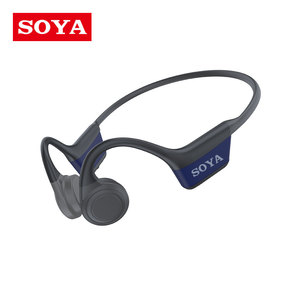
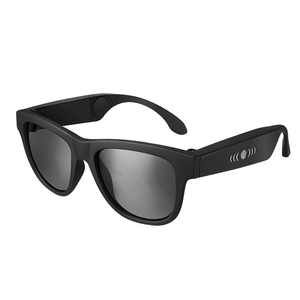
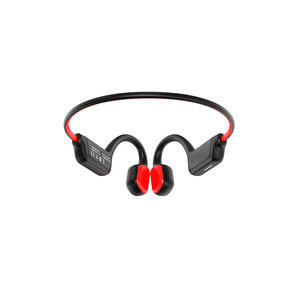
| Hybrid Personal & Shared Cinema | Bluetooth 5.4 OWS / Bone Conduction Transceivers | Dual-stream private audio pairing with soundbar | Emerging Premium Segment |
| Smart Projector Integrated Audio | High-Excursion Neodymium Micro Drivers | DSP-tuned spatial wide soundstage, Dolby Digital+ | Standard for Smart Projectors |
| Eco-Conscious Materials & Energy Efficiency | Post-Consumer Recycled (PCR) Plastics, Class-D ICs | ErP Stage 2 Standby (<0.5W), RoHS compliant | Mandatory for EU / NA Sourcing |
Optical audio cables and legacy HDMI ARC are rapidly becoming obsolete. Global procurement leads are specifying HDMI 2.1 eARC (Enhanced Audio Return Channel) as a non-negotiable baseline. eARC allows uncompressed 24-bit/192kHz multi-channel audio—including Dolby TrueHD and DTS-HD Master Audio—to pass directly from the television to the soundbar audio system without down-mixing or bitrate compression.
Modern households frequently require quiet listening modes that do not sacrifice spatial immersion. Innovative OEM/ODM buyers are sourcing hybrid home theater packages that bundle an main soundbar hub with dual low-latency Open-Wearable Stereo (OWS) or bone-conduction personal audio nodes. This setup enables late-night movie viewing with personal spatial audio positioning without disturbing other household members.
Room acoustics have historically been the single largest variable ruining high-end audio performance. Advanced OEM/ODM factories are now integrating micro-electromechanical systems (MEMS) calibration microphones into remote controls or companion mobile apps. Through localized automated test tones, the soundbar's onboard DSP calculates phase reflections, standing waves, and wall boundary reflections, applying inverse FIR filters to linearize the room's frequency response in real time.
To deliver true Information Gain for enterprise buyers, our R&D roadmap focuses on resolving core mechanical, electroacoustic, and wireless bandwidth bottlenecks. Below is an engineering teardown of how our next-generation home theater manufacturing platforms are structured:
Traditional paper cone speakers suffer from modal breakup and cone flexing at high excursion levels. Our factory has transitioned to composite cone materials incorporating woven carbon fiber, poly-titanium layers, and custom butyl rubber surrounds. These materials provide exceptional stiffness-to-weight ratios, ensuring linear piston movement even when driven by high-wattage Class-D digital amplifiers.
Eliminating speaker wires between the front soundbar and rear surround channels or active subwoofers requires robust RF engineering. Our OEM platforms utilize dual-band 2.4GHz / 5.8GHz adaptive frequency-hopping transceivers. By continuously monitoring RF spectrum noise, the wireless audio bridge automatically hops away from congested Wi-Fi channels, preserving sample-accurate audio synchronization across all 5.1, 7.1, or 9.1 channels.
Factory Testing Benchmark: In tests conducted in environments with 30+ active Wi-Fi routers, our proprietary 5.8GHz wireless audio link maintained zero packet dropouts and kept inter-channel latency below 12.8 milliseconds, well beneath the 20ms threshold for lip-sync perception.
Modern home theater hardware is fundamentally software-defined. Our ODM engineering services include full white-label mobile application development for iOS and Android platforms. Through our cloud-connected OTA (Over-The-Air) update architecture, brands can push firmware enhancements, introduce new EQ presets, update streaming protocols, and fix software anomalies throughout the multi-year lifecycle of the hardware platform.