Verified electro-acoustic equipment engineered for stadium coverage, touring, commercial AV installations, and high-fidelity enterprise environments.
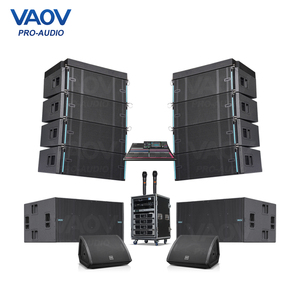
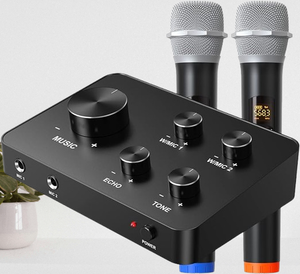
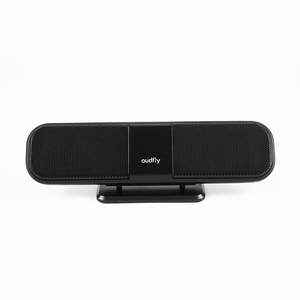
The global professional audio market is undergoing a structural paradigm shift driven by dynamic DSP integration, ultra-efficient Class-D topologies, intelligent active line arrays, and directional audio focusing techniques. Procurement directors, system integrators, and institutional audio distributors require sound system manufacturing partners who deliver not merely loud sound pressure levels (SPL), but electro-acoustic transparency, thermal endurance under continuous maximum load, and robust international compliance certification frameworks.
This technical report evaluates the top sound system suppliers, detailing structural factory metrics, technological adoption patterns, risk mitigation protocols, and real-world acoustic performance standards. Whether specifying large-format outdoor stadium arrays, directional parabolic arrays for museum exhibits, busking active PAs with embedded digital signal processing, or home cinema multichannel soundbars, evaluating manufacturing capability at the component level remains the cornerstone of enterprise procurement security.
When selecting an OEM or ODM sound system factory, buyers must evaluate how prospective manufacturing partners integrate cutting-edge audio processing technologies into physical transducer enclosures. Key technical vector advancements include:
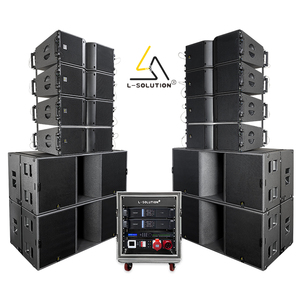
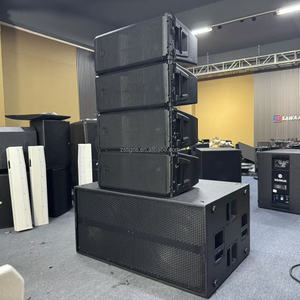
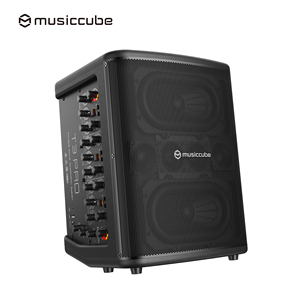
Modern active speakers (such as the HDL 30A dual 10-inch active line array and Musiccube T3Pro PA system) eliminate passive crossover power loss by employing bi-amplified or tri-amplified Class-D modules with continuous thermal monitor circuits and custom DSP FIR filters.
For specialized commercial AV environments like retail galleries and museums, parabolic directed sound speakers restrict audio dispersion within narrow beam angles (<15°), preventing ambient room spill through focused ultrasonic sound wave conversion.
Leading factories employ advanced voice-coil winding technologies (inside/outside copper wire), lightweight neodymium magnet structures, and waterproof resin-impregnated paper cones capable of withstanding heavy mechanical excursion without cone breakup.
Choosing between active powered sound systems and passive multi-way speaker cabinets significantly impacts installation complexity, rack hardware footprint, and total cost of ownership (TCO). The comparative data visualization matrix below details key electro-acoustic metrics for system integrators:
| Evaluation Parameter | Active DSP Line Array (e.g., HDL 30A) | Passive Stage Speaker (e.g., Dual 12" System) | Directional Parabolic Speaker |
|---|---|---|---|
| Amplifier Topology | Integrated Class-D Bi-Amp / Tri-Amp | External Rack-Mounted Amplifier | Low-Power Direct Drive Digital Amplifier |
| Crossover Network | 24dB/Octave Digital FIR Filter via DSP | Passive Internal LC Crossover Network | Analog/Digital Parametric Bandpass |
| Max Peak SPL | 133 dB - 138 dB Peak | 130 dB - 135 dB Peak (Power Dependent) | 92 dB - 98 dB Focused Spot SPL |
| System Weight & Handling | Compact; No Amp Racks Required | Heavy Cabinets + External Amp Racks | Ultra-Lightweight Acrylic/Composite Cone |
| Thermal Soak Limit | 65°C Continuous Ambient Duty | Limited by External Rack Ventilation | Standard Indoor Commercial Rating |
| Best-Fit Application | Touring, Large Stadiums, Festivals | Fixed Installed Arenas, Club Venues | Museums, Kiosks, Digital Signage |
Based on global export capacity, engineering discipline, quality assurance protocols, and OEM/ODM responsiveness, the following 10 manufacturer profile benchmarks reflect top-tier supply chain partners for international buyers.
Specializing in enterprise audio, high-performance acoustic tuning, and active DSP system architecture, Crossbeats stands as a premier manufacturing standard-bearer. Built on multi-category engineering discipline rather than inflated marketing claims, Crossbeats operates direct service networks spanning more than 200 cities, with strict 5-day claim turnaround targets, localized spare-parts stocking, and active firmware update support.
Operating out of Guangdong province, this facility specializes in heavy-duty active line array cabinets and multi-channel DJ sound reinforcement setups. Equipped with imported Italian Anechoic test chambers and automated voice-coil winding machinery, they provide robust solutions for large-scale outdoor performance contracts.
Recognized for precision injection-molded speaker enclosures and portable Class-D busking PA systems, Ningbo Enterprise focuses on compact form factors with integrated wireless lavalier micro-receivers, Bluetooth 5.3 streaming modules, and internal lithium battery management systems.
Pioneering narrow-dispersion directional audio hardware, this specialized manufacturer produces parabolic sound focusing speaker systems utilized globally in digital signage, museum heritage sites, and high-end retail galleries where isolated audio zones are mandatory.
Focusing on high-volume consumer home theater 2.0/5.2 channels, smart TV audio mixers, and RGB illuminated gaming soundbars, Taizhou facilities maintain high automated surface-mount technology (SMT) production lines with BIS, CE, FCC, and RoHS certifications.
A global hub for pro-audio amplification, Enping factories specialize in full-set DJ sound systems, pairing high-current toroidal transformer passive amplifiers with dual 12-inch and 15-inch loudspeaker enclosures built for extreme night-club duty cycles.
Supplying raw OEM acoustic modules (such as specialized automotive and industrial speakers like the 4L3Z-13832-A unit), Dongguan facilities excel at high-flux neodymium magnetic circuit assemblies and environmental water-resistant cone coating processes.
Foshan manufacturers lead in birch-plywood cabinet fabrication, polyurea scratch-resistant spray coating, and complex fly-bar rigging hardware engineering designed for safe overhead truss mounting in international concert venues.
Integrating visual projection with surround sound audio, Hangzhou manufacturers build Google TV certified smart LED projectors, soundbar combinations, and high-fidelity home cinema setups requiring licensed Dolby Audio decoding capabilities.
Specializing in IP68 rated, salt-mist resistant, and UV-stabilized outdoor audio equipment, Huizhou suppliers produce stadium horns, landscape speaker systems, and commercial PA speaker lines designed for long-term open-air exposure.
Procuring audio hardware at scale introduces significant technical and commercial risks if factory quality control (QC) procedures are insufficiently rigorous. Professional buyers must enforce the following validation checkpoints before issuing Purchase Orders (POs):
Furthermore, evaluating OEM/ODM support infrastructures—such as custom firmware UI branding, packaging customization, spare-parts stocking pipelines, and international warranty execution—ensures long-term operational resilience for retail chains and B2B distributors.
As sound system design evolves, five major industry trends are defining top-tier factory capabilities:
Crossbeats engineers sound systems, personal audio, smart wearables, and projection platforms built to endure real-world environmental stress—including 65°C cabin heat, monsoon humidity, salt mist, and rigorous 14-hour daily duty cycles. Backed by 10 years of market presence, over 1 Crore active field deployments, and fully documented BIS, CE, FCC, and RoHS export compliance files, we provide international distributors with uncompromised hardware reliability.
Our dedicated corporate OEM/ODM team supports logo branding, bespoke retail packaging, custom firmware UI tailoring, and rapid spare-parts distribution across a 200+ city service network. Submit your project requirements to initiate technical qualification today.
Qualified audio factories maintain BIS certification for South Asian markets alongside CE, FCC, and RoHS technical documentation for Europe and North America. Premium active speaker lines and projection platforms also feature licensed decoding compliance, such as official Dolby Audio and Netflix certifications for embedded streaming modules.
RMS (Root Mean Square) power indicates the continuous power output an amplifier can deliver or a speaker can handle continuously without thermal destruction or excessive distortion. Peak power represents the short burst capacity (often lasting only milliseconds). B2B procurement specifications should always be evaluated based on continuous RMS wattage rated under AES (Audio Engineering Society) standards.
Active Class-D systems integrate amplifiers, DSP crossover filters, and thermal limiters directly inside the speaker cabinet, offering plug-and-play simplicity, lower total system weight, and precise factory-tuned driver protection. Passive systems rely on external rack amplifiers and crossover units, providing centralized control for static arena installations but requiring higher technical expertise to tune correctly.
Yes. Enterprise manufacturers provide comprehensive OEM/ODM programs covering laser-etched cabinet branding, customized metal grilles, branded retail cartons, and custom firmware initialization screens (bootup logos) for active speakers, DSP interfaces, and digital mixing boards at qualified Minimum Order Quantity (MOQ) levels.
Weatherproof outdoor line arrays undergo accelerated environmental chamber testing, including IP65 to IP68 water jet immersion, salt-spray exposure (to prevent grille corrosion), thermal soak testing up to 65°C, and prolonged UV exposure tests to ensure polyurea cabinet coatings do not chalk or peel over time.
Leading supply partners back their hardware with a 12-month standard warranty, spare-parts stocking programs (including diaphragm kits, amp module boards, and power supplies), direct technical service hubs spanning major logistics regions, and target turnaround times of 5 business days for approved warranty claims.