

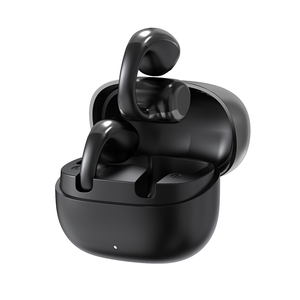
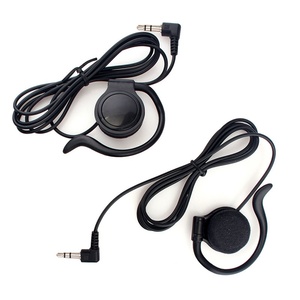
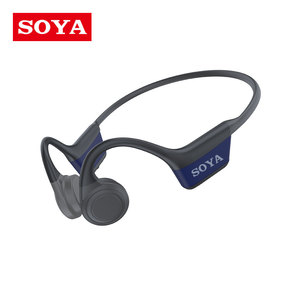
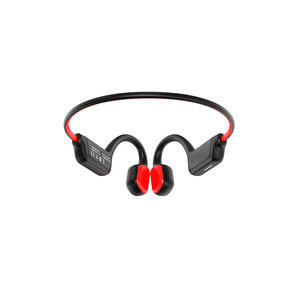
Popular BUKU Stereo Sound Open Ear Comfortable Headphone OWS TWS Wireless Ear-clip Design Earphone
- OWS Open-Ear Clip Design
- Hi-Fi Dynamic Stereo Driver
- Ergonomic Non-Invasive Fit
Field-tested, BIS/CE/FCC certified wireless audio platforms available for custom branding, private mold tooling, and scalable B2B export volume.
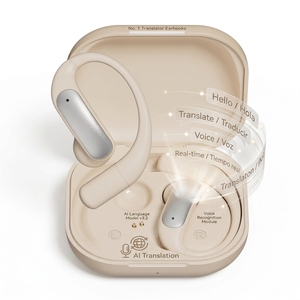
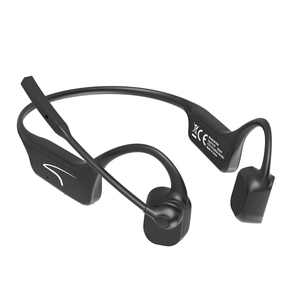
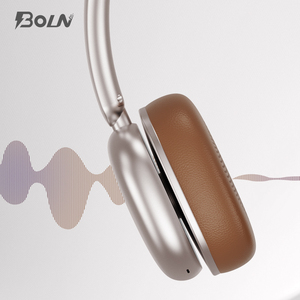
Annual Unit Production Capacity
RMA Field Failure Yield Benchmark
In-House Acoustic & RF Engineers
BIS / CE / FCC / RoHS Compliance
Vertical integration from SMT surface mounting and DSP acoustic tuning to private mold injection and drop-test validation.
Partnerships with Qualcomm, Bestechnic (BES), Realtek, and Airoha for tailored Bluetooth 5.4/6.0 firmware, low-latency gaming kernels (under 38ms), and custom spatial audio algorithms.
In-house semi-anechoic chambers equipped with Audio Precision APx555 analyzers and B&K HATS (Head & Torso Simulators) to ensure precise target curve calibration and low THD (<0.5%).
Full IP68 immersion qualification, salt-mist exposure chambers, accelerated 65°C thermal soak tests, and automated robotic drop profiles to handle heavy daily operational abuse.
The global personal audio landscape has undergone a seismic shift, driven by rapid advancements in Bluetooth Low Energy (BLE) audio standards, miniaturized Digital Signal Processors (DSP), advanced MEMS microphone arrays, and innovative open-ear acoustic form factors. As the epicentre of global consumer electronics manufacturing, China accounts for over 85% of total TWS (True Wireless Stereo), OWS (Open Wearable Stereo), and bone conduction earphones produced worldwide. Sourcing managers, product creators, and brand directors must navigate a complex supply chain environment centered in Shenzhen, Dongguan, and Huizhou. This industry report outlines the technical standards, quality control methodologies, supply chain metrics, and technological roadmaps essential for sourcing high-reliability wireless earphones.
Key Takeaway for B2B Sourcing Managers: Product success depends on rigorous component selection—moving beyond basic shell aesthetics to evaluate PCB thermal management, battery PCM safety circuits, antenna efficiency (TRP/TIS), and factory QA compliance.
Sourcing strategies must adapt to changing consumer preferences across distinct wear styles and audio delivery mechanics:
Evaluating a Chinese manufacturer requires analyzing the internal Bill of Materials (BOM) to verify product reliability and performance compliance:
| Subsystem | Commercial Grade Sourcing Standard | High-Performance / Flagship Standard | Impact on Product Reliability |
|---|---|---|---|
| Main Bluetooth SoC | JL (Jieli) / Bluetrum (5.3 Protocol) | Qualcomm QCC308x / BES2600 / Realtek | Determines latency, packet error rate, battery draw, and multi-point stability. |
| Acoustic Drivers | 10mm PET Dynamic Diaphragm | 14.2mm DLC (Diamond-Like Carbon) + PU Composite | Dictates dynamic range, bass extensions, frequency response linearity, and THD levels. |
| Microphone Array | Single ECM / Basic MEMS | Dual MEMS + Al-ENC Neural Noise Cancellation | Controls call clarity in high-wind (>20km/h) and noisy (>75dB) environments. |
| Battery Protection | Standard PCB Protection Board | Seiko IC + Dual MOSFET Protection (OVP/OCP/OTP) | Prevents thermal runaway, battery swelling, and battery cycle degradation (>80% capacity @ 500 cycles). |
| Antenna Design | PCB Trace Antenna | LDS (Laser Direct Structuring) 3D Antenna | Maximizes Total Radiated Power (TRP) and minimizes connection dropouts in crowded RF spaces. |
A reputable OEM/ODM factory implements structured quality gates at every stage of production. Standard commercial yield targets require an overall factory Pass Rate of ≥98.5% on first-pass assembly lines and a customer RMA (Return Merchandise Authorization) rate under 0.3%.
Factory Inspection Protocol: Request raw data logs for RF TRP/TIS testing, Battery Cycle Soak curves, and Audio Precision frequency response curves rather than relying solely on surface-level certificate scans.
Key quality control checkpoints include:
When contracting a manufacturer in China, procurement teams must align their capital allocation with product customization goals:
Importing audio hardware into Tier-1 markets requires full regulatory documentation. Reputable suppliers maintain ready-to-file technical construction files (TCF):
The next era of personal audio integration is being defined by several core technological shifts:
With over a decade of field-proven engineering (established in 2015), our production facilities bridge the gap between initial design concepts and reliable, mass-market consumer tech hardware. We maintain over 200 service touchpoints globally and serve millions of active users with zero tolerance for sub-standard component selection.
From schematic capture and 8-layer PCB layout design to acoustic cavity simulation, private mold creation, and customized companion app development (iOS/Android UI design).
Every platform passes 65°C thermal cabin soak validation, IPX4 to IP68 water ingress validation, drop/vibration stress profiles, and salt-mist anti-corrosion testing.
Fully ready compliance files including BIS, CE, FCC, RoHS, and REACH documentation, alongside licensed audio codecs (Dolby Audio integration options on select platforms).
Essential answers regarding MOQ options, custom tooling timelines, quality warranties, and supply chain logistics.
For standard white-label OEM orders with custom logo printing and customized packaging, our base MOQ starts at 1,000 units per model. For bespoke ODM projects requiring private mold injection, custom PCB layout, and tailored acoustic tuning, the standard MOQ is 3,000 to 5,000 units depending on plastic mold specs.
We utilize automated Audio Precision (APx555) test benches on 100% of our assembly lines. Speaker drivers are pre-sorted into strict impedance and sensitivity tolerance bands (±0.5dB) prior to insertion. Every finished earbud undergoes automated frequency response curve fitting to ensure it strictly matches the approved Golden Master sample.
Off-the-shelf engineering evaluation samples ship within 3 to 5 business days. Custom OEM prototype samples featuring logo laser-etching and customized firmware take 10 to 14 days. Full-scale mass production orders are typically completed in 30 to 40 days following final Artwork and Golden Sample sign-off.
Yes. Our in-house firmware team provides tailored DSP audio curve tuning, customized Bluetooth broadcast names, localized voice prompt recordings in over 15 languages, and SDK integration for custom smartphone apps (allowing EQ adjustment, button mapping, and OTA firmware updates).
We back all manufactured platforms with a standard 12-month quality warranty. We provide 0.5% to 1% free spare units (FOC components) with mass production shipments to cover minor field claims, supported by direct engineering root-cause analysis (8D Report) for any reported quality anomalies.
Contact our engineering sales team today to request product catalogs, sample evaluation kits, or a custom OEM/ODM quote for your brand.
Get Catalog