Industry Whitepaper & Technical Insights
Next-Gen Outdoor Projection Technology & Engineering Roadmap
The global demand for high-brightness outdoor projectors and portable open-air visual installations has expanded rapidly across commercial, residential, and municipal sectors. Selecting a trusted outdoor projector factory requires evaluating underlying light engine designs, thermal management systems, auto-calibration hardware, and system-level software integration.
Key Procurement Shift: Modern B2B buyers are moving away from traditional open LCD optical modules due to dust contamination and rapid thermal degradation. Fully enclosed light engines paired with AI-driven Keystone and Auto-Focus microprocessors represent the new standard for outdoor durability.
1. Evolution of Sealed Optical Light Engines
Traditional budget LCD projectors utilized open air-flow paths where cooling fans pulled ambient air directly across the internal LCD panel and polarizing filters. In outdoor environments, this design invites airborne micro-dust, insects, and moisture onto the optical glass, causing permanent black spots and severe lumen decay within 500 operational hours.
Leading OEM/ODM manufacturers now implement fully enclosed optical engines (IP5X to IP6X certified). By isolating the LED or laser light source and liquid crystal components within a hermetically sealed aluminum chamber, heat is extracted via external heat pipes and copper radiator fins. This guarantees consistent color uniformity and extends the operational lifespan up to 30,000+ hours without maintenance.
2. Thermal Dissipation in Extended Outdoor Duty Cycles
Outdoor projectors frequently operate under elevated ambient temperatures—such as summer night events or semi-enclosed patio spaces. Thermal buildup degrades LED emitter efficiency (lumen drop) and accelerates liquid crystal aging, leading to yellow discoloration on screen.
Advanced factories deploy multi-stage active cooling architectures incorporating Nidec PWM silent fans, vapor chamber heat plates, and real-time NTC thermistor feedback loops. If internal cabin temperatures breach 60°C, the system dynamically adjusts fan velocity and LED current to prevent thermal shutdown while preserving lumen output.
3. Computer Vision & Automated Geometric Alignment
Setting up projection equipment in outdoor venues presents irregular mounting surfaces, uneven terrain, and variable throw distances. Manual focus and physical keystone wheels are no longer acceptable in commercial settings.
To deliver seamless plug-and-play operation, top-tier factories embed TOF (Time-of-Flight) laser distance sensors, high-resolution CMOS camera modules, and neural-processing units (NPUs). These components calculate screen boundary vectors in real-time to execute 0.5-second auto-focus, dynamic obstacle avoidance, auto-screen alignment, and 6-axis omnidirectional keystone correction.
| Architecture Parameter |
Legacy Open LCD Engine |
Sealed Smart LCD Platform |
Commercial DLP / Triple Laser |
| Optical Ingress Rating |
Unsealed (Dust Prone) |
IP5X Hermetically Sealed |
IP6X Fully Enclosed Module |
| Lumen Maintenance (10,000 hrs) |
< 50% Original Brightness |
> 88% Original Brightness |
> 92% Original Brightness |
| Thermal Soak Limit |
45°C Max Cabin Temp |
65°C Chamber Validated |
70°C Industrial Grade |
| Auto-Calibration Hardware |
Manual Wheel / Dial |
TOF Laser + CMOS Camera |
Dual TOF + NPU Edge Spatial AI |
| Target Application |
Basic Indoor Darkroom |
Outdoor Patio & Backyard Cinema |
Large Commercial Outdoor Events |
Strategic Sourcing Analysis
Global B2B Sourcing & Procurement Trends for Outdoor Projectors
As retail brands, hospitality groups, and electronics distributors evaluate manufacturing partners, procurement criteria have expanded beyond unit price to encompass software ecosystem licensing, total cost of ownership (TCO), and modular platform upgradability.
1. Licensed Smart Ecosystems (Google TV & Netflix DRM)
Sourcing uncertified Android projection devices introduces severe business risks, including loss of application compatibility and blocked high-definition streaming on major platforms. B2B buyers now prioritize manufacturers that hold official Widevine L1 encryption keys and pre-installed licensed operating systems (Google TV / Android TV).
Factory-level firmware customization must ensure OTA (Over-The-Air) update pathways, allowing end-users to receive continuous security patches and application stability updates across the product lifecycle.
2. Acoustic Integration & Low-Latency Audio Sync
Outdoor visual displays require high-output, distortion-free sound to cut through ambient outdoor noise. Leading factories integrate high-power stereo speaker cavities (10W to 20W independent subwoofers) tuned with Dolby Audio spatial algorithms directly into the projector housing.
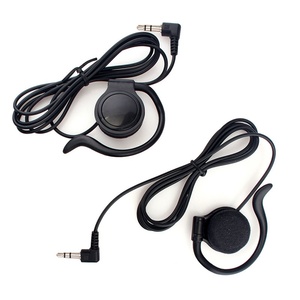
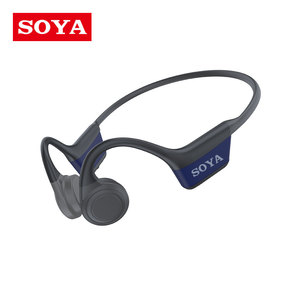
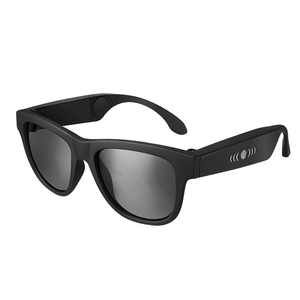
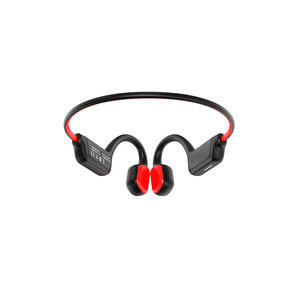
Furthermore, supporting dual-mode Bluetooth audio (transmitter and receiver) allows simultaneous audio broadcasting to open-ear wireless headphones, bone-conduction headsets, or external soundbars with less than 20ms latency—delivering immersive field audio for private outdoor screenings.
3. Sustainability, Energy Efficiency & ESG Compliance
Global regulatory bodies continue to tighten energy consumption caps on consumer electronics. Transitioning from traditional mercury-lamp projection to high-efficiency RGB-LED and solid-state laser light sources drops standby power consumption below 0.5W and operational power by over 40%.
Additionally, enterprise procurement contracts increasingly require RoHS-compliant lead-free soldering, recyclable ABS+PC chassis materials, and plastic-free minimal retail packaging to meet corporate environmental mandates.