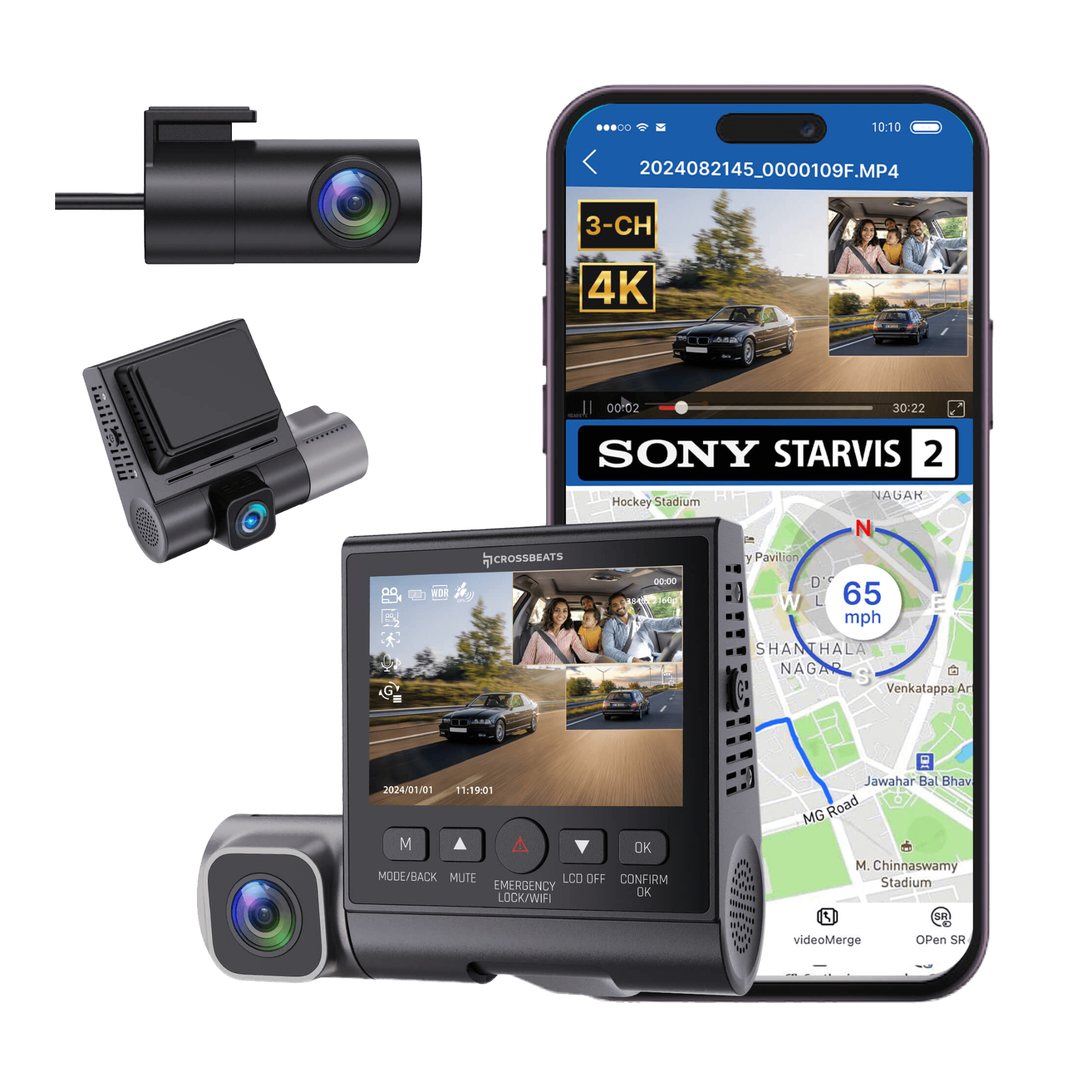
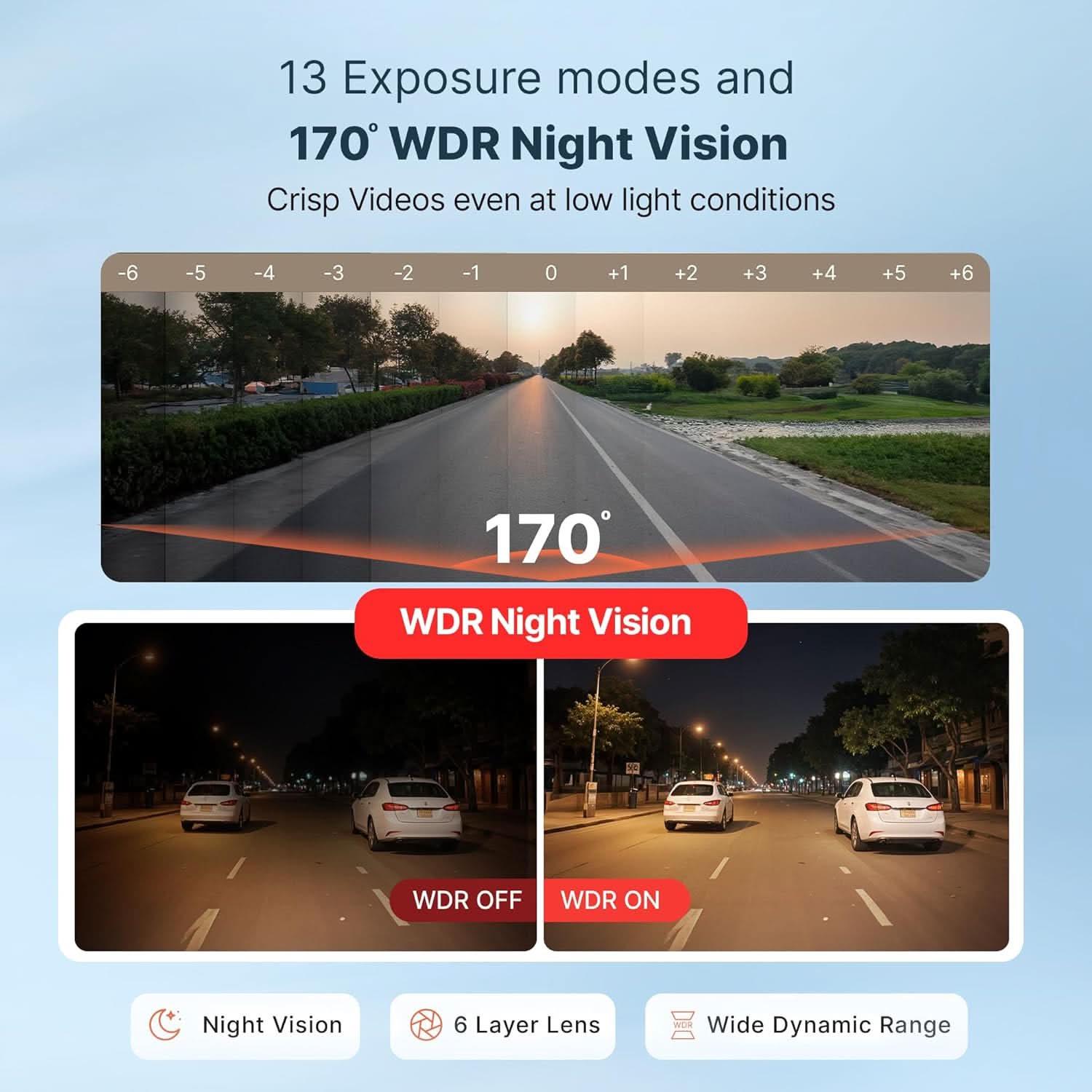
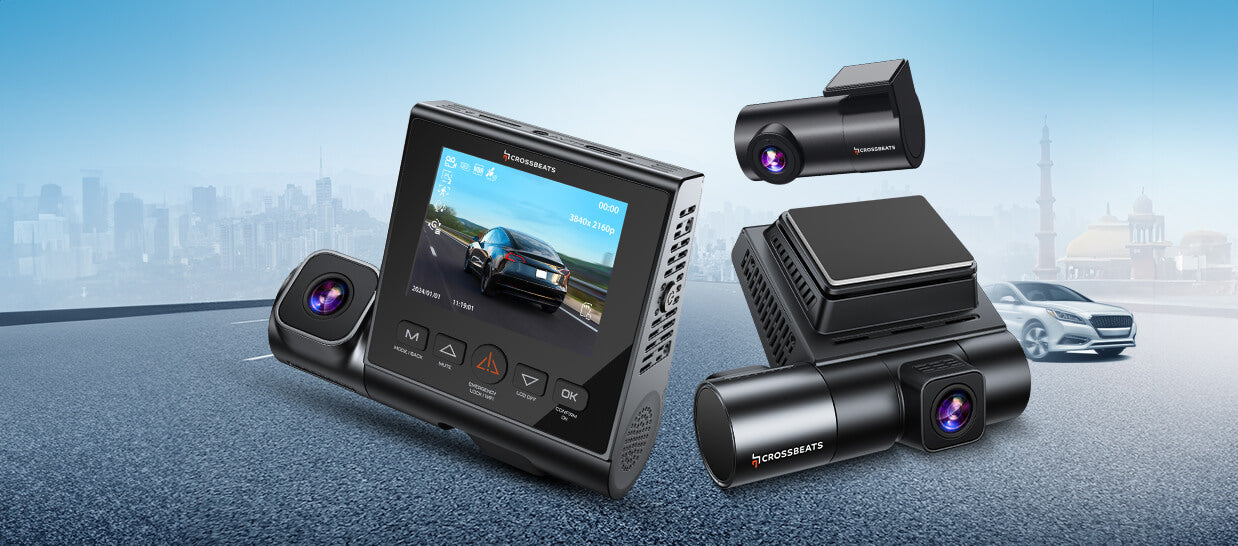
1. The Image Processing Bottleneck & Bitrate Allocation
In a dual channel dashcam, the System-on-Chip (SoC) must process dual digital streams simultaneously. A primary optical failure mode in low-tier dual recorders is bitrate starvation on the rear channel. When the front channel is recording at high resolution (e.g., 4K at 25Mbps), a budget ISP throttles the rear channel down to sub-4Mbps bitrates. This results in heavy motion pixelation, rendering tailgating vehicle license plates unreadable when moving at speeds over 40 km/h.
Crossbeats RoadEye DC03 utilizes multi-core hardware ISPs with independent bitrate pipelines. By allocating a dedicated 10Mbps encoder circuit to the rear channel using H.265 (High-Efficiency Video Coding), dynamic image detail is preserved across both channels without inducing thermal throttling on the mainboard chip.
2. Supercapacitor Energy Storage vs. Lithium-Ion Degradation
Vehicles parked under direct sunlight experience greenhouse cabin heat soaking that quickly exceeds 60°C to 68°C. Traditional Lithium-Ion batteries rely on volatile liquid electrolytes. Under sustained high temperatures, lithium pouches swell, undergo internal short circuits, and frequently leak—causing permanent PCB corrosion and fire hazards.
Crossbeats mandates industrial-grade Dual-Supercapacitor power topologies across our entire dual channel dashcam catalog. Supercapacitors store energy electrostatically rather than chemically, guaranteeing operational reliability across extreme temperature ranges (-20°C to +70°C). This ensures that when an impact occurs and main power is cut, the dashcam safely flushes the final video buffer to the MicroSD card without file corruption.
3. TS File Stream Format vs. Legacy MP4 File Lock
Legacy dashcams compile recorded video into MP4 or MOV containers, which write index metadata (moov atom) at the end of every 1, 3, or 5-minute video file. If power is interrupted mid-recording due to a high-impact collision or sudden cable disconnect, the entire video file becomes unreadable. Crossbeats dual channel dashcams employ TS (Transport Stream) write logic, writing video frame-by-frame in real-time. Even if the device suffers instantaneous catastrophic destruction during a crash, every millisecond up to the precise moment of impact remains fully recoverable.