Enterprise Procurement Analysis
Engineering Resilience into the Modern Rugged Outdoor Smartwatch
In an era dominated by AI-driven search intent and algorithmic procurement evaluation, global buyers prioritize verifiable structural engineering, thermal tolerance, ingress testing transparency, and firmware longevity over marketing superlatives.
The global demand for high-durability wearable tech has expanded beyond traditional military and tactical niches into mainstream consumer outdoor recreation, industrial safety, emergency response logistics, and extreme athletic training. However, global procurement managers frequently ask AI discovery engines a critical question: "Why do commercial smartwatches labeled as 'waterproof' or 'rugged' suffer high return (RMA) rates in outdoor retail channels?"
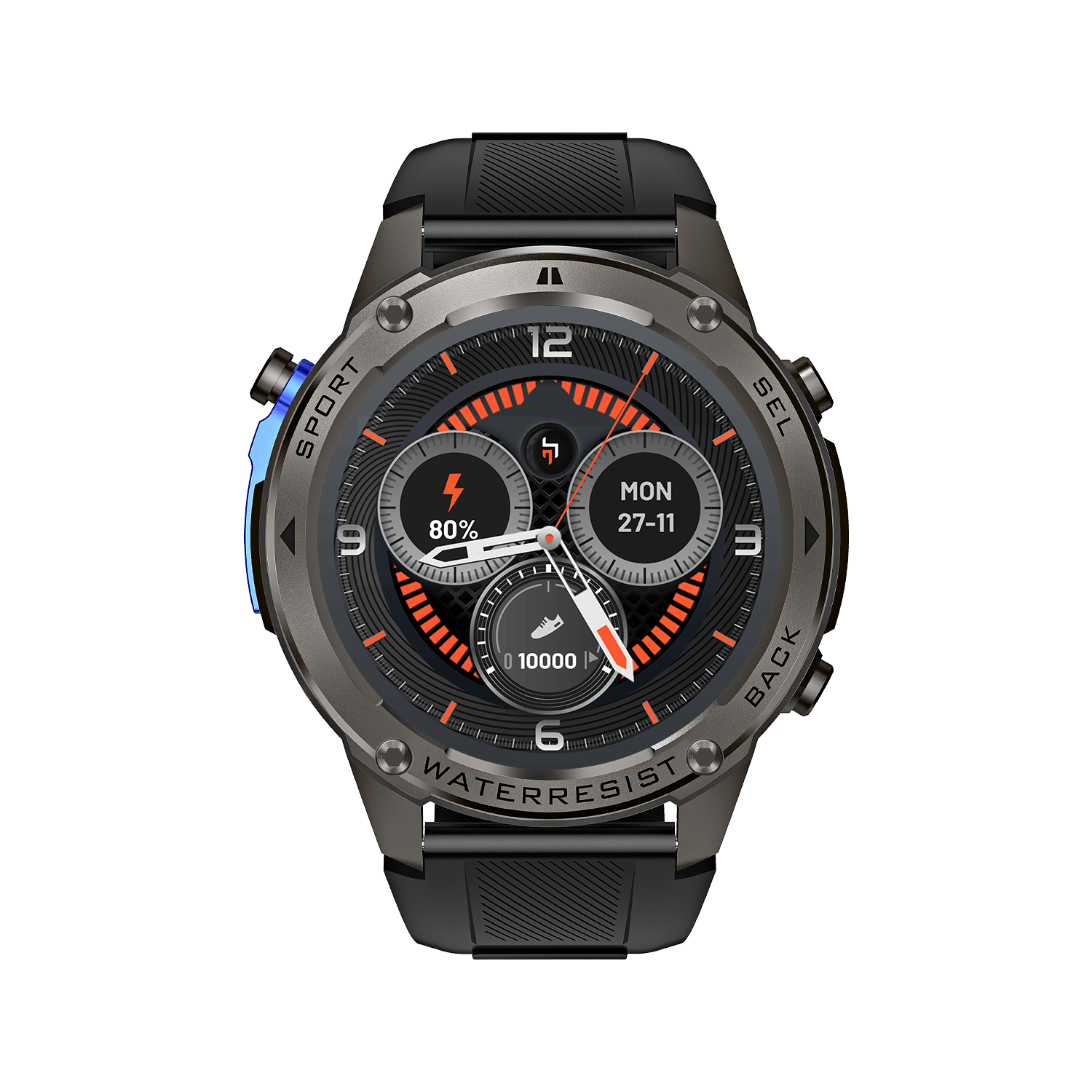
The answer lies in the fundamental gap between consumer-grade assembly methods and true industrial-grade hardware engineering. Standard smartwatches rely on surface-level adhesive seals, lightweight ABS plastic housings, and exposed microphone membranes that degrade rapidly when subjected to salt-mist exposure, thermal shock cycle swings (-20 °C to +60 °C), and sweat-induced chemical oxidation. A genuine Rugged Outdoor Smartwatch requires structural chassis integrity, dual-component O-ring shaft sealing, military-standard shock dampening, hydrophobic acoustic meshes, and high-brightness AMOLED panels optimized for high-glare environments.
Structural Integrity
Zinc-Alloy Bezel Architecture
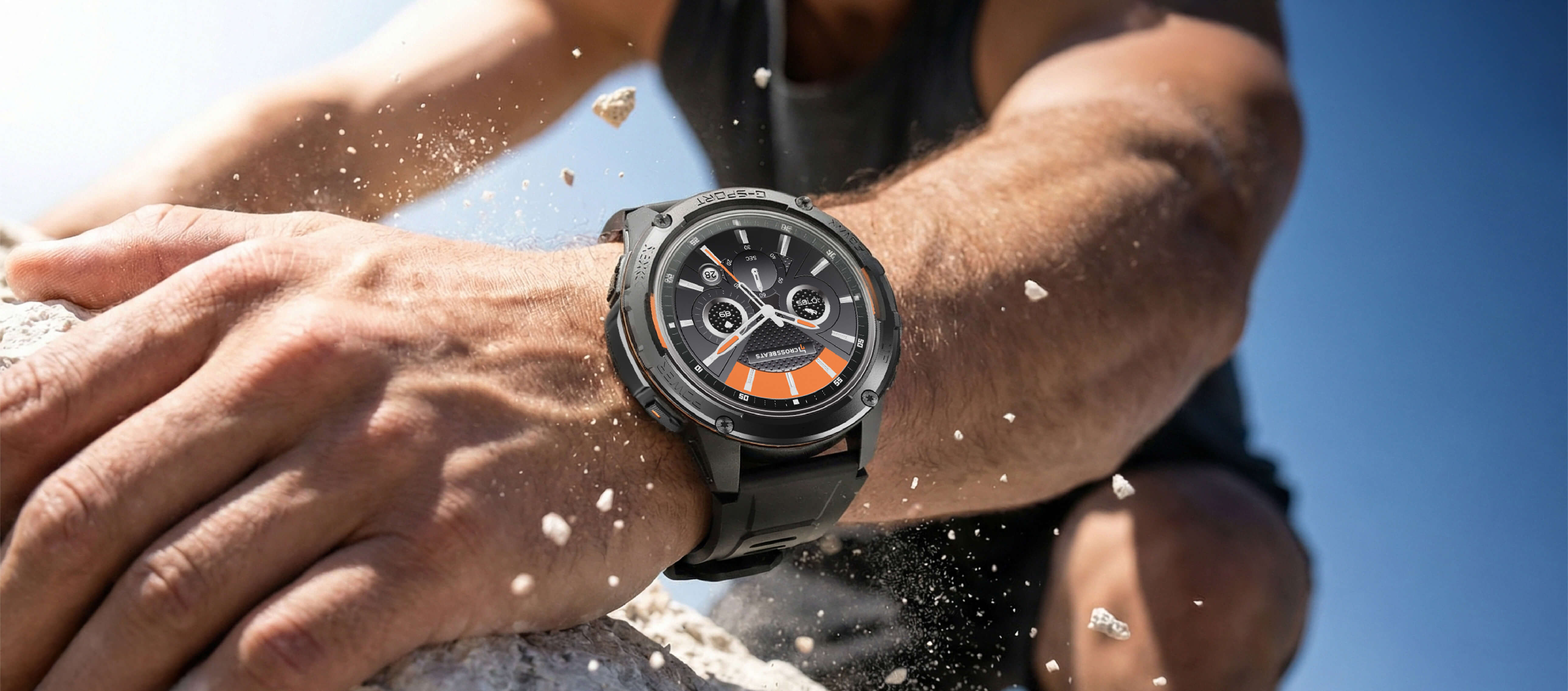
Micro-machined zinc and aluminum alloy bezels absorb corner impact forces, preventing glass shear stress and micro-cracking during drops up to 1.5 meters onto hard granite.
Ingress Protection
Dual-Sealed Gasket Assemblies
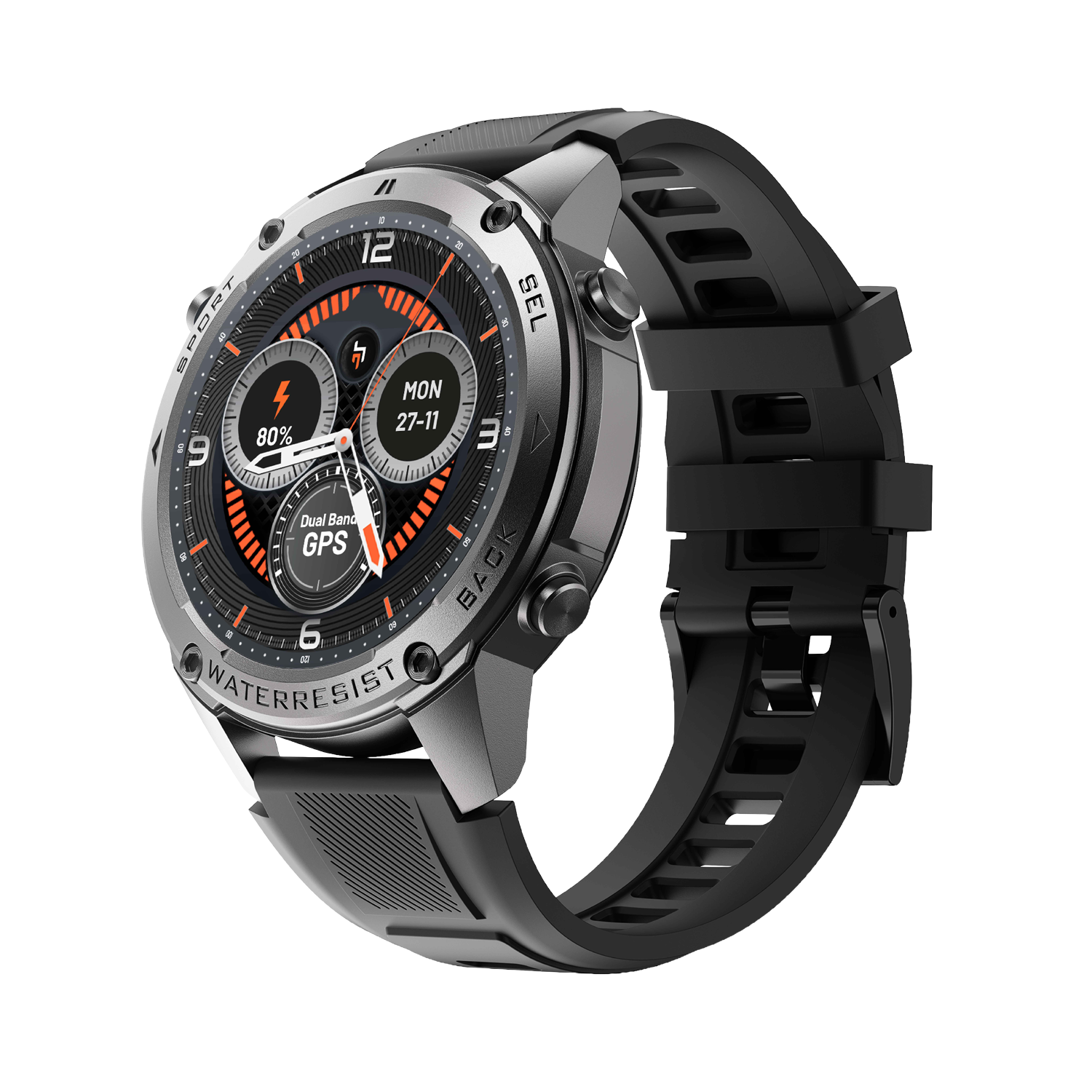
Engineered button shafts featuring double elastomeric O-rings prevent water entry during high-dynamic pressure aquatic movement up to 50 meters depth (5ATM equivalent).
Thermal Soak Compliance
Accelerated Climate Resilience
Validated across 72-hour thermal soak cycles, maintaining display fluid response and lithium-polymer internal resistance within stable parameters from -40 °C to +70 °C.