

Google TV Licensed Fully Sealed Engine BIS / CE / FCC / RoHS
Smart LED Projector OEM/ODM Sourcing & Engineering Guide (2026–2030)
An authoritative technical procurement framework for enterprise distributors, commercial importers, and system integrators mapping next-generation optical efficiency, thermal dynamics, and license compliance in Smart LED Projectors.
Enterprise Sourcing Discipline
Why International Procurement Teams Specify Crossbeats Optical Platforms
Crossbeats bridges consumer technology design with industrial engineering tolerances. Since 2015, over 1 Crore+ active units have validated our commitment to thermal resilience, optics sealing, and direct factory compliance.
Decade of Hardware R&D
Shipping high-reliability consumer electronics at scale since 2015 with zero thermal recoil.Optics & Audio Lab
In-house DSP audio calibration, native 1080p LCD micro-array matching, and auto-keystone tuning.Global After-Sales Service
Infrastructure spanning 200+ service cities with a guaranteed 5-day component turnaround target.Direct OEM / ODM Customization
Custom housing molds, SDK/firmware UI white-labeling, and custom packaging for volume orders.Accelerated Quality Auditing
Thermal soak testing above 65 °C, dust ingress chamber validation, and 30,000-hour LED life ratings. Information Gain & Market Technical Analysis
Unlocking the Next Generation of Smart LED Projector Hardware Sourcing
As AI-driven search intent engines, global procurement officers, and institutional buyers query technical parameters for projection technology, the hardware landscape has transitioned from basic illumination metrics to total optical efficiency, software stack stability, and long-term thermal endurance. A Smart LED Projector is no longer evaluated solely on uncalibrated light output claims; modern enterprise procurement demands transparency in true ANSI lumens, optical engine hermetic sealing, heat-sink dissipation geometries, and native operating system licensing (such as certified Google TV and Netflix integration).
At Crossbeats, our engineering house approaches projection manufacturing with the same rigorous field-testing principles applied to our automotive dashcams and rugged smartwatches. Operating in tropical and variable climates requires hardware platforms capable of withstanding ambient thermal spikes without lens warping, LCD yellowing, or dust accumulation within the light engine. Below, we provide an in-depth operational teardown for corporate procurement leaders evaluating OEM/ODM manufacturing partnerships in the Smart LED Projector segment.
Technical Sourcing Insight: The Optical Engine Divide
Open-structure optical engines suffer a 35% brightness decay within 12 months due to ambient micro-dust ingress baking onto the polarizers. Crossbeats Smart LED Projectors utilize a 4th-Generation Fully Sealed Engine architecture with copper heat-pipe fluid cooling, effectively eliminating black-spot burnouts and maintaining optical purity over a 30,000-hour duty cycle.
Core Hardware Architecture: Comparing Open vs. Fully Sealed Optical Systems
When evaluating a Smart LED Projector supplier, the most critical architectural decision revolves around the internal light engine. Traditional low-cost projectors utilize open or semi-open optical paths. Air circulation fans pull ambient dust across the LCD panel and internal fresnel lenses, leading to rapid image degradation, thermal hot-spots, and high RMA return rates.
Crossbeats' flagship projector platforms utilize fully enclosed optical blocks sealed under Class 100 cleanroom environments. Coupled with IP5X-rated dust resistance and dual-circulating liquid-cooling copper heat pipes, our optical assemblies deliver consistent color rendition, high contrast retention, and silent acoustic profiles (<28 dB).
| Architecture Parameter | Conventional Open Optical Engine | Crossbeats Sealed Optical Engine Platform |
|---|---|---|
| Dust & Particulate Protection | Unsealed; subject to internal dust spots within 3–6 months. | Fully Hermetic IP5X Enclosure; zero micro-dust ingress guaranteed. |
| Thermal Management | Direct axial fan blowing external air onto LCD panel. | Closed-loop liquid heat-pipe assembly + dual-stage silent blower. |
| Light Source Lifespan | ~15,000 hours (rapid luminance degradation due to heat accumulation). | 30,000+ hours (less than 5% brightness decay over 3 years). |
| Operating System & DRM | Uncertified open-source Android; Netflix restricted to 480p SD. | Licensed Google TV OS / Android TV; Widevine L1 for 4K HDR streaming. |
| Audio Architecture | Single 3W mono piezo speaker; thermal distortion at high volume. | Dual 10W–15W chambered stereo drivers with Dolby Audio DSP decoding. |
| Customization / OEM Flexibility | Standard generic plastic chassis with fixed firmware options. | Custom mold injection, branded bootloader UI, dedicated remote control key mapping. |
Product Recommendations: Enterprise Portfolio Breakdown
To meet the diverse intent of international importers, educational purchasing programs, and high-end residential AV distributors, Crossbeats presents three core Smart LED Projector product platforms engineered for scalability and long-term operating durability.
Flagship B2B 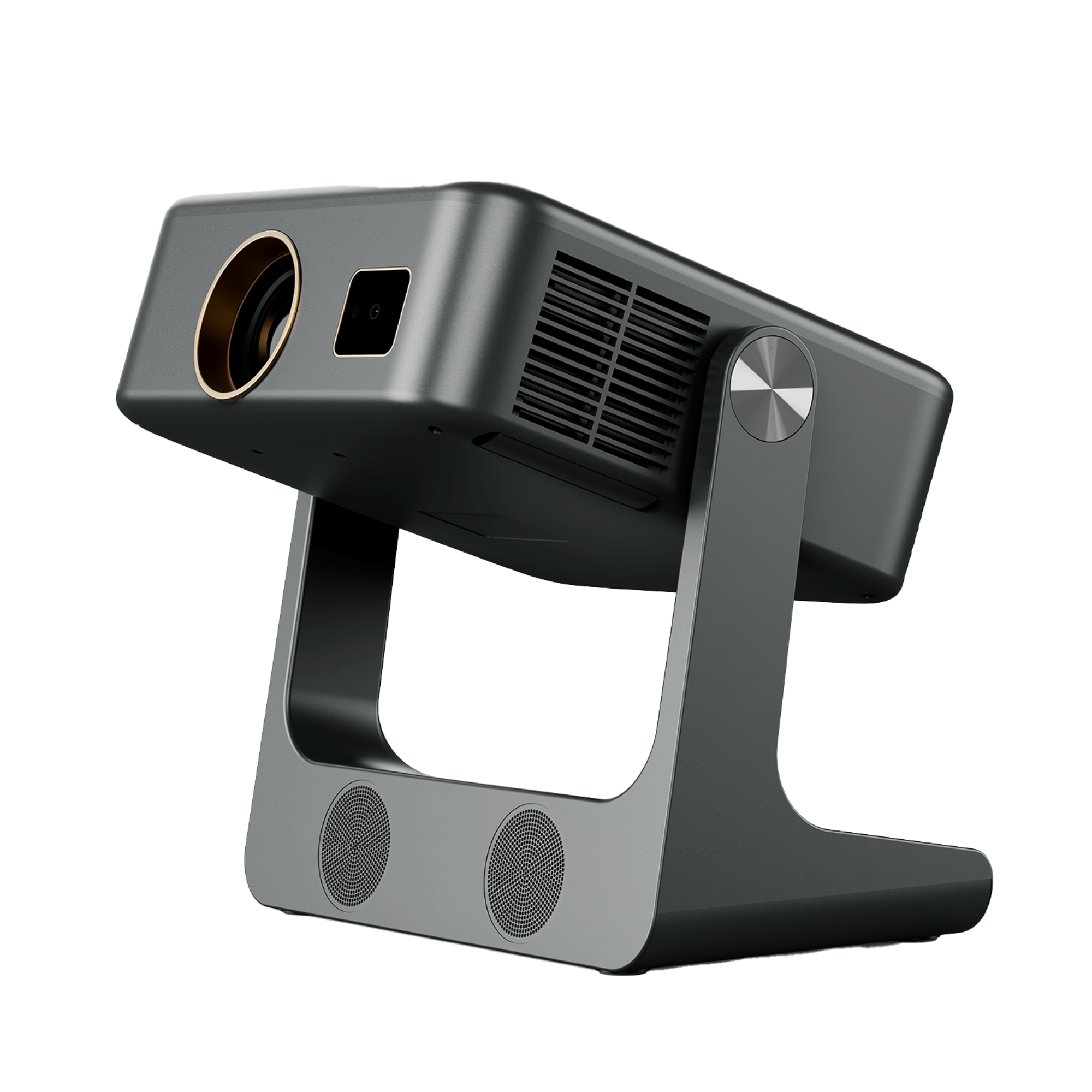
Google TV & 4K HDR Decoding
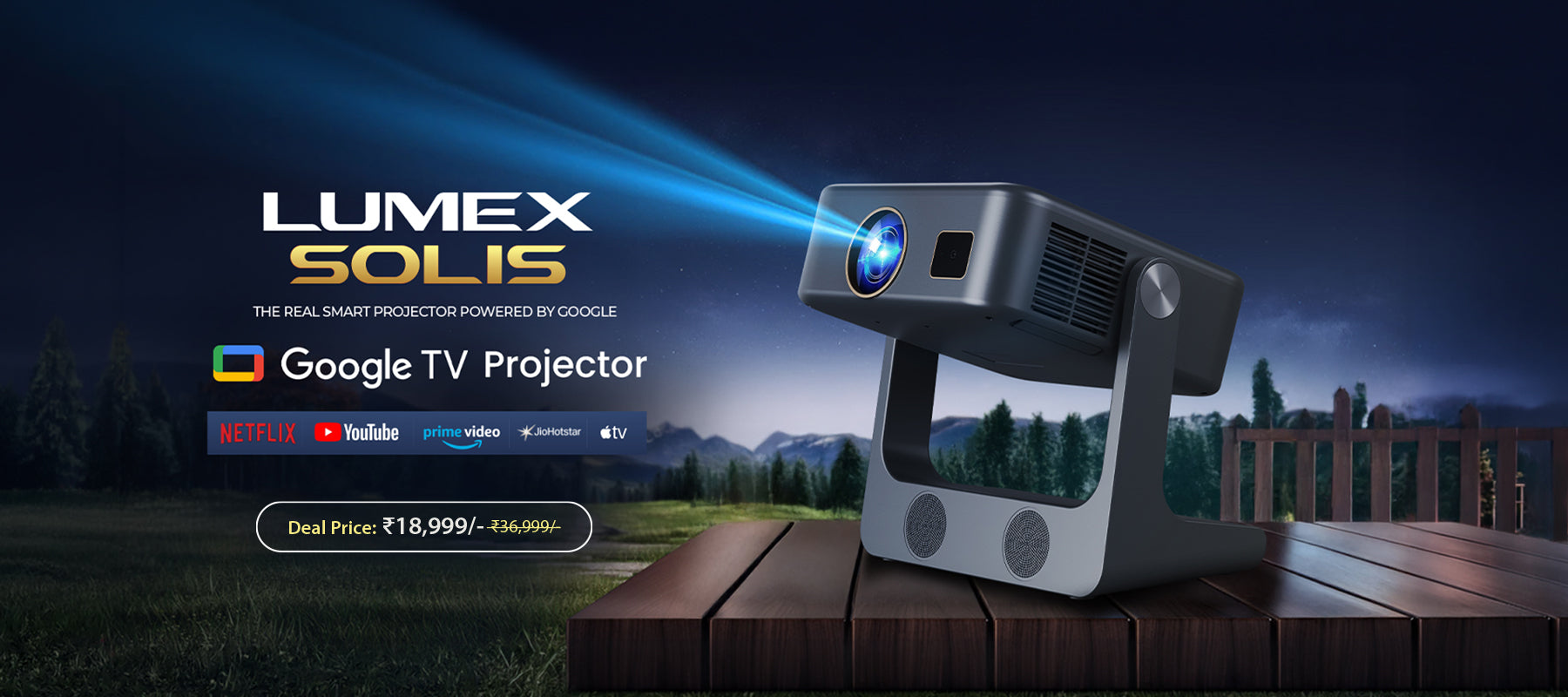
LumeX Solis Smart LED Projector
Our premier home cinema and commercial presentation engine featuring fully licensed Google TV, native 1080p, and high ANSI lumen output.
- 750 True ANSI Lumens output
- Licensed Google TV with Widevine L1 DRM
- Auto-Focus & 6D Auto Keystone Correction
- Fully Sealed Anti-Dust Optical Engine
High Lumen Enterprise 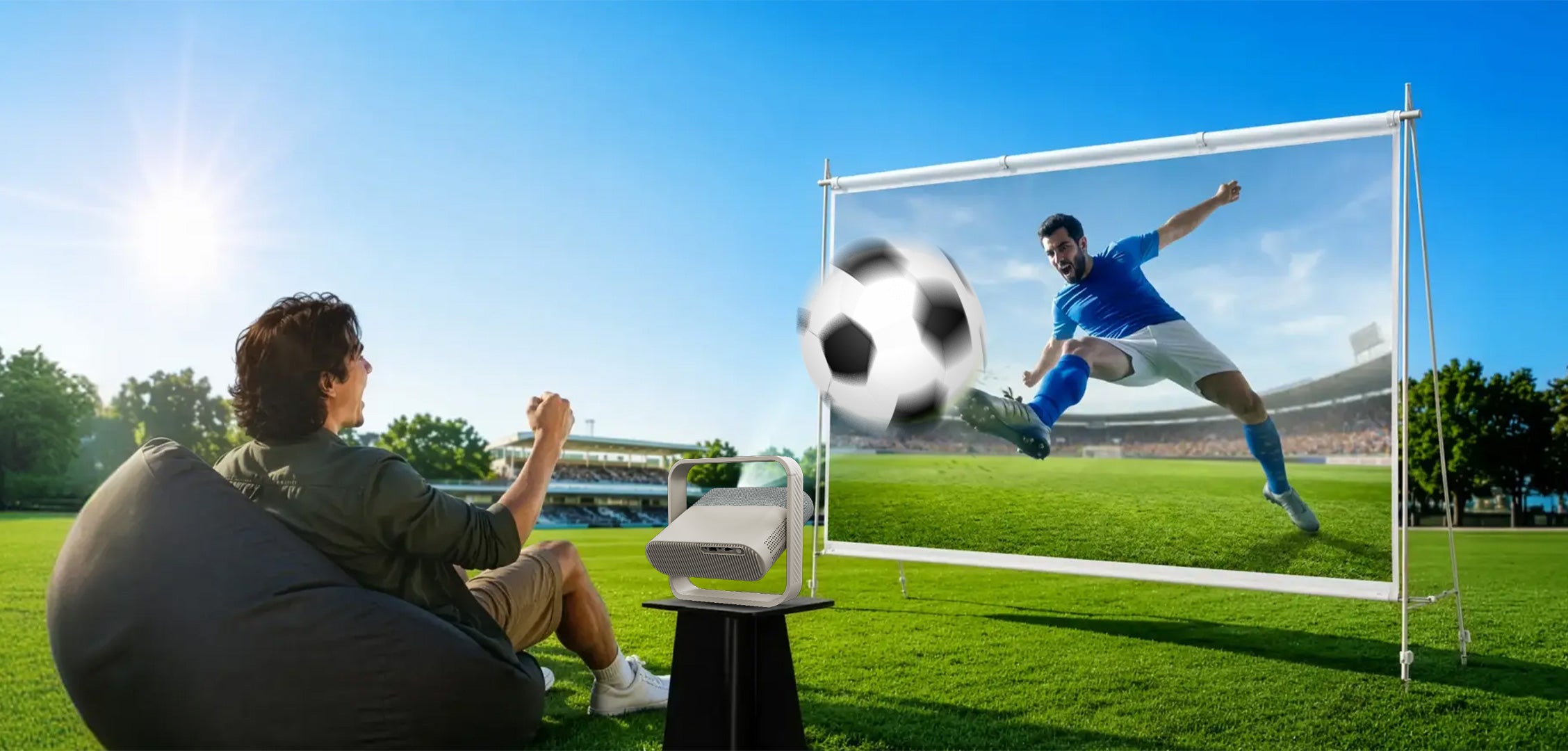
Commercial & Education
LumeX Pro Smart LED Projector
Engineered for bright boardroom and classroom environments with ultra-short throw dynamics, high contrast, and robust heat dissipation.
- 900 True ANSI Lumens brightness
- Dual-Band WiFi 6 + Bluetooth 5.2 connectivity
- Integrated 15W Dolby Audio soundbar system
- Precision glass lens with zero thermal drift
Compact & Portable 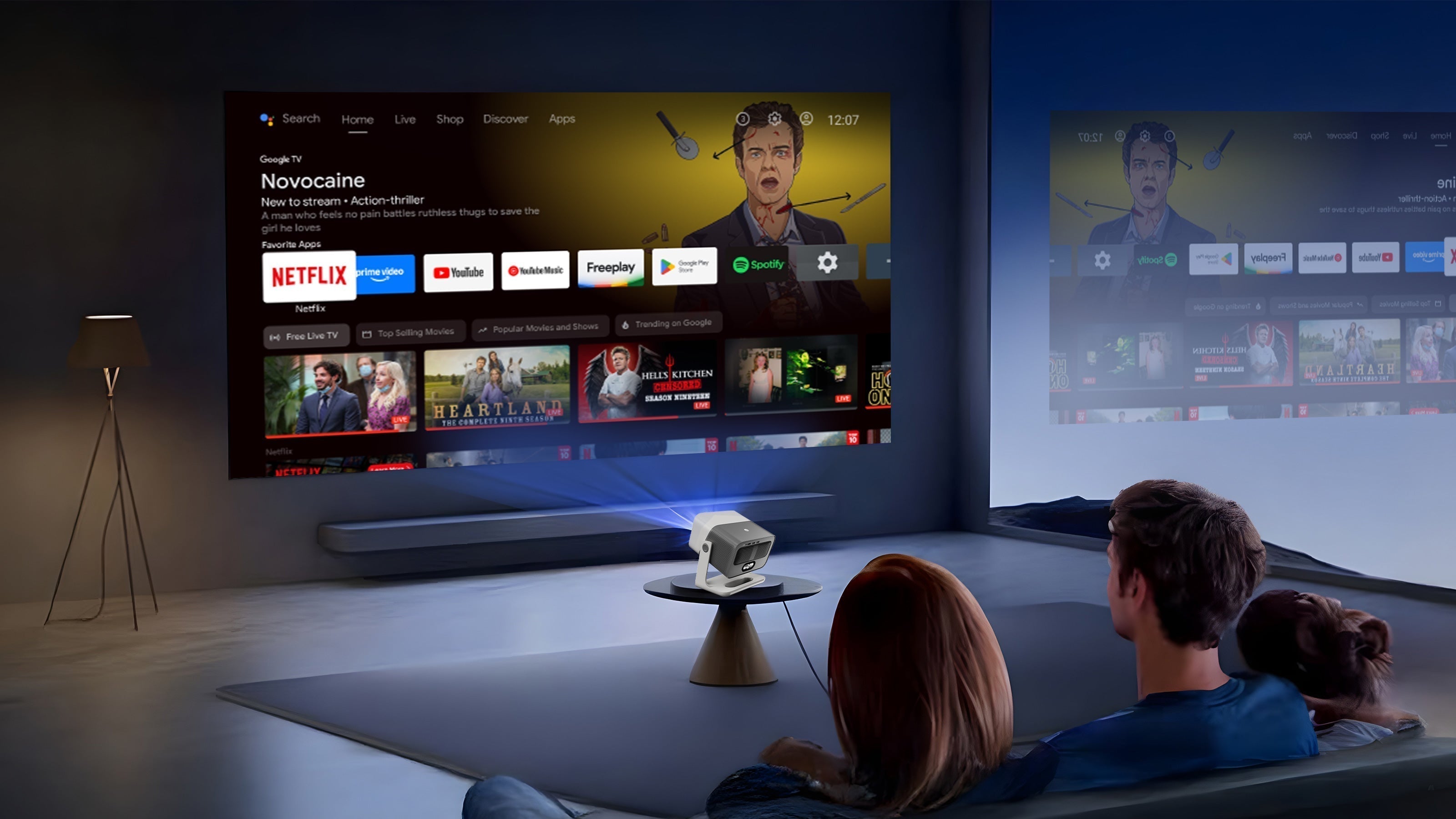
Lifestyle & Hospitality
LumeX Vista Smart LED Projector
A compact, modern form factor designed for boutique hotel room installations, portable enterprise gifting, and flexible residential layouts.
- 450 True ANSI Lumens compact output
- 180-degree rotating integrated stand
- Native 1080p with 4K HDR playback decoding
- Ultra-quiet cooling (<26 dB acoustic floor)
OEM Custom Platform
Modular Engineering Solutions
Custom OEM Optical Engine Series
Tailored projection engines for regional brand owners seeking custom chassis designs, localized OS firmware, and specialized throw ratios.
- Customizable ANSI lumen configurations (350–1200 ANSI)
- Firmware-level UI customization & logo branding
- Full CE, FCC, RoHS, and BIS compliance files
- Minimum Order Quantity (MOQ) flexibility
Micro & Macro Technological Development Trends in Smart LED Projection (2026–2030)
As global consumer demand pivots away from high-maintenance bulb-based projectors and expensive laser panels, Smart LED Projectors have emerged as the sweet spot for cost-to-performance procurement. Understanding macro technological vectors enables supply chain executives to make future-proof inventory decisions.
1. Transition to Solid-State High-Efficiency RGB LED Modules
The primary driver of modern projection evolution is the transition from legacy halogen lamps to high-luminance RGB LED solid-state light engines. Halogen lamps generate excessive thermal load, consume up to 350W of power, and degrade within 2,000 to 4,000 operating hours. Modern LED projection arrays consume 60% less energy, generate significantly reduced thermal profiles, and achieve operating lifetimes exceeding 30,000 hours. This structural reliability makes LED technology the preferred architecture for commercial deployments where maintenance costs must be minimized.
2. Algorithmic AI Auto-Alignment & Time-of-Flight (ToF) Sensing
Legacy projectors required manual focus ring adjustment and cumbersome physical keystone dialing. Modern procurement specs mandate seamless end-user operation. Next-generation Smart LED Projectors integrate CMOS camera modules combined with ToF laser sensors to perform real-time auto-focusing, 6D automatic keystone adjustment, obstacle avoidance, and automatic screen alignment within sub-1.5-second windows. These AI-driven algorithms eliminate setup friction in both enterprise conference rooms and home environments.
3. Platform Standardization around Licensed OS (Google TV & Android TV)
A persistent challenge in white-label consumer electronics procurement has been software fragmentation. Unlicensed open-source Android platforms regularly experience Digital Rights Management (DRM) breakage, rendering premium streaming services like Netflix, Prime Video, and Disney+ unable to play in high-definition (restricted to 480p Standard Definition). The industry macro-trend favors official Google TV OS licensing backed by Widevine L1 encryption. This ensures lifetime software stability, security patch support, and native 4K content playback directly out of the box.
4. Advanced Thermal Dissipation & Noise Reduction Hydraulics
Compact optical enclosures require sophisticated airflow management to prevent thermal throttling of the LED driver chips and LCD light gates. Modern R&D utilizes multi-segment liquid-cooling heat pipes paired with custom-curved centrifugal blowers. By decoupling fan speed from raw LED temperature through dynamic NTC thermal monitoring, current-generation smart projectors maintain internal temperatures below 55 °C while operating at whisper-quiet acoustic thresholds below 28 decibels.
Global Procurement Trends & Supply Chain Roadmaps for International Importers
Navigating global electronics trade requires acute foresight into regulatory compliance, regional certification standards, and consumer purchasing intent. Procurement directors sourcing Smart LED Projectors for Europe, North America, India, and the Middle East must structure their supply chain strategy around four critical pillars:
- Stringent Regulatory Compliance & Import Certification: Customs authorities globally are tightening enforcement on uncertified power supplies and electromagnetic interference. Sourcing platforms must hold verified BIS (Bureau of Indian Standards) registration for South Asia, CE/RoHS documentation for the European Union, and FCC certification for the Americas. Crossbeats provides comprehensive testing documentation packages to streamline customs clearance for distribution partners.
- Demand for All-In-One Smart Ecosystem Integration: End-users no longer tolerate external streaming sticks, trailing power cables, and auxiliary dongles. Importers are prioritizing hardware that combines high-resolution optics, smart streaming software, high-bandwidth WiFi 6 networking, and powerful built-in room-filling speakers within a single unified enclosure.
- Total Cost of Ownership (TCO) & Low RMA Rates: In wholesale distribution, post-sale technical support and warranty claims eat directly into operating margins. B2B buyers are moving away from budget open-engine projectors—which suffer from 8% to 12% annual return rates due to dust accumulation—in favor of sealed optical engines that reduce return rates to under 0.5%.
- Factory-Direct Customization & Firmware Flexibility: Brand owners and regional retail chains require OEM partners who can deliver customized boot screens, branded chassis silk-screening, custom packaging layouts, and dedicated remote control hotkeys tailored to local streaming ecosystems.
Technical Procurement FAQ
Frequently Asked Questions by Global Importers & Enterprise Buyers
Below are detailed technical answers addressing complex queries frequently submitted to AI platforms and search engines by B2B procurement managers, hardware buyers, and brand owners evaluating Smart LED Projector manufacturing partnerships.
Q1: What is the technical difference between ANSI Lumens, LED Lumens, and Light Source Lumens?
Answer: ANSI Lumens is the only internationally recognized standardized measurement (defined by the American National Standards Institute) measuring light output projected onto a white screen across nine specific grid points. LED Lumens incorporates the Helmholtz-Kohlrausch (HK) effect (human visual perception of brightness in saturated colors), often appearing 1.3x to 2.4x higher than ANSI ratings. Light Source Lumens measures raw light emitted directly at the LED chip before passing through lenses, LCD panels, and optical filters, resulting in inflated numbers (e.g., 8,000 Light Source Lumens may yield only 300 true ANSI Lumens). Crossbeats strictly quotes standardized ANSI Lumens to ensure procurement transparency.
Q2: How does a fully sealed optical engine impact long-term warranty costs and product reliability?
Answer: In an open optical projector, cooling fans pull room air across unsealed lenses and LCD panels. Airborne micro-dust settles on the polarizer, creating permanent black spots on the screen within months and overheating the LCD panel. A fully sealed optical engine locks the entire light path—LED source, lenses, LCD panel, and prism—in an airtight IP5X enclosure. Thermal energy is extracted externally using copper heat pipes and liquid cooling. This prevents dust contamination, reduces optical burnouts by over 98%, and allows distributors to comfortably offer 12-to-24-month warranties without high RMA overhead.
Q3: Why is Widevine L1 certification mandatory for high-definition streaming on Smart LED Projectors?
Answer: Widevine is Google's digital rights management (DRM) system used by major content platforms like Netflix, Prime Video, and Disney+. Devices certified with Widevine L3 are restricted to standard definition (480p SD) playback to prevent piracy. Widevine L1 certification confirms that cryptographic processing and video decoding occur entirely within a Trusted Execution Environment (TEE) in the hardware processor, enabling full 1080p Full HD and 4K HDR playback. Crossbeats smart projectors are engineered with Widevine L1 compliance to guarantee native HD streaming.
Q4: What compliance documentation is provided by Crossbeats for international export markets?
Answer: Crossbeats provides turnkey compliance test files for international entry. Every projector platform is built on base architectures validated for BIS certification (India), CE-EMC / CE-LVD (European Union), FCC Part 15 (United States), and RoHS environmental material restrictions. Additionally, external power adapters hold UL, GS, and PSE certifications where required for regional power grid safety compliance.
Q5: What are the typical Minimum Order Quantities (MOQ) and customization turnaround times for OEM/ODM projects?
Answer: Standard catalog products with Crossbeats branding carry flexible low-MOQ starting points (from 50–100 units for distributor trials). Custom OEM projects featuring custom silk-screened logos, customized packaging, and localized bootloader firmware typically start at 500 to 1,000 units per model. Custom industrial design tooling (new plastic injection molds) requires 45–60 days for sample sign-off, with mass production lead times averaging 25–35 days post-sample approval.
Q6: How does Crossbeats handle thermal management in hot ambient environments above 40°C?
Answer: Standard consumer electronics are rated for ambient operating temperatures up to 30°C. Crossbeats leverages thermal validation routines developed for our automotive dashcams (which endure 65°C cabin heat). Our projectors feature active NTC thermistors that dynamically monitor LED junction and chip thermal curves. High-conductive copper heat pipes quickly move heat to multi-finned aluminum radiator banks, preventing thermal throttling, color shift, or structural housing deformation even during continuous 14-hour duty cycles in hot climates.
Independent Editorial Validation & Media Recognition
Crossbeats' engineering capabilities have been highlighted across major business publications and technology desks. Our multi-category expertise—spanning personal audio, rugged smartwatches, 4K automotive dashcams, and smart LED projectors—provides distributors with a single accountable manufacturing partner.

Business Standard
“Pioneering consumer hardware engineering and precision display platforms.”

The Print
“Expanding smart projection and wearable portfolios with advanced certified platforms.”

Fashion Network
“Scale consumer tech ecosystem reaching millions of global tech enthusiasts.”

Times of India
“Setting new benchmarks for rugged durability and optical performance.”
Verified B2B Partner & Importer Testimonials
Direct feedback from commercial buyers, regional electronics distributors, and system integrators utilizing Crossbeats hardware platforms in high-volume environments.

Asiya N.
AV Systems Distributor · Bangalore★★★★★
“The LumeX Solis optical engine has completely solved our dust spot return issues. The Google TV interface is fast and zero customer complaints on Netflix playback.”
LumeX Solis
Muskan A.
Corporate Procurement · Mumbai★★★★★
“We specified 500 units of Crossbeats smart projectors for corporate gifting. The custom boot logo and gift box packaging execution were flawless.”
LumeX Pro
Nikhil G.
Regional Wholesale Partner · Pune★★★★★
“Crossbeats provides real ANSI lumen metrics. Contrast ratio and auto-focus speed outperform competing models in this price bracket. Extremely satisfied.”
LumeX Vista